The Bipartisan Gamble: Can Democrats and Donald Trump Find Common Ground on Healthcare Reform

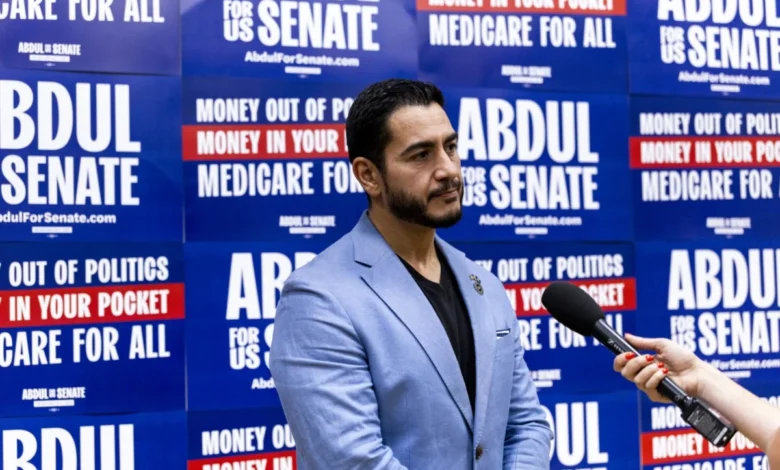
The American healthcare landscape is undergoing a period of intense scrutiny as the incoming Congress prepares to navigate a political environment defined by both sweeping Democratic majorities and a skeptical executive branch. With rising medical expenses serving as a primary catalyst for voter frustration during the recent midterm election cycle, healthcare has vaulted to the top of the legislative agenda. As Democrats prepare to wield their newly expanded influence in both the House and Senate, they face the immediate reality of a President who has previously demonstrated a willingness to utilize the veto pen to block legislative priorities that do not align with his vision.
In an unexpected twist of political maneuvering, Senator-elect Abdul El-Sayed has proposed a strategy that attempts to transcend partisan hostility by appealing directly to the personal legacy-building ambitions of President Donald Trump. This approach centers on a bold, potentially transformative legislative package: a national, universal healthcare program marketed under the name "TrumpCare."
The Genesis of a Political Gambit
The strategy emerged in mid-November, following the consolidation of Democratic congressional gains. El-Sayed, a former public health official known for his advocacy of Medicare for All, took to social media to broadcast a visual concept of a gold-embossed "TrumpCare" insurance card. His message was direct and provocative: "Donald, this is on the table. Guarantee healthcare for every American, from cradle to grave."
By framing the policy as a potential cornerstone of the President’s legacy, El-Sayed and his allies are attempting to bypass the traditional ideological gridlock that has paralyzed healthcare reform for decades. In subsequent interviews, El-Sayed clarified that his focus remains on tangible outcomes for the American public rather than the nomenclature of the legislation. "What you call it is secondary," El-Sayed stated. "What it does in your life, that’s the whole point. Most of us ran to actually solve problems in people’s lives."
The President’s reaction was immediate and signaled potential, if cautious, interest. By reposting El-Sayed’s appeal on his Truth Social platform, President Trump acknowledged the proposal, effectively opening a door that many political observers assumed was permanently bolted.
Historical Context and Political Precedent
This tactical shift draws a direct line to the political philosophy famously articulated by President Ronald Reagan, who once remarked that there is no limit to what a person can achieve if they are willing to cede the credit. In an era of record-high partisan polarization, the willingness of incoming Democratic leadership to embrace this "Reagan-esque" approach—trading brand recognition for policy substance—marks a significant departure from standard Washington procedure.
The context of this interaction is especially fraught given the intense rhetoric exchanged during the campaign season. President Trump had previously leveled severe personal attacks against El-Sayed. However, the Senator-elect has signaled a desire to move beyond these clashes, drawing on his background in competitive sports to frame his approach. "I was taught to play the ball, not the man," El-Sayed noted during an appearance on NBC’s Meet the Press. He suggests that if the President is genuinely interested in a historic, lasting legacy, the creation of a universal, premium-free healthcare system would be the ultimate political achievement.
Economic Realities and the Cost of Care
The urgency of this discussion is underpinned by stark economic data. As the current open enrollment period proceeds, millions of Americans are grappling with substantial increases in health insurance premiums. According to industry analysis and recent reports from healthcare policy experts, wage growth has failed to keep pace with the rising costs of employer-sponsored health plans.
Furthermore, the expiration of pandemic-era enhanced subsidies for Affordable Care Act (ACA) plans has created a "coverage cliff" for many middle-class families. Without federal intervention to stabilize these costs, out-of-pocket expenses for deductibles and co-pays are projected to reach record highs in the coming fiscal year. The current system is increasingly viewed as unsustainable by both constituents and policymakers, creating the political vacuum that El-Sayed is attempting to fill with a bipartisan proposal.
The Legislative Hurdles and Strategic Implications
For President Trump, supporting a universal healthcare mandate would represent a seismic 180-degree turn from his first term, during which he championed the repeal and replacement of the Affordable Care Act. However, political analysts note that the President has often favored policies that emphasize his ability to "make deals" and secure "wins."
Senator-elect Peggy Flanagan has joined this chorus of support, suggesting that the Democratic caucus is pragmatic regarding the branding of such a program. "If we have to call it TrumpCare in order to get it across the finish line, that’s fine by me," Flanagan stated. The sentiment reflects a broader strategy within the Democratic Party to prioritize the expansion of the social safety net over the rigid adherence to established legislative branding.
If the proposal gains momentum, it would trigger a profound realignment in American politics. A Republican President signing a law that essentially guarantees healthcare for every American—thereby eclipsing the scope of the ACA—would fundamentally reshape the party platform. El-Sayed anticipates that if the President formally embraces the initiative, the legislative whip count in Congress would shift rapidly, as the majority of congressional Republicans would likely align with the executive’s directive.
Challenges to Universal Coverage
Despite the optimism expressed by proponents, significant hurdles remain. The logistical and fiscal requirements of transitioning to a universal system are immense. Opponents, including many fiscal conservatives within the Republican party, remain deeply skeptical of government-managed healthcare, citing concerns regarding bureaucracy, the quality of care, and the potential for massive tax increases.
Moreover, the insurance industry and private medical providers have substantial lobbying power. Any attempt to dismantle or significantly restructure the current system would face fierce resistance from stakeholders who have spent decades building the current infrastructure. The transition would require not only a presidential endorsement but also a complex, bipartisan legislative consensus that has remained elusive in the modern era.
A Departure from the Obama Legacy
The potential branding of the program as "TrumpCare" also carries symbolic weight. During the Obama administration, the Affordable Care Act was subjected to a sustained campaign of criticism that sought to turn the term "Obamacare" into a pejorative. Over time, as the law’s benefits became entrenched and the public became reliant on its provisions, the name lost its negative stigma.
President Barack Obama’s own reflection on this evolution at the 2024 Democratic National Convention—noting that the program is now often referred to by its original, neutral title—serves as a case study in how public perception of government programs changes over time. If a new program were to be introduced under the "TrumpCare" moniker, it would represent a complete inversion of this historical trajectory, with the President’s own party potentially inheriting a system that was once the subject of intense partisan debate.
Looking Ahead
As of late November, discussions regarding the potential framework of this legislation are reportedly underway. When pressed on whether formal meetings have been scheduled between the Senator-elect and the executive branch, El-Sayed confirmed that plans are "in the works."
The coming months will be a test of whether American politics can move beyond the performative conflict of the election cycle to address the substantive financial burdens facing the electorate. Whether this "TrumpCare" proposal is a viable path toward universal coverage or a sophisticated piece of political theater remains to be seen. However, the willingness of both sides to entertain the concept signals that the status quo in healthcare is no longer considered acceptable by either party.
In the final analysis, the success of such an initiative will depend on whether the desire for a legacy-defining achievement can outweigh the deep-seated ideological divisions that have defined the last decade of American governance. For the millions of Americans navigating rising premiums and dwindling coverage options, the outcome of these negotiations is not merely a matter of political theater, but a critical determinant of their long-term economic and physical security.