The Landscape of Early Black Friday Retail
The retail environment for the 2026 holiday shopping season has undergone a strategic transformation. Historically, Black Friday was a singular event occurring on the Friday following Thanksgiving. However, over the past decade, major retailers—including Amazon, Costco, and Best Buy—have shifted toward a "Black Friday Month" model. This strategy is designed to mitigate supply chain bottlenecks, reduce warehouse congestion, and capture consumer spending earlier in the fiscal quarter.
The current promotion on the Samsung M80H serves as a microcosm of this trend. By discounting inventory well ahead of the traditional November peak, manufacturers and retailers are competing for early-bird shoppers who are increasingly wary of holiday shipping delays. Analysts suggest that this aggressive pricing strategy is also a response to softening consumer electronics demand throughout the year, forcing brands to incentivize upgrades for those holding onto aging, lower-resolution hardware.
Technical Specifications and Performance Metrics
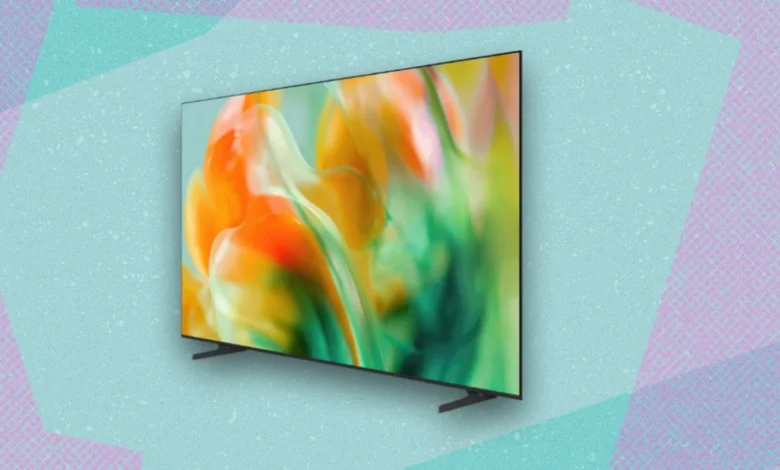
The Samsung M80H occupies a specific niche in the current display hierarchy. Positioned as an entry-level 4K smart television, it bridges the gap between basic LED panels and premium, high-cost OLED or QLED displays.
The integration of Mini-LED technology is a notable feature at this price point. Mini-LED utilizes significantly smaller light-emitting diodes than traditional LED TVs, allowing for more precise backlighting control. This improves contrast ratios and peak brightness, although, as noted in recent performance reviews, the absence of advanced local dimming zones means that the display may face challenges in environments with intense ambient light, such as sun-drenched living rooms.
For the gaming demographic, the M80H offers a competitive advantage. While many budget-friendly televisions are capped at a 60Hz refresh rate, the M80H supports a 144Hz refresh rate. This hardware specification is critical for reducing motion blur during fast-paced gameplay. Furthermore, the inclusion of Variable Refresh Rate (VRR) and AMD FreeSync Premium ensures that the television can synchronize its refresh rate with the output of modern gaming consoles and PCs, effectively eliminating screen tearing and stuttering.
Software-wise, the unit utilizes Samsung’s proprietary Tizen interface. This ecosystem provides native integration with major streaming platforms and supports Samsung’s Vision AI, which assists in upscaling non-4K content to match the panel’s native resolution. Connectivity options include standard AirPlay support for Apple devices and built-in Amazon Alexa compatibility for smart home integration.
Market Context and Consumer Implications
The decision to bring the 65-inch model to sub-$500 pricing is a strategic move by Samsung to maintain market share against aggressive pricing from budget-oriented competitors like TCL and Hisense. These brands have long dominated the "value-for-money" segment, and Samsung’s entry into this pricing bracket suggests a broader industry pivot.

Historically, the cost of a 65-inch television with a 144Hz refresh rate and Mini-LED backlighting would have exceeded $1,000 as recently as two years ago. The current downward pressure on prices reflects both the maturation of display manufacturing processes and the economies of scale that Samsung has achieved.
From an investment perspective, consumers looking to upgrade from older 1080p or early 4K "dumb" TVs are finding that the functional gap between mid-range and high-end televisions is narrowing. While a high-end OLED display will still provide superior black levels and infinite contrast, the M80H offers a "good enough" performance threshold that satisfies the vast majority of casual users, sports fans, and console gamers.
Chronology of the 2026 Promotional Cycle
The current promotional activity began in late October, following a series of manufacturer supply updates that indicated higher-than-expected inventory levels for the M80H line. Retailers began signaling potential discounts as early as the first week of November.
- October 25: Retailers finalized their "Early Black Friday" inventory allocations, with the M80H designated as a "hero" item for home theater promotions.
- November 1: The first wave of discounts went live, initially targeting the 55-inch and 65-inch models.
- November 5: Prices reached the current record-low of $497.99 for the 65-inch unit.
- Projected Late November: Industry experts anticipate that if stock remains, these prices will likely be locked in through the official Black Friday and Cyber Monday period, though inventory depletion may lead to price stabilization or the removal of incentives for larger 75-inch and 85-inch variants.
Assessing the Value Proposition
When evaluating a purchase, prospective buyers should consider the specific use case of the M80H. Because the unit relies on Filmmaker Mode to ensure color accuracy out of the box, it is well-suited for viewers who prioritize an authentic cinematic experience without the need for extensive manual calibration.
However, potential buyers should weigh the following trade-offs:
- Brightness Limitations: In rooms with high natural light, the lack of sophisticated local dimming may result in a washed-out image during dark scenes.
- Size Versatility: The discounts are not limited to the 65-inch model. Retailers have also applied price reductions to the 55-inch, 75-inch, and 85-inch iterations, allowing consumers to scale their purchase based on the specific dimensions of their living space.
- Future-Proofing: While the 144Hz refresh rate is excellent for current gaming needs, the lack of advanced hardware-level image processing found in higher-tier Samsung models (such as the Neo QLED series) means the M80H is an entry-level solution rather than a long-term premium investment.
Broader Economic Impact
The aggressive pricing of home entertainment hardware is a key indicator of broader retail health. As households continue to balance budgets against inflation, the willingness of consumers to spend on "big-ticket" items like televisions remains a bellwether for the economy. When major brands like Samsung offer significant discounts on hardware, it signals a desire to move volume over maintaining high per-unit margins.
Furthermore, the integration of AI features in entry-level models reflects a software-first approach to hardware manufacturing. By embedding Vision AI into the Tizen OS, manufacturers are attempting to extend the lifespan of their products through software updates, potentially reducing the frequency of hardware replacements for the average consumer.
In summary, the current $497.99 price for the 65-inch Samsung M80H represents a notable intersection of high-end features and mass-market pricing. For consumers seeking a significant upgrade in display size and gaming performance without the premium cost of OLED technology, the current early Black Friday offers provide a rare opportunity to acquire feature-dense hardware at a price point that was previously unattainable for this segment of the market. As the holiday season progresses, the availability of these units will likely be the primary constraint for interested buyers, as current trends suggest strong consumer demand for high-value electronics.