The Structural Collapse of the Chinese Equity Market Threatens the Future of President Xi Jinping’s Economic Transformation Agenda

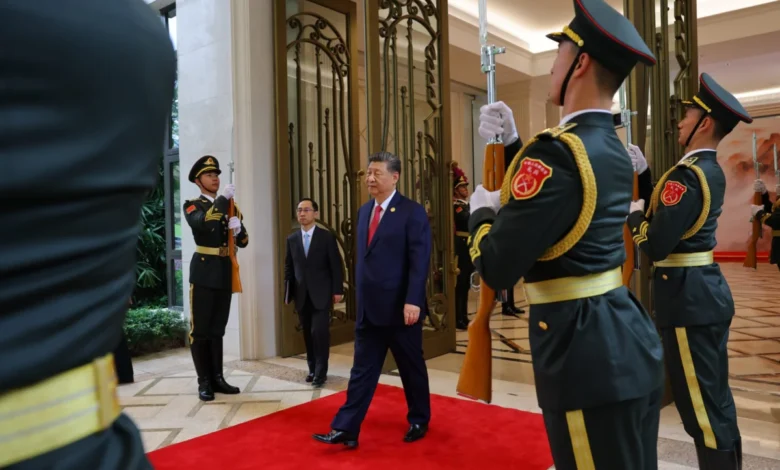
While U.S. investors grapple with a period of profound volatility and the cooling of the artificial intelligence sector, a more systemic and deeply entrenched crisis is unfolding within the People’s Republic of China. According to a recent analysis by Yardeni Research, the speculative bubble surrounding Chinese tech stocks has not merely burst; it has disintegrated, creating a vacuum that threatens the very foundation of President Xi Jinping’s long-term economic strategy. As the Chinese leadership attempts to pivot from a growth model historically anchored in property development to one driven by high-tech innovation and capital market participation, the ongoing market rout suggests that this transition is hitting a catastrophic wall.
The divergence between the U.S. Nasdaq—which has experienced a significant 18% correction from its peak—and China’s STAR 50 index is stark. The STAR 50, often heralded as the barometer for China’s future technological prowess, has tumbled roughly 44% from its recent highs. This collapse is particularly concerning for Beijing, as it occurs against a backdrop of a broader, long-term stagnation in the Shanghai Composite, which remains trapped well below its 2007 peak despite the nation’s GDP expanding nearly sixfold in the intervening seventeen years.
The Failure of the New Economic Paradigm
For decades, real estate functioned as the primary vehicle for household wealth in China, accounting for approximately 70% of family assets. However, the implosion of the property sector, characterized by the insolvency of major developers and a massive inventory glut, has left the Chinese populace with a profound sense of "financial PTSD." As household wealth evaporated along with housing values, consumer confidence plummeted, leading to a persistent deflationary environment that Beijing has struggled to reverse.
President Xi’s administration had envisioned a seamless transition: moving household savings out of stagnant real estate and into the equity markets to provide the necessary liquidity for the massive AI infrastructure buildout. By fostering a "Chinese Wall Street," Beijing hoped to reduce its reliance on the shadow banking system and property-driven growth. Instead, the market has failed to gain the trust of domestic investors. Retail participants, who drive the vast majority of trading volume, continue to view the market as a "rigged casino" where the odds are perpetually tilted in favor of state-backed entities and politically connected insiders.
Chronology of Market Turbulence and Regulatory Responses
The current malaise is not a sudden occurrence but the culmination of years of regulatory and economic pressures. The trajectory of this crisis can be traced through several key phases:
- 2015: A massive stock market crash necessitated an unprecedented intervention by the "national team"—a consortium of state-backed financial institutions tasked with propping up asset prices. This event sowed the initial seeds of distrust among retail investors.
- 2020: The government launched a sweeping crackdown on the tech sector, targeting industry titans and curbing the influence of private enterprise. This signaled a fundamental shift in the government’s tolerance for independent tech giants, chilling investor sentiment.
- 2023–2024: Economic data confirmed a sharp downturn in business investment, with property investment falling by nearly 22% as of October.
- Late 2024: Faced with an export-dependent growth model that is increasingly under fire from international trade partners, Beijing began deploying state funds to stabilize capital markets, though these measures have thus far failed to catalyze a sustained recovery.
The Convergence of Geopolitical and Economic Risks
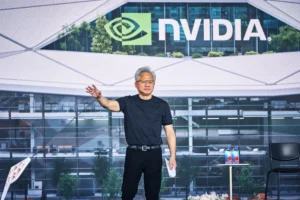
The economic crisis is now intersecting with escalating geopolitical tensions. The "spy scandal" involving leadership changes at global chip powerhouse Nvidia has exacerbated fears regarding China’s access to advanced computing power. The Trump administration’s implementation of aggressive technology curbs—specifically targeting indirect chip shipments—has introduced a new layer of uncertainty.
Analysts at Capital Economics have noted that these restrictions are not merely bureaucratic hurdles; they represent a fundamental threat to China’s ability to remain competitive in the global AI race. By limiting access to the high-end hardware required to train large language models, the U.S. is effectively slowing the rollout of China’s technological modernization, forcing the domestic AI industry to rely on inferior, older-generation components.
Official Responses and the "National Team" Strategy
The gravity of the situation has reached the highest levels of the Chinese government. Premier Li Qiang recently addressed a State Council executive meeting, explicitly stating that stabilizing capital markets is the top priority for the remainder of the year. This rhetoric has been accompanied by tactical maneuvers from the China Securities Regulatory Commission (CSRC), which has moved to ease requirements for company buybacks and restrict initial public offerings (IPOs) to prevent share dilution.
However, these measures are viewed by many market observers as "Band-Aid" solutions. The underlying issue remains the lack of fundamental confidence in the market’s integrity. If the AI sector continues to falter, Beijing faces a difficult choice: allow the private tech firms to wither, or absorb them into the state-owned enterprise (SOE) universe. Given that the government has pledged to shrink the footprint of SOEs since 2013, such a move would represent a significant ideological and economic retreat, effectively crowding out private innovation and further entrenching state control over the economy.
Implications for the Future of China’s Growth Model
The broader implications of this market collapse are significant for the global economy. China’s reliance on "export shocks"—dumping cheap goods onto global markets to sustain growth—is increasingly viewed as an unsustainable practice that invites further protectionist responses from the European Union and the United States.
If the equity market cannot be stabilized, Beijing’s dream of a consumer-led, tech-driven economy may remain just that—a dream. As Yardeni Research points out, China possesses the engineers, the capital, and the institutional ambition to lead in AI. Yet, without a functioning, transparent, and fair capital market to provide long-term funding, the entire venture risks collapsing under the weight of political interference.
For the international investment community, the current situation serves as a cautionary tale. The reliance on the "national team" to manipulate market outcomes has not succeeded in creating a resilient financial ecosystem. Instead, it has institutionalized the volatility that Beijing is so desperate to eliminate. As the year draws to a close, the focus will remain on whether the state can convince its own citizens to trust the market once more, or if the "casino" reputation will permanently alienate the domestic capital required to fuel the next generation of Chinese growth.
Ultimately, the failure of the stock market to reflect the nation’s GDP growth is the most damning indictment of the current economic management. With households holding record levels of cash but refusing to deploy it into equities, the "wealth effect" that usually drives recovery is absent. Until the underlying structural issues—including corporate tax burdens, energy costs, and the risk of further crackdowns—are addressed, the Chinese market is likely to remain in a state of suspended animation, leaving President Xi’s vision of a modernized, tech-forward economy vulnerable to the very volatility he sought to conquer.
Related posts: