Beyond the Blue Wave: Political Analysts Urge Caution Following the 2026 Midterm Elections

The Democratic Party’s sweeping victories in the 2026 midterm elections have fundamentally reshaped the American political landscape, delivering congressional majorities, critical legislative trifectas in key battleground states, and an unexpected Senate pickup in deep-red Texas. However, as the dust settles on a turbulent electoral cycle, political strategists, pollsters, and party leaders are issuing a unified note of caution. Far from signaling a permanent ideological realignment or an undeniable mandate for the progressive platform, the historic results may instead reflect a transient wave of anti-incumbent sentiment in an era defined by volatile, unpredictable voter behavior.
This tension between celebrating short-term legislative gains and recognizing long-term volatility has sparked a fierce debate across the political spectrum. While party optimists envision an expanded map that brings traditionally unachievable states into the Democratic fold by the 2028 presidential cycle, realists and opposition analysts argue that the fragile voter coalitions assembled on November 3, 2026, are deeply transactional rather than transformational.
The Anatomy of the 2026 Midterm Sweep
The 2026 midterm elections concluded a grueling campaign cycle dominated by voter anxiety over economic pressures, inflation, cost-of-living increases, and governmental corruption. Throughout the months leading up to November, polling consistently indicated that the electorate was primarily motivated by "affordability"—a catch-all term encompassing housing costs, consumer goods, healthcare expenses, and wage stagnation.
Capitalizing on these vulnerabilities, the Democratic Party executed a broad-tent strategy that targeted disaffected demographics. In traditional battleground states such as Michigan and Ohio, Democratic candidates successfully peeled away independent voters and moderate Republicans who had previously supported Donald Trump’s platform in 2024. The strategy culminated on November 3, when voters handed the Democrats control of both the House of Representatives and the Senate, while simultaneously securing state-level trifectas across multiple competitive jurisdictions.
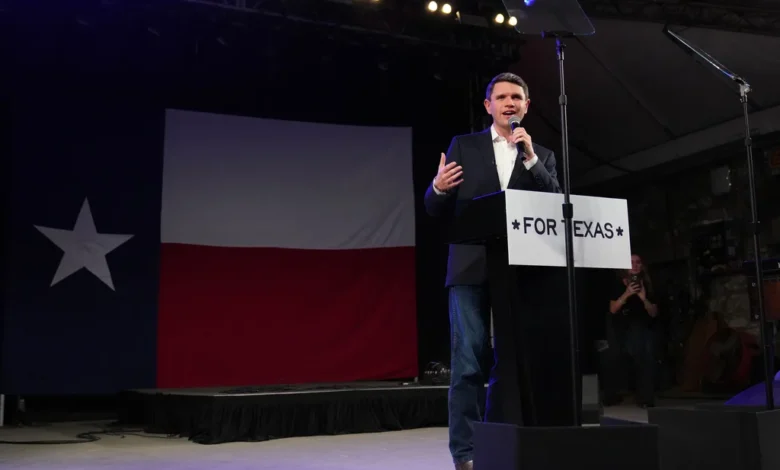
Perhaps the most symbolic victory of the night occurred in Texas, where newly elected Senator James Talarico secured a historic Senate seat in a state long considered an impregnable Republican stronghold. Following his victory, Talarico declared that Texas is "absolutely" competitive for Democrats heading into the 2028 presidential race. Similarly, Democratic National Committee Chairman Ken Martin championed the "big tent" approach as a sustainable blueprint for maintaining momentum over the next two years.
A Repudiation, Not a Vindication: Perspectives from the Left
Despite the jubilation within party headquarters, veteran strategists and prospective 2028 contenders have cautioned against overconfidence. Former Chicago Mayor Rahm Emanuel, speaking on a podcast interview shortly after the election, drew a sharp distinction between the 2026 midterms and previous historic waves, such as the Democratic landslide of 2006 that preceded Barack Obama’s 2008 presidential victory.
According to Emanuel, the 2026 results should be interpreted strictly as a repudiation of the incumbent Republican administration rather than an enthusiastic ideological endorsement of the Democratic platform.
"The voters voted for change, not a Democratic version of more of the same," Emanuel said. He emphasized that the winning coalition relied heavily on non-MAGA Republicans and independents giving the opposition a second look out of sheer frustration. To convert these transactional votes into a lasting political majority, Emanuel argued that Democrats must use their newfound legislative power to fundamentally reform Washington across all three branches, making the electoral shift structural rather than temporary.
Democratic strategist Adam Kinsey echoed this sentiment, noting that the party’s success in historically red areas hinged on voters framing the election not through a traditional partisan lens of "red versus blue," but rather as "them versus us." Kinsey emphasized that while the map has undoubtedly expanded, the longevity of these gains depends entirely on legislative execution. If Democrats fail to tangibly alleviate the economic pressures that drove voters to the polls, the very demographics that propelled them to victory—including young voters, suburban professionals, and Hispanic working-class families—are likely to retreat or pivot away once again.
The Skeptical View from the Right: The Anti-Establishment Electorate
On the conservative side of the aisle, analysts view the 2026 electoral swing through the framework of a recurring political pendulum rather than a decisive leftward lurch. Republican strategist Jason Roe argued in an interview with the Washington Examiner that the fundamental realignment of traditional party coalitions, which accelerated following Donald Trump’s initial 2016 victory, remains fluid and unanchored.
"I think it would be a mistake for Democrats to believe that they have gotten any kind of a mandate from a majority of Americans," Roe stated. He pointed out that traditional demographic alignments have weakened significantly over the past decade, resulting in an electorate that lurches back and forth between parties out of chronic dissatisfaction rather than ideological loyalty. In Roe’s estimation, American politics will remain highly volatile for the foreseeable future.
Conservative commentator Ben Shapiro offered a similar assessment during a recent media appearance, characterizing the midterm outcome as part of a recurring cycle of voter retribution against whichever party holds the reins of power.
"We’re ping-ponging every two years, it seems, in extraordinary ways," Shapiro observed. He argued that modern political campaigns routinely "promise the moon" to voters, only to fall short of expectations. Once disillusionment sets in, the electorate punishes the incumbent party by shifting support to the opposition, regardless of whether that opposition’s specific policy prescriptions align with their underlying values.
Shapiro specifically dismissed arguments from Republican leaders—such as Vice President JD Vance—who attempted to attribute midterm losses primarily to specific foreign policy flashpoints, such as ongoing conflicts in the Middle East. According to Shapiro, the erosion of support among key demographics, such as young male voters aged 18 to 29, stems from a deep-seated, transgressive anti-establishment sentiment rather than single-issue grievances. In an era where voters are perpetually dissatisfied with the institutional status quo, politicians attempting to play an "inside-outside game"—criticizing the establishment while occupying the highest halls of power—face an uphill battle to retain credibility.
Chronology of the 2026 Political Shift
To understand how the current political volatility reached its peak, it is necessary to examine the trajectory of the 2026 election cycle:
- Early 2026: As the legislative calendar opened, polling data consistently highlighted "affordability" and government accountability as the dominant concerns of the American electorate, overshadowing traditional culture-war debates.
- Spring and Summer 2026: Economic indicators remained sluggish, and foreign policy complications, including protracted conflicts abroad, added to public discontent with the executive branch. Both parties braced for a volatile midterm contest.
- September–October 2026: Democratic campaigns rallied around a unified message focusing on cost-of-living relief, anti-corruption measures, and healthcare access. Meanwhile, Republican strategists struggled to maintain traditional demographic coalitions amid rising anti-incumbent sentiment.
- November 3, 2026: Election Day delivered a decisive national rebuke of the incumbent administration. Democrats secured majorities in both the House and the Senate, flipped critical state-level trifectas, and achieved a stunning Senate upset in Texas.
- Post-Election (November 2026): Party leaders immediately began debating the long-term implications of the sweep. While optimistic figures like DNC Chairman Ken Martin and Senator-elect James Talarico viewed the results as evidence of a permanently expanding electoral map, seasoned strategists warned that the coalition remains fragile, transactional, and vulnerable to shifting public moods.
Broader Implications and Outlook for 2028
The implications of the 2026 midterms extend far beyond the immediate legislative arithmetic of the 120th Congress. For the Democratic Party, holding majorities provides a unique platform to enact key economic policies, but it also carries immense political risk. Having campaigned aggressively on affordability and systemic reform, the party now bears the responsibility of governance under intense public scrutiny. Failure to deliver measurable improvements in daily living standards could trigger a rapid backlash in the 2028 midterms or presidential election.
Conversely, the Republican Party faces a period of introspection regarding coalition management. The erosion of support among working-class voters, young men, and suburban independents highlights the limitations of relying solely on anti-establishment rhetoric without substantive policy delivery. To remain competitive in emerging battlegrounds, GOP leadership must address the structural economic anxieties that drove millions of voters into the opposition camp in November.
Ultimately, the 2026 midterm elections demonstrate that the contemporary American electorate is defined less by rigid party loyalty and more by a relentless demand for results. Whether the Democratic wave represents the dawn of a new political era or merely another chapter in an ongoing cycle of anti-incumbent swings will be determined by legislative actions taken in Washington over the next twenty-four months.
Related posts: