Skydance Terminates James Gunn and Peter Safran as Co-Chairmen of DC Studios in Major Strategic Overhaul

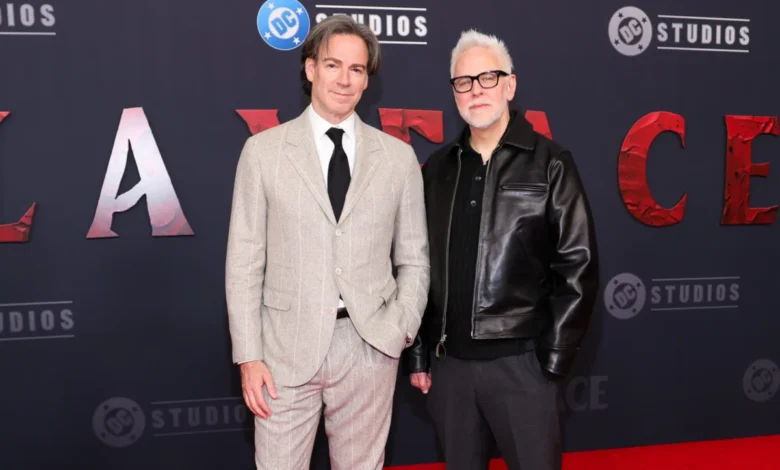
In a seismic shift for the entertainment landscape, Skydance—the newly formed corporate entity resulting from the merger of Paramount and Warner Bros. Discovery—has officially parted ways with James Gunn and Peter Safran. The duo, who had served as the architects of the revitalized DC Studios since 2022, were informed of their dismissal on November 6, just one month after Skydance finalized its acquisition of the studio assets. This decision marks the end of a high-stakes tenure and signals a profound change in direction for one of Hollywood’s most valuable intellectual property portfolios.
The management change was confirmed on November 9 by the Skydance Motion Picture Group, which announced that Jeremy Latcham, a foundational veteran of the Marvel Cinematic Universe (MCU), will assume the role of president and chief creative officer of DC Studios effective December 1. Latcham, whose career includes pivotal work on Iron Man and The Avengers, will report directly to Skydance Motion Picture Group co-chairs Dana Goldberg and Josh Greenstein.
A Chronology of Instability
The history of DC’s film strategy has been marked by persistent executive turnover, reflecting the difficulty of maintaining a cohesive creative vision in a rapidly evolving market. Since 2013, when Zack Snyder’s Man of Steel launched the DC Extended Universe (DCEU), the studio has undergone three distinct attempts to build a unified, interconnected franchise.
- 2013–2022: The era of the DCEU, characterized by a mix of tonal shifts, from the dark aesthetic of Snyder’s vision to the lighter, more fractured approach of later entries like Shazam! and Aquaman.
- November 2022: James Gunn and Peter Safran are hired to consolidate the disparate DC assets into a singular, interconnected DC Universe (DCU).
- July 2025: The release of Superman, a critical and commercial benchmark that grossed $618.7 million, briefly solidified the promise of the new leadership.
- October 2026: Paramount completes its acquisition of Warner Bros. Discovery, forming the new conglomerate, Skydance.
- November 2026: The formal removal of Gunn and Safran, signaling a rejection of the previous four-year strategy.
The Rise and Fall of the Gunn-Safran Vision
When James Gunn and Peter Safran were appointed to lead DC Studios in late 2022, the industry viewed the move as a calculated play for credibility. Gunn, fresh off his success with Marvel’s Guardians of the Galaxy trilogy, was tasked with applying the "Marvel playbook"—a disciplined, character-driven, and interconnected roadmap—to the sprawling DC roster.
Initial results were promising. The July 2025 release of Superman, starring David Corenswet, served as the formal "Chapter One" of the new era. With a global opening of $217 million, the film demonstrated that the DC brand still held significant sway with global audiences. However, the momentum proved difficult to sustain. The subsequent release, Supergirl, became a cautionary tale for the studio, failing to connect with critics or audiences, and ultimately settling into the history books as one of the most significant box-office disappointments in the studio’s recent memory, grossing only $126 million against a $170 million production budget.
Despite these struggles, the duo did achieve notable successes. The R-rated, low-budget horror film Clayface served as a testament to the creative freedom allowed under their leadership, yielding a strong return on investment. Furthermore, television ventures like Lanterns and Peacemaker found a dedicated audience, suggesting that Gunn and Safran were more effective at managing niche, character-focused storytelling than the "event" cinema required for a major summer tentpole.
Official Responses and the Transition
While the transition is abrupt, Skydance has emphasized a commitment to stability. In his inaugural statement following the appointment, Jeremy Latcham noted, "I’ve had the privilege to help bring some of the most celebrated superhero stories to life on the big screen, and I’m excited and honored for the opportunity to now lead DC Studios into its next era."
Despite their exit from the executive suite, Gunn and Safran are expected to fulfill their remaining production commitments. This includes completing post-production on Man of Tomorrow, the highly anticipated Superman sequel currently scheduled for a July 2027 release. Skydance’s decision to retain the pair as producers for their existing projects is a move designed to mitigate further disruption and ensure that current creative investments reach the screen.
The Challenge of the "Marvel Playbook"
Jeremy Latcham’s return to the superhero genre is viewed by many analysts as an attempt by Skydance to recapture the discipline of the early Marvel era. Latcham was an integral part of the team that helped Kevin Feige construct the MCU, and his deep familiarity with the structural requirements of a connected universe is likely the primary reason for his appointment.
However, the environment in which Latcham arrives is significantly different from the one he left in 2017. The market for superhero films has reached a state of oversaturation. Audiences are no longer automatically drawn to "connected" universes; they are increasingly prioritizing unique, auteur-driven visions. This is evidenced by the success of films like Joker and Matt Reeves’ The Batman, which exist outside of the core continuity and have thrived precisely because they are untethered from the burden of franchise-building.
Strategic Implications for Skydance
For Skydance, the priority is clear: maximize the value of the DC intellectual property while curbing the runaway production budgets that have plagued the industry in recent years. By hiring Latcham, the new management is signaling a pivot toward a more structured approach to development, though it remains to be seen if this will lead to a reboot of the existing universe or a continuation of the foundations laid by Gunn and Safran.
Industry experts point to the current state of The Batman: Part II as a case study for the uncertainty ahead. With Steven Soderbergh being brought in to finalize the production, it is clear that the studio is willing to lean on experienced, high-caliber filmmakers to rescue high-profile projects. Whether this "hired gun" strategy can be extended to the entire DC slate is the central question of the Latcham era.
Future Outlook: A Blank Slate
As of mid-November 2026, the long-term roadmap for DC remains opaque. Questions regarding the future of the characters, the viability of ongoing television series, and the ultimate fate of the "connected" universe model remain unanswered. Fans of the franchise are once again faced with a sense of "whiplash"—a feeling that has defined the DC experience for the better part of a decade.
For Latcham, the task is twofold: he must navigate the immediate demands of upcoming releases while simultaneously defining a creative identity for DC that distinguishes it from both its past failures and the established dominance of the MCU. As he begins his tenure on December 1, Latcham will be tasked with determining whether the superhero genre can still sustain the level of long-term planning that once defined its golden age, or if a new model is required for a generation of moviegoers that has grown weary of the traditional franchise framework.
The departure of Gunn and Safran serves as a poignant reminder that in the modern Hollywood economy, creative success is often secondary to the overarching goals of corporate restructuring. As Skydance continues to integrate its newly acquired assets, the fate of the DC Universe remains the most significant variable in the studio’s long-term financial health. Whether this latest change in leadership provides the stability the studio so desperately seeks, or merely adds another chapter to a long history of volatility, will be determined by the performance of the projects currently moving through the pipeline under Latcham’s new, yet-to-be-revealed, creative mandate.
Related posts: