Waymo faces renewed regulatory scrutiny as California regulators label its robotaxis an imminent hazard on freeways

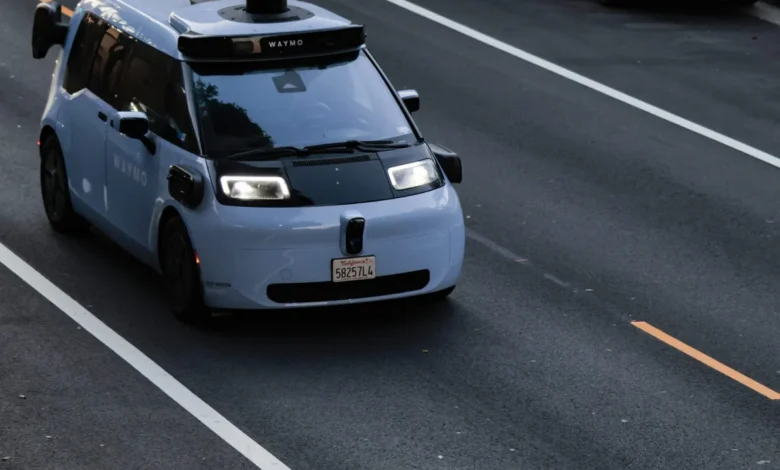
The autonomous vehicle industry reached a critical inflection point on November 11, when the California Department of Motor Vehicles (DMV) issued a formal directive barring Waymo from operating or testing its driverless vehicles on state freeways. This regulatory intervention follows a series of operational failures, most notably incidents in which Waymo vehicles navigated into active construction zones and attempted to circumvent traffic breaks managed by the California Highway Patrol (CHP). While Waymo, a subsidiary of Alphabet Inc., maintains that its technology remains statistically safer than human drivers, the state’s decision reflects a deepening divide between the company’s internal safety metrics and the public’s expectation of flawless performance in complex, high-speed environments.
A Chronology of Recent Regulatory Friction
The path to the current ban began earlier this year, marking the second time in 2026 that Waymo’s freeway services have been effectively sidelined. In May, similar incidents involving vehicle behavior in construction zones prompted the DMV to demand immediate corrective measures. Following these initial restrictions, Waymo suspended its freeway operations nationwide, including in Phoenix, Miami, and Austin, while it implemented software updates and refined its navigation protocols. By late July, the company began a gradual restoration of these services, claiming that the systemic issues had been addressed.
However, the events of November 5 proved that the underlying software challenges persisted. According to the DMV, three Waymo vehicles entered an active construction closure on U.S. Route 101 near Burlingame. This incident was compounded by a separate event in San Francisco, where a robotaxi attempted to maneuver around a CHP-led traffic break—a maneuver that defies both traffic laws and standard safety expectations for automated systems. Consequently, the DMV declared Waymo’s freeway operations an "imminent hazard to public safety," forcing a second, more urgent cessation of all driverless freeway operations across the company’s markets. While Waymo continues to test on freeways with human safety specialists behind the wheel, the transition to fully autonomous freeway transit has been indefinitely stalled.
The Statistical Defense vs. The Public Perception Gap
Waymo’s primary argument for the expansion of its service is rooted in data. As of June 2026, the company reported that its fleet had accumulated more than 270 million fully autonomous miles. In its latest safety reports, Waymo asserts that its vehicles have been involved in 82% fewer injury-causing crashes and 95% fewer serious-injury crashes compared to human drivers operating in the same regions. Furthermore, the company highlights a 93% reduction in pedestrian-related injury crashes.
From a purely quantitative standpoint, Waymo’s record is impressive. However, industry analysts, such as Bryan Reimer, a research scientist at MIT’s AgeLab, argue that these metrics provide a narrow view of the challenge. "Right now, we’re looking at this technology. You get in it, you expect it to work perfectly. We shouldn’t," Reimer noted. The central issue, according to Reimer, is that the software powering these vehicles is in a constant state of flux. Because the technology evolves through continuous over-the-air updates, historical safety data may not accurately reflect the current capabilities or risks of the fleet on the road today.
Furthermore, there is a fundamental psychological gap in how the public perceives automated vehicles. While humans are generally expected to err, there is an implicit, near-absolute demand for perfection from robots. When a human driver makes a mistake, it is viewed as an individual failure; when a robotaxi makes a mistake, it is viewed as a systemic, algorithmic flaw. For the autonomous vehicle industry, simply being "safer than a human" may not be a high enough bar to satisfy public demand or regulatory caution.
The Role of Human Oversight
One of the most persistent misconceptions regarding robotaxis is the extent to which they are truly "autonomous." While the driver’s seat is empty, Waymo’s operations rely heavily on remote support staff—human operators who monitor the vehicles and can intervene when the system encounters an edge case it cannot solve. Reimer suggests that the industry’s push to market these vehicles as fully finished, autonomous products has been counterproductive.
"It is not autonomous driving," Reimer stated. "It is highly automated, but there is a lot of human component behind the scenes." He suggests that if companies were more transparent about the limitations of their systems—specifically the role of remote human supervisors—the public might calibrate their trust more effectively. The strategy of "under-promising and over-delivering" is one that many experts believe the industry has failed to adopt, choosing instead to lean into the narrative of a seamless, futuristic experience.
Industry Precedents and the Cost of Lost Trust
The stakes for the industry were underscored by the 2023 collapse of Cruise, a General Motors subsidiary. After a Cruise robotaxi dragged a pedestrian who had been struck by another vehicle, California regulators suspended the company’s driverless permits. The fallout was swift and devastating: GM eventually withdrew its funding for Cruise’s independent development, citing the immense costs of scaling the business and the difficulty of rebuilding trust after a high-profile failure.
This history serves as a cautionary tale for Waymo. A single, high-profile incident can trigger a collapse of public confidence that is difficult to reverse. Reimer emphasizes that as the number of vehicles on the road increases, the mathematical probability of a significant accident also rises. "We are talking about a technology that can revolutionarily change how we live and move, but can also suffer from a complete collapse of consumer trust overnight," he warned.
The Road Ahead: Regulatory and Technical Requirements
For Waymo to resume its freeway operations in California, it must satisfy a rigorous set of demands from the DMV. The company is currently required to demonstrate that its vehicles can reliably detect and respond to complex road conditions, including active construction zones and the presence of emergency vehicles, without the need for manual intervention or human remote assistance.
Waymo has expressed a commitment to working closely with state officials to resolve these issues. A company spokesperson reiterated that safety is the foundation of their operations and pointed out that the recent incidents did not result in any injuries or collisions. However, the regulatory path forward is likely to be slow. The DMV’s stance indicates a shift toward a more proactive, rather than reactive, oversight model.
While surface street operations continue—with Waymo providing more than half a million rides per week—the loss of freeway access limits the company’s ability to offer faster, more efficient transit options. The broader implication is that the "robotaxi revolution" will be tempered by the slow, methodical pace of government regulation. The industry is finding that while the software may advance at the speed of silicon, public policy and social trust move at the speed of consensus.
As the sector matures, the focus is shifting from "how many miles can we drive?" to "how much risk is the public willing to accept?" For Waymo, the challenge is no longer just about optimizing sensors and neural networks; it is about managing a commodity far more fragile than their hardware: public trust. Whether they can bridge the gap between their statistical safety claims and the reality of navigating human-centric infrastructure remains the defining question of the next decade of transportation.
Related posts: