The biggest guessing game in business has begun: Who can fill Jensen Huang’s shoes?

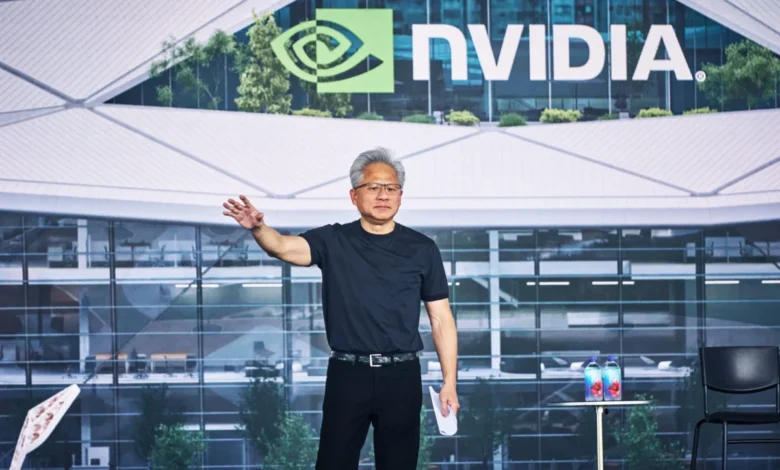
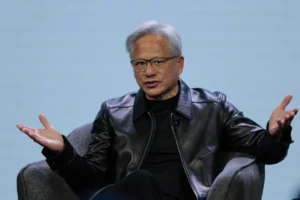
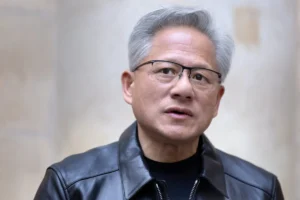
The resignation of Jensen Huang, the visionary architect behind Nvidia’s meteoric rise to the center of the artificial intelligence revolution, has triggered one of the most high-stakes leadership transitions in the history of the technology industry. For over three decades, Huang has been the face, voice, and strategic engine of Nvidia, transforming the company from a niche graphics card manufacturer into a trillion-dollar juggernaut that currently serves as the backbone of the global AI infrastructure. With his departure, the company now faces the Herculean task of identifying a successor capable of maintaining the momentum of a firm that has become synonymous with the modern digital age.
A Period of Transition: The Interim Appointment
On Thursday, Nvidia’s board of directors announced that Colette Kress, who has served as the company’s chief financial officer since 2013, will assume the role of interim CEO. Kress is widely credited with helping steer Nvidia through its most transformative decade, managing the financial complexities of the company’s expansion into data centers, autonomous vehicles, and the explosive AI chip market.
While Kress remains in her CFO role, the board has initiated a comprehensive search for a permanent successor. Industry analysts suggest that the board’s choice of Kress as an interim leader provides a bridge of stability. Scott W. Simmons, co-managing partner of the executive search firm Crist Kolder Associates, noted that Kress is the "right" choice for the immediate term. However, he emphasized that the search for a permanent successor will likely pivot toward a technologist—potentially an outsider—who can navigate the rapidly shifting landscape of semiconductor manufacturing and AI deployment.
The Search for a Visionary Successor
The criteria for the next CEO are daunting. Whoever inherits the role must command deep respect within the engineering community, maintain the loyalty of a workforce deeply ingrained in "Jensen’s culture," and navigate the geopolitical minefield of international chip manufacturing and export controls.
The Internal-External Hybrid: Rene Haas
Among the most frequently mentioned external candidates is Rene Haas, the current CEO of Arm. Haas offers a compelling narrative: he is a former Nvidia veteran who spent seven years at the company before departing in 2013. His supporters, including Shay Boloor of The Futurum Group, argue that Haas possesses a rare understanding of both the legacy culture at Nvidia and the critical architecture that underpins its current products. Because Nvidia’s Grace and Vera CPUs are built on Arm architecture, Haas brings a technical fluency that is difficult to replicate in other candidates.
The Industry Rival: Lisa Su
The prospect of poaching AMD CEO Lisa Su has also entered the conversation. Su, who shares a familial connection with Huang, is a titan of the semiconductor industry. Her tenure at AMD, which began in 2014, is marked by a legendary turnaround that saw the company rise from the brink of obsolescence to becoming a primary competitor to Intel and Nvidia. While her engineering credentials and executive track record are unimpeachable, the logistical and strategic challenge of persuading a sitting, successful CEO to leave her own company remains a significant hurdle for the Nvidia board.
The "Big Tech" Heavyweights
Analysts have also pointed toward leaders who have managed large-scale operations outside of pure-play chip manufacturing. Dan Ives of Yorkville Ives & Co. has highlighted Tim Cook, the former CEO of Apple, as a top-tier candidate. Cook’s experience in succeeding a "founding visionary" (Steve Jobs) is an asset that few other executives can claim. Furthermore, his expertise in supply chain management—the lifeblood of the semiconductor industry—makes him a uniquely qualified candidate. The public endorsement from President Trump on social media has only intensified the speculative focus on Cook, though his ongoing responsibilities as Apple’s chairman present a significant hurdle.
Other names in the conversation include Tom Kurian, CEO of Google Cloud, who brings deep experience in the software and infrastructure side of the AI ecosystem, and Nikesh Arora, the CEO of Palo Alto Networks. Arora’s extensive background at SoftBank and Google provides him with a global perspective on enterprise technology that could prove vital as Nvidia looks to integrate its hardware more deeply into global software networks.
Data and Context: The Scale of the Challenge
To understand the gravity of this transition, one must look at the trajectory of the company under Huang’s leadership. In 2013, when Kress joined, Nvidia was a company primarily focused on gaming and professional visualization. By 2026, the company had become the world’s most valuable firm by market capitalization, largely due to the success of its CUDA platform and its dominance in the data center GPU market.
The following timeline highlights the critical shifts in Nvidia’s executive and operational evolution:
- 1993: Nvidia is founded by Jensen Huang, Chris Malachowsky, and Curtis Priem.
- 2013: Colette Kress joins as CFO, marking the beginning of a decade of aggressive financial restructuring and expansion.
- 2017: The introduction of the Volta architecture signals the company’s full pivot toward AI acceleration.
- 2023: Nvidia reaches a trillion-dollar valuation, driven by the demand for H100 and subsequent AI chips.
- November 2026: Jensen Huang steps down; Colette Kress is named interim CEO.
The Implications for the Semiconductor Industry
The search for a new CEO is occurring at a time of unprecedented complexity for the global semiconductor market. The "small pool" of qualified candidates, as identified by Scott Simmons, reflects the specialized nature of the role. The next leader of Nvidia will not just be managing a company; they will be the steward of the primary technological resource powering the global AI economy.
The choice of successor will signal to shareholders and competitors alike where Nvidia intends to focus its efforts over the next decade. If the board selects a candidate with a strong background in software and cloud integration, it may suggest an intent to move further up the value chain, away from pure hardware. Conversely, selecting a pure semiconductor veteran would imply a defensive posture aimed at maintaining dominance against emerging competitors in the specialized AI chip market.
Conclusion: A Defining Moment
The board of directors, likely led by new board chair Harvey Jones, faces a decision that will shape the trajectory of the tech sector for years to come. The process of finding a replacement for a figure as singular as Jensen Huang is inherently disruptive, yet the company’s internal structure—bolstered by the stability provided by Kress—appears designed to weather the storm.
As the search progresses, the market will remain hyper-sensitive to every signal from the board. For now, the "guessing game" serves as a reminder of just how critical Nvidia has become to the global infrastructure. Whether the successor is a familiar face returning to the fold or a titan from the broader tech landscape, the incoming CEO will inherit a company that is no longer just a chipmaker, but the bedrock of the next industrial revolution. The transition will be judged not by how closely the new leader mimics Huang, but by how effectively they can secure Nvidia’s place at the center of a rapidly evolving digital future.