Digital Vulnerability in the Age of AI: Why Everyday Consumers Are Turning to Offline Survival Tech

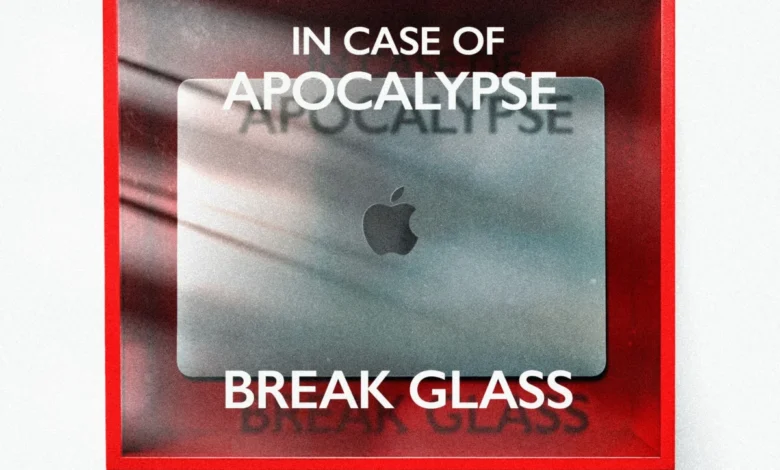
The modern world operates on an invisible, highly interconnected web of cloud-based services, data centers, and telecommunications networks that most people take for granted until they suddenly vanish. In mid-November 2026, a cascading series of high-profile technological disruptions—beginning with a massive system failure at Microsoft affecting core platforms like Outlook, Teams, Word, and Excel, swiftly followed by a rare national ground stop issued by the Federal Aviation Administration (FAA), and compounding with service degradations at financial institutions such as Charles Schwab and consumer tech giants like Apple iCloud—sent shockwaves through global markets and daily routines. These simultaneous outages served as a glaring, real-time stress test of modern digital infrastructure, exposing systemic vulnerabilities just as society accelerates its reliance on artificial intelligence and cloud automation.
For the average citizen, the immediate consequence was a visceral reminder of absolute digital dependency. When connectivity fails, individuals can find themselves abruptly cut off from navigation, banking, communication, emergency alerts, and basic entertainment. While panic manifested temporarily in standard urban inconveniences, it sparked a deeper, more strategic reaction within niche digital communities. Online survivalist forums, most notably the "Preppers" community on Reddit—traditionally preoccupied with physical stockpiles, diesel generators, and off-grid homesteading—pivoted sharply toward a new frontier: safeguarding their digital lives against cyber attacks, power grid failures, and the looming threat of an "AI apocalypse."
The Rise of the Pocket-Sized Offline Server
Out of this surging anxiety, an unexpected wave of offline-first technology has captured the public imagination. Among the primary beneficiaries of this trend is Nomad, a pocket-sized, self-contained server engineered to operate entirely independently of the internet. The project was originally conceived not by a corporate cybersecurity firm or a defense contractor, but by Jackson Studner, a student at Millersville University of Pennsylvania.
Working alongside faculty members, Studner initially developed Nomad as a practical utility for personal leisure—specifically to provide offline entertainment, movie streaming, and video game software during camping excursions and cross-country road trips with friends where cellular service and Wi-Fi dead zones rendered modern smartphones useless. However, in the wake of November’s systemic tech failures, Studner’s personal project transformed into a viral sensation.
"I had huge, huge spikes in traffic," Studner noted, detailing the sudden influx of curious users navigating to his website.
Nomad functions as a miniature digital ecosystem. Despite its diminutive physical footprint, the device stores a comprehensive repository of human knowledge and media, including the entire English-language Wikipedia library, offline geographic maps, films, television programming, and localized Wi-Fi broadcasting capabilities. Recognizing the shift in his user base, Studner has since updated the software to include advanced offline navigation features. Unlike standard cloud-dependent GPS applications that fail without a data connection, Nomad calculates walking routes, roadway directions, and travel times locally, providing critical operational utility for users preparing for localized infrastructure breakdowns or prolonged power grid failures.
"I really like the reliability aspect," Studner explained, summarizing the ethos driving his project. "I like to own my stuff. It’s kind of that simple."
Emergency LLMs and the Open-Source Digital Survival Movement
Beyond physical hardware like Studner’s Nomad, the movement to insulate daily life from cloud outages has heavily influenced software development. Tech-savvy consumers and developers are increasingly downloading emergency digital libraries and offline artificial intelligence models directly onto their personal computers. These resources are designed to bridge the gap between low-tech survivalism and high-tech information retrieval.
Notable tools leading this charge include lastbook.org, a repository providing downloadable emergency literature and instructional video content on essential survival skills such as water purification and fire generation. Similarly, platforms like Survival LLM offer structured, highly reliable data compiled from authoritative public health and safety organizations, including the Centers for Disease Control and Prevention (CDC) and the Federal Emergency Management Agency (FEMA), allowing users to query artificial intelligence models without an active internet connection.
Another major open-source project commanding widespread attention is "Project Nomad"—unrelated to Studner’s hardware—created by Chris Sherwood, a prominent technology educator and host of the popular YouTube channel Crosstalk Solutions, known for guiding viewers through the construction of personal home computing laboratories ("homelabs").
The public response to Sherwood’s open-source survival guide has broken previous community benchmarks. According to development metrics, Project Nomad has garnered more than 40,000 "stars" on GitHub—a key indicator reflecting active user engagement, bookmarking, and developer endorsement—while driving upwards of 200,000 unique monthly visitors to its hosting platform.
Chronology of the November 2026 Outages
The acute public interest in decentralized, offline technology did not emerge in a vacuum; it was catalyzed by a rapid-fire sequence of critical infrastructure failures that disrupted commerce, travel, and communication across the United States and international markets:
- November 13, 2026 (Morning): Microsoft experiences a severe global system outage impacting mission-critical productivity suites, including Outlook, Teams, Word, and Excel, halting operations for numerous enterprise clients, educational institutions, and government agencies.
- November 13, 2026 (Midday): Amid compounding software anomalies and telecommunications glitches, the Federal Aviation Administration (FAA) issues an unprecedented national ground stop for commercial aviation, citing extraordinary circumstances and safety considerations, leaving thousands of passengers stranded in terminals nationwide.
- November 13–14, 2026: Secondary digital failures ripple through the consumer and financial sectors. Major brokerage firm Charles Schwab reports client access issues, while Apple iCloud services experience intermittent global connectivity drops.
- Mid-November 2026: Online communities, security analysts, and independent software developers observe a massive surge in inquiries regarding localized data storage, off-grid power generation, and offline-capable artificial intelligence.
Humanitarian Roots and the Shift in Public Perception
Despite becoming an icon within digital survivalist circles, Chris Sherwood maintains that he is not a traditional prepper. His design philosophy for Project Nomad was forged through firsthand humanitarian experience rather than apocalyptic forecasting. Sherwood drew his inspiration from the Information Technology Disaster Resource Center (ITDRC), a specialized non-profit organization that deploys technical infrastructure into disaster zones to restore communications when commercial networks are completely destroyed.
Sherwood’s perspective fundamentally shifted after he joined an ITDRC deployment following the devastation of Hurricane Ian. Witnessing communities plunged into total digital darkness revealed a critical humanitarian reality: restoring connectivity is frequently just as urgent to recovery operations as delivering potable water and food supplies.
"I had the opportunity to go on deployment with [ITDRC] when Hurricane Ian came through, and I saw firsthand all these people that were offline. It was a disaster," Sherwood recalled. "Getting people back online was almost as important as the food and water supplies that were getting set up to help with the recovery."
A similar psychological evolution has occurred with Jackson Studner. Initially driven purely by collegiate curiosity and recreational utility, Studner’s immersion into the prepper community has subtly altered his personal outlook on risk management and technological dependency.
"It’s for peace of mind," Studner admitted. "I have my little go bag. I’m not too, too worried about it, but I like to know that if there ever was a real problem, I’d be okay in that situation."
Implications for the Future of Digital Infrastructure
The viral adoption of offline servers, open-source survival LLMs, and decentralized homelabs highlights a growing cognitive dissonance in modern society. As corporations and governments aggressively transition critical infrastructure, commerce, and civic services into centralized cloud environments powered by artificial intelligence, the potential blast radius of a single technological failure expands exponentially.
Security analysts point out that while cloud computing offers unprecedented efficiency, scalability, and computational power, it creates a fragile "single point of failure" paradigm. When vast segments of society rely entirely on remote servers for navigation, communication, and basic professional tasks, ordinary citizens are left exceptionally vulnerable to cyber attacks, software corruption, geopolitical conflicts, and hardware anomalies.
The sudden popularity of projects like Nomad and Survival LLM suggests that a growing segment of the population is no longer willing to accept absolute digital vulnerability. By reclaiming local data ownership—storing encyclopedias, maps, artificial intelligence models, and communication tools on physical hardware inside their own homes—these tech-savvy consumers are quietly constructing a digital safety net. Whether driven by fear of a systemic grid collapse or a simple desire for self-reliance, the trend signals a cultural pivot: in an increasingly automated and interconnected world, the ultimate luxury is the ability to unplug and still survive.