Serve Robotics Pivots Beyond Sidewalks to Launch Physical AI Services for the Autonomous Industry

Serve Robotics, widely recognized as a pioneer in self-driving sidewalk delivery technology, is executing a strategic evolution that will take the company far beyond its traditional delivery routes. Announced alongside its third-quarter earnings report, the company is introducing a brand-new business division titled Physical AI Services. This move marks a definitive shift in Serve’s corporate trajectory, transforming it from a pure-play autonomous delivery provider into a foundational technology supplier for a diverse array of robotics companies operating across multiple industries.
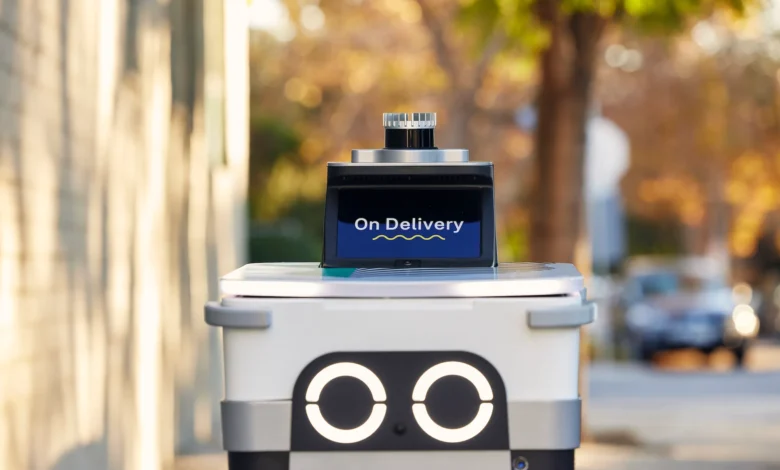
While the company will continue to deploy and operate its signature googly-eyed sidewalk delivery bots—alongside hospital assistant robots acquired through its recent purchase of Diligent Robotics—management believes the time is right to monetize the underlying infrastructure it has spent years perfecting. By packaging its proprietary connectivity, data curation tools, and real-world datasets, Serve Robotics is aiming to capture a broader share of the burgeoning autonomous systems market.
From Postmates Spinout to Public Markets: A Chronological Overview
To understand the weight of Serve Robotics’ current expansion, it is essential to trace the company’s corporate lineage and rapid growth. The enterprise was originally incubated within Postmates, functioning as an internal robotics research and development project. In December 2020, ride-hailing giant Uber acquired Postmates. Following the acquisition, Uber elected to spin off the delivery robot division, officially establishing Serve Robotics as an independent startup in March 2021.
Operating independently allowed the company to scale its sidewalk delivery footprint rapidly, securing commercial partnerships with major delivery networks. As the fleet expanded and navigation algorithms matured, Serve reached a major financial milestone in April 2024 by going public on the stock market via a $40 million public offering, backed by high-profile corporate heavyweights including Uber and Nvidia.
Throughout this period, the company’s core focus remained firmly planted on urban last-mile delivery. However, as the technological challenges of autonomous navigation in chaotic human environments were systematically addressed by Serve’s engineering teams, leadership identified a lucrative parallel opportunity: selling those same foundational solutions to developers of agricultural robots, warehouse automation systems, and construction machinery.
Deconstructing the Physical AI Services Lineup
Serve Robotics’ new business division is launching with three core product offerings designed to solve critical bottlenecks for robotics developers. These tools address the heavy computational loads, complex data management requirements, and real-world testing constraints that routinely challenge autonomous vehicle and robot engineering teams.
The first product, Serve Link, focuses on telecommunications and connectivity. Autonomous machines deployed in the field require constant communication with data centers to handle exception processing, software updates, and advanced AI computations. However, cellular and wireless networks in urban and industrial environments are notoriously unreliable. Serve Link is engineered to maintain high-performance, resilient connectivity even when operating across patchy network infrastructures.
Complementing Serve Link is a specialized data curator tool. As robots navigate sidewalks, warehouses, and farms, their onboard sensors collect staggering amounts of real-world video and telemetry data. Sifting through petabytes of routine footage to find critical "edge cases"—rare, unexpected scenarios that cause autonomous systems to fail—is a notoriously time-consuming process for developers. Serve’s data curator automates the identification of these critical training moments, allowing companies to refine their AI models significantly faster.
The third pillar of the new division is a real-world foundation-model data catalog. Built directly from the vast operational history of Serve’s sidewalk delivery fleet, this catalog provides a comprehensive training dataset that teaches AI systems how to interpret, navigate, and react to complex, unpredictable human environments.
Strategic Partnerships and Early Adopters
Even prior to the formal unveiling of Physical AI Services, Serve Robotics had already begun validating its technology stack with external clients. Among the early customers is Bedrock Robotics, an innovative startup currently developing self-driving autonomous systems specifically tailored for heavy construction equipment.
Furthermore, Serve announced a strategic collaboration with telecommunications giant T-Mobile. This partnership is designed to bring edge-computing power physically closer to robots in the field. By decreasing latency and optimizing data transfer speeds between mobile robots and cloud-based AI systems, the collaboration aims to enhance the real-time decision-making capabilities of autonomous machines operating in dense urban zones.
This commercial expansion coincides with a strategic evolution in Serve’s delivery operations. While the company initially relied heavily on its ties to Uber, its delivery ecosystem has increasingly diversified to encompass alternative partners such as DoorDash and Wonder, demonstrating the company’s growing independence and multi-platform adaptability.
Drawing Parallels to the Cloud Computing Revolution
In discussing the strategic rationale behind the launch of Physical AI Services, CEO and co-founder Ali Kashani drew a direct conceptual parallel to Amazon Web Services (AWS). In the early days of cloud computing, Amazon built massive internal infrastructure to support its massive e-commerce operations. Recognizing the broader utility of that underlying infrastructure, the company eventually opened it up to the public, permanently altering the enterprise software landscape.
Kashani argues that the robotics sector is currently experiencing a comparable inflection point. According to the CEO, early-stage technological maturity dictates that a company must build end-to-end applications because it is the only way to genuinely understand the engineering requirements. However, as the foundational technology matures across the industry, an increasing number of enterprises require similar underlying building blocks without necessarily wanting to reinvent the wheel.
"When the technology is so nascent, you have got to build the end-to-end application because that’s the only way you know what to build, but then over time, as the technology gets more advanced, a lot more people are going to be wanting to build similar things," Kashani noted. "And what you want to do is to open your technology so others build with you and on your platform."
Broader Market Implications and Industry Outlook
The pivot by Serve Robotics reflects a wider maturation trend within the broader autonomous systems and artificial intelligence sectors. For years, robotics companies operated largely as closed ecosystems, guarding their proprietary hardware designs and navigation software as closely held trade secrets. However, the immense capital expenditures required to train foundation models and maintain robust fleet-management software have made pure vertical integration increasingly difficult to sustain for smaller players.
By positioning itself as a technology supplier, Serve Robotics is effectively insulating its business model against the localized fluctuations of the last-mile delivery market. Should economic pressures, regulatory hurdles, or labor shifts impact food and retail delivery margins, the company will have diversified revenue streams derived from enterprise software, telecommunications integrations, and data licensing.
At the same time, the broader robotics industry stands to benefit significantly from accessible infrastructure. Startups building autonomous tractors for agriculture, inventory drones for warehouses, or specialized medical transporters can bypass years of expensive trial-and-error by plugging into proven connectivity frameworks and pre-vetted training datasets.
As Serve Robotics rolls out Physical AI Services in the quarters ahead, the industry will be watching closely to see whether the company can successfully execute its platform strategy. If validated by widespread adoption among external developers, this move could establish a new commercial playbook for autonomous robotics enterprises seeking to scale beyond their original product boundaries.