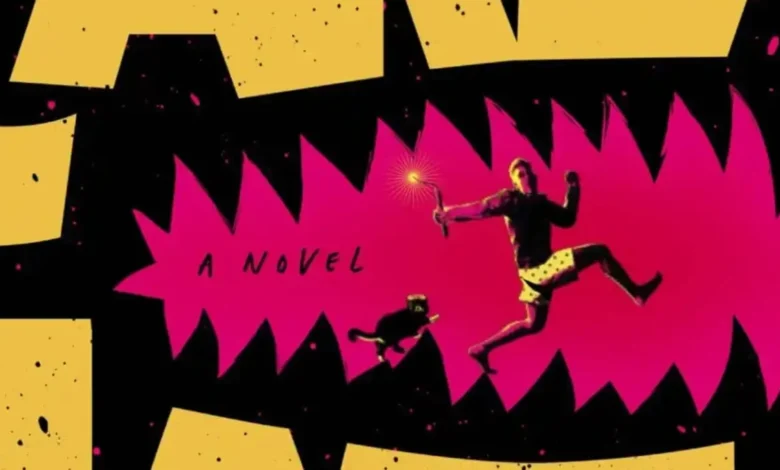
The meteoric rise of the LitRPG genre—a literary subcategory that fuses the narrative structure of traditional fiction with the rules, leveling systems, and mechanics of tabletop and video games—has been anchored by the massive success of Matt Dinniman’s Dungeon Crawler Carl series. As of late 2026, the series has cemented its status as a cultural phenomenon, characterized by its high-stakes, dystopian premise: a man and his sentient, talking cat are forced to navigate a brutal, livestreamed alien game show played within the ruins of Earth. The series is lauded for its unique blend of dark, absurdist humor, intense character development, and complex game-world logic. For readers who have exhausted the existing eight volumes and are seeking similar thematic experiences, the literary landscape offers several sophisticated alternatives that mirror Dinniman’s signature style of progression fantasy and meta-commentary.
The Rise of the LitRPG Phenomenon
LitRPG, which traces its origins to early Russian and South Korean web-novel communities before achieving mainstream success in the West, has grown into a multi-million-dollar industry. Market data suggests that the genre’s growth is largely driven by its interactive nature; readers often engage with these stories as they would a video game, tracking the protagonist’s "stats," "inventory," and "skill trees." Dungeon Crawler Carl, in particular, has become a benchmark for the genre, frequently appearing on bestseller lists and drawing significant attention on platforms like Audible, where its production quality has set a new standard for serialized audiobooks. The appeal lies in the "progression fantasy" element—the satisfying, granular documentation of a character moving from weakness to power through ingenuity and struggle.
Chronology and Evolution of the Genre
The evolution of these narratives has moved from simple, "power-fantasy" escapism toward more nuanced, character-driven storytelling. While early entries in the genre were criticized for repetitive mechanics and thin characterization, contemporary authors have begun to use the game-like framework as a vehicle for examining existential themes. The following selection of titles represents a cross-section of the best writing within this space, ranging from works published in 2016 to the most recent releases of 2025 and 2026.
Recommended Reading: Foundational and Emerging Works
For readers drawn to the specific mechanics of dungeon crawling and "system-based" survival, several titles provide a similar structural satisfaction to the Carl series:
He Who Fights with Monsters (2021) by Travis "Shirtaloon" Deverell
This series occupies the "isekai" (transported to another world) sub-genre. It mirrors Dinniman’s tone by pairing a protagonist who is deeply skeptical of his environment with a world that operates on rigid, often cruel gaming rules. The narrative follows Jason, a middle manager who loses everything—including his clothing—upon arrival in a hostile new realm. The series is widely cited by critics for its balance of high-octane action and existential dread.

The Perfect Run (2021) by Maxime J. Durand
Durand’s work introduces a time-loop mechanic that echoes the "respawn" functionality of video games. The protagonist, Ryan "Quicksave" Romano, possesses the ability to set temporal save points. The narrative exploration of how constant death and reset cycles impact a human psyche offers a compelling parallel to the psychological toll endured by characters in the Dungeon Crawler Carl universe.
Unsouled (2016) by Will Wight
While not a traditional LitRPG, the Cradle series is a foundational text in the "progression fantasy" sub-genre. It focuses on Lindon, an underdog who must overcome his lack of inherent magical ability through sheer grit and strategic exploitation of the world’s power systems. It provides the same addictive, forward-momentum feel that defines Dinniman’s work.
Threadbare (2018) by Andrew Seiple
This series is essential for readers who prioritize the "companion" dynamic seen in the relationship between Carl and his cat, Princess Donut. The story follows a sentient, magical stuffed bear. Its ability to pivot from whimsical, lighthearted humor to deep, poignant emotional stakes makes it a tonal sibling to the Dungeon Crawler Carl series.
Meta-Narratives and Industry Critique
Recent entries in the genre have begun to turn the lens inward, critiquing the conventions of LitRPG itself.
Scathing Reviewer (2025) by BananaDragon
This novel explores the meta-concept of an author whose fictional world becomes a reality. The protagonist, Liu Peijin, finds herself trapped within her own creation, forced to contend with both the dangers she invented and the vitriolic criticism of the "readers" who are now observing her life. It is widely considered a sophisticated commentary on the parasocial relationships between authors and their audiences.
How to Become the Dark Lord and Die Trying (2024) by Django Wexler
Wexler uses the trope of the "hero’s journey" and flips it on its head. The protagonist, having failed to save the world repeatedly, decides to defect and become the villain. The use of "endless replays" as a plot device provides a unique structural twist that appeals to fans of game-logic narratives.

Broader Implications for the Genre
The proliferation of these titles indicates a maturation of the LitRPG market. Publishers have noted that fans of this genre are increasingly seeking stories that incorporate "hard" magic systems—sets of rules that are clearly defined and consistently applied—rather than "soft" systems that rely on deus ex machina.
Industry analysts suggest that the future of this genre lies in the intersection of traditional literary tropes and interactive media. As platforms like Kindle Unlimited and Royal Road continue to facilitate the rapid release of serialized chapters, the dialogue between authors and readers has become more instantaneous. This feedback loop allows for a "living" narrative experience where authors can adjust the trajectory of a story based on reader engagement, much like a developer patching a game post-launch.
Official Responses and Academic Interest
While LitRPG has historically been relegated to the fringes of the publishing industry, academic interest is beginning to shift. Literature departments have started to categorize these works as a form of "gamified narrative," exploring how the constraints of gaming systems (such as health bars, levels, and skill caps) influence the way readers perceive personal development and agency.
Authors like Will Wight and Andrew Rowe, whose Arcane Ascension series is also highly recommended for its dungeon-crawling focus, have been invited to speak at fantasy conventions about the viability of "game-lit" as a permanent fixture in the literary landscape. The consensus among publishers is that the success of the Dungeon Crawler Carl series has opened a door for a new generation of writers to experiment with the fusion of high-stakes fiction and mechanical game systems, ensuring the genre’s longevity for the foreseeable future.
For the reader, these ten titles represent the most successful experiments in this field, offering not just a distraction, but a deep, rule-based immersion into worlds that reward the reader’s attention to detail, logic, and character growth. Whether one is looking for the absurdist wit of Mayor of Noobtown or the cosmic scale of the Bobiverse series, the current literary market is well-positioned to satisfy the specific appetites cultivated by the Dungeon Crawler Carl phenomenon.
Related posts: