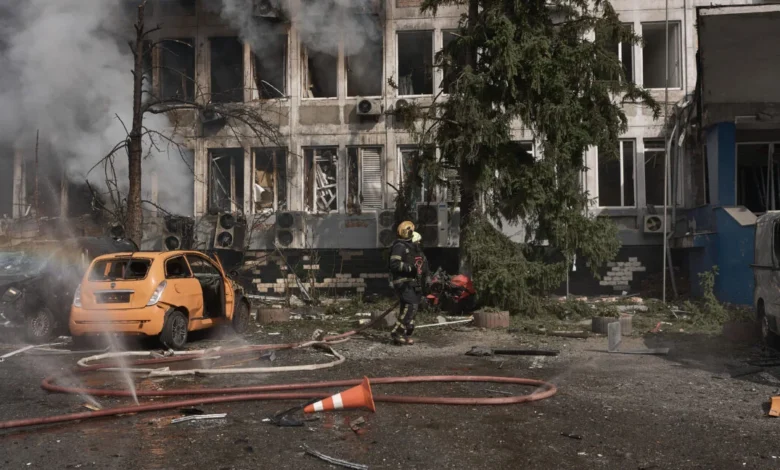
The landscape of modern warfare has undergone a paradigm shift, moving beyond traditional battlefield kinetics to strike at the foundational architecture of the digital age: the data center. Throughout this year, a series of targeted drone and missile strikes against critical cloud infrastructure in Eastern Europe and the Middle East has moved from the realm of theoretical risk to tangible reality. These attacks have caused unprecedented damage, resulting in widespread service disruptions for millions of users and, in specific instances involving Amazon Web Services (AWS), the permanent loss of customer data. This emerging threat vector signals a new era of geopolitical tension where the cloud is no longer a neutral utility, but a strategic target.
The Evolution of Kinetic Cyber Warfare
Historically, the vulnerability of cloud services was discussed primarily in the context of cyber espionage, ransomware, or distributed denial-of-service (DDoS) attacks. However, the events of the past twelve months have introduced a physical dimension to digital instability. When a missile impacts a facility housing thousands of servers, the redundancy protocols that typically protect against hardware failure or software bugs are often rendered insufficient.
In Eastern Europe, the ongoing conflict has seen data centers become focal points for both sides. The physical destruction of hardware in regions heavily reliant on centralized cloud storage has forced governments and corporations to reconsider the geographical distribution of their digital assets. Meanwhile, in the Middle East, the escalation of regional hostilities has led to direct strikes on facilities operated by major cloud service providers (CSPs). These incidents have highlighted a sobering vulnerability: the concentration of global data within a limited number of high-capacity facilities creates a single point of failure that can be exploited by state actors with precision-guided munitions.
Chronology of Escalating Threats
The current crisis did not emerge overnight. It is the culmination of years of increasing reliance on cloud-based systems for national infrastructure.
- Early 2024: Intelligence reports indicate an uptick in reconnaissance activities targeting high-value infrastructure sites in border regions, specifically identifying data centers as primary targets for tactical strikes.
- Spring 2024: Initial kinetic strikes in Eastern Europe demonstrate the efficacy of drone technology in neutralizing peripheral server clusters, leading to localized outages that lasted for several days.
- Mid-2024: Tensions in the Middle East reach a boiling point, culminating in the first recorded missile strike that resulted in the complete destruction of a data center wing. This incident led to the first verified reports of "permanent data loss" for enterprise clients, marking a significant escalation in the scope of digital warfare.
- Late 2024: Increased frequency of strikes prompts a global audit by major CSPs, with significant capital expenditure being diverted toward physical hardening, air-gapped backups, and distributed server architecture.
Supporting Data and Technical Vulnerabilities
The architectural design of modern cloud infrastructure is predicated on the assumption of physical security and high-speed connectivity. However, the physical reality of a data center—massive buildings with identifiable power grids and cooling systems—makes them susceptible to sophisticated targeting.
Data from industry analysts suggest that while CSPs maintain "high availability" (HA) zones, these are often geographically proximal to minimize latency. If a kinetic attack impacts a regional zone, the failover mechanisms are sometimes compromised if the redundant site is also within the same blast radius or on the same power grid. In the case of the Middle Eastern strikes, the reliance on satellite and fiber-optic backhauls meant that the destruction of the primary physical site cascaded into broader connectivity issues across the region, impacting banking, healthcare, and governmental communications.
Expert Analysis: The RUSI Perspective
To unpack the strategic implications of these developments, Joseph Jarnecki, a senior research fellow at the Royal United Services Institute (RUSI), has been at the forefront of analyzing the intersection of cloud services and national security. Jarnecki’s work, particularly his research on Ukraine’s cloud resilience, serves as a blueprint for how modern states must adapt to this threat.
Ukraine’s ability to maintain digital continuity during the full-scale Russian invasion was not accidental; it was the result of a deliberate, pre-emptive migration to distributed, Western-backed cloud infrastructure. By decentralizing their data and utilizing hybrid cloud models, Ukrainian agencies were able to absorb kinetic strikes without suffering a complete collapse of administrative or military digital systems. This model of "Cloud Sovereignty" is now being studied by NATO and other European security bodies as a necessary safeguard against the weaponization of infrastructure.
Official Responses and Corporate Strategy
Major cloud providers have largely remained tight-lipped regarding the specific details of their losses, citing security and non-disclosure agreements with enterprise clients. However, the industry-wide shift in strategy is palpable. Companies are now lobbying for data centers to be classified as "Critical National Infrastructure" (CNI), which would grant them protections similar to power plants, water treatment facilities, and communication hubs.
The classification of these sites as CNI would fundamentally alter the rules of engagement. Under international law, attacking CNI constitutes a war crime, theoretically providing a deterrent that current commercial status does not. However, the difficulty in attribution—often obscured by the use of long-range drones or covert tactical units—remains a significant hurdle for enforcement.
Broader Implications for Global Society
The implications of this trend extend far beyond the balance sheets of Big Tech. Modern life is inextricably linked to the cloud. From the banking apps that facilitate daily commerce to the patient records used in hospitals, the cloud is the silent engine of the 21st century.
Economic Consequences
The permanent deletion of data represents a massive liability for businesses that lack secondary, off-site, immutable backups. The financial fallout from service interruptions is compounding, as insurance companies struggle to quantify "digital kinetic damage," a risk category that was largely excluded from most policies prior to this year.
Geopolitical Stability
The ability to strike an adversary’s digital infrastructure without launching a full-scale conventional invasion offers a tempting "gray zone" option for state actors. This lowers the threshold for conflict, as nations can disrupt an enemy’s economy or administrative capability while maintaining a level of plausible deniability.
The Future of Infrastructure
The move toward "sovereign clouds"—where data is kept within national borders and governed by national laws—is accelerating. However, as Jarnecki points out, sovereignty is only as good as the physical security of the facility. The next phase of development will likely see a move toward "hardened cloud" facilities, featuring reinforced concrete structures, independent power generation, and military-grade physical perimeter defense.
The Road Ahead
As the world grapples with the realization that the cloud is vulnerable to physical destruction, the discourse is shifting from "how to build the fastest network" to "how to build the most resilient one." The reliance on globalized, centralized data hubs is being challenged by the realities of a more volatile geopolitical environment.
On Tuesday, November 17, at 1 pm ET, a live, in-depth conversation titled "Drone attacks and data centers: New Risks for Big Tech" will be hosted to further explore these themes. Featuring Joseph Jarnecki, the session will examine the specific lessons learned from the conflict in Ukraine and the Iranian strikes in the Middle East. The discussion will aim to provide a comprehensive look at how NATO and European governments are recalibrating their cloud adoption plans in light of these kinetic risks.
For the average citizen, the immediate effect of these changes may be minimal, but the long-term impact on the stability of the digital services they rely on is profound. As infrastructure becomes a battleground, the resilience of the global cloud will be tested in ways that were once relegated to science fiction. The convergence of kinetic warfare and digital architecture is not merely a temporary trend; it is the new standard of risk in a globally connected, yet deeply fractured, world. Stakeholders across both the public and private sectors must now decide whether to fortify the existing centralized model or pivot toward a more distributed, decentralized future that can withstand the inevitable reality of modern conflict.