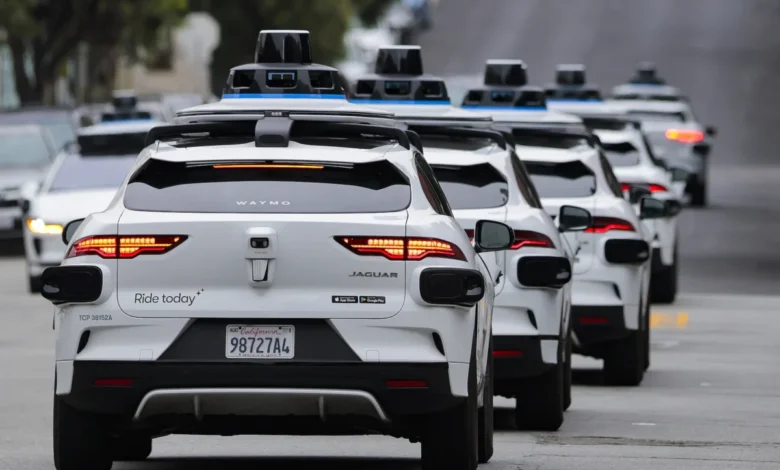
San Francisco experienced a significant disruption to its burgeoning autonomous vehicle (AV) landscape on July 18, 2026, when Waymo, the self-driving technology company owned by Alphabet, temporarily suspended its robotaxi service. The pause, which lasted approximately one hour, was a direct consequence of a widespread power outage that impacted roughly 7,000 PG&E customers across the city. While service quickly resumed, the incident served as a stark reminder of the vulnerabilities of advanced urban mobility solutions to critical infrastructure failures and further intensified the ongoing debate surrounding the regulation and operational resilience of autonomous vehicles in complex metropolitan environments.
Chronology of a Brief Disruption
The events of July 18 unfolded swiftly, beginning with a power outage that blanketed several districts of San Francisco. The precise cause of the PG&E disruption was not immediately detailed beyond a general acknowledgement of equipment issues, a common occurrence in aging urban power grids. As the outage began to spread, impacting homes, businesses, and traffic signals, Waymo’s sophisticated autonomous vehicles, operating across a wide service area, began to encounter conditions outside their standard operational parameters.
At approximately 12:30 PM PDT, Waymo initiated a "temporary pause" in its service. Customers attempting to hail a robotaxi or already mid-journey received notifications indicating the service interruption. A screenshot shared on social media by a local resident, Ethan McKanna, revealed a message from Waymo to its San Francisco customers stating, "Service temporarily paused" and notably adding, "freeway routes are unavailable." This latter detail suggested a specific concern for high-speed, multi-lane environments where a sudden loss of infrastructure data or communication could pose elevated risks.
TechCrunch, upon learning of the widespread service interruption and the social media reports, reached out to Waymo for an official statement. Initially, a company spokesperson confirmed, "We are making temporary adjustments to our service while we monitor local conditions. We know riders depend on us, and we will return to normal operations as soon as possible." This initial response underscored Waymo’s cautious approach, prioritizing safety and system integrity during unforeseen external challenges.
Following the initial publication of news regarding the pause, Waymo provided additional clarification. A spokesperson elaborated that the company "decided to pause service for approx. one hour to assess the scale of the power outage affecting a large portion of San Francisco and coordinate with local officials." This proactive measure highlights the company’s protocol for evaluating potential risks before resuming operations, emphasizing a commitment to ensuring both passenger safety and minimal disruption to urban flow, even if it means a brief halt. By mid-afternoon, Waymo confirmed that its robotaxi service had fully resumed across its San Francisco operational zone, indicating that the power situation had either stabilized sufficiently or alternative operational contingencies were deemed adequate.
Waymo’s Footprint and the San Francisco Crucible
San Francisco has emerged as a critical proving ground for autonomous vehicle technology, often dubbed a "crucible" due to its unique challenges. The city’s dense urban environment, characterized by steep hills, narrow streets, variable weather conditions (including dense fog), a complex mix of traffic, pedestrians, and cyclists, and distinct neighborhood characteristics, presents an unparalleled test for AV systems. Waymo, a pioneer in the self-driving space, has been progressively expanding its operations here, moving from initial testing to a fully commercialized robotaxi service.
The company’s Waymo One service allows registered users to hail fully autonomous vehicles for rides within a defined operational domain. These vehicles, equipped with an array of advanced sensors including LiDAR, radar, and high-resolution cameras, continuously map their surroundings, predict trajectories, and navigate intricate urban scenarios without human intervention. The reliability and safety records of these vehicles are meticulously tracked, contributing to an ever-evolving dataset that informs further technological advancements and regulatory decisions.
The regulatory landscape in California, particularly concerning AVs, is complex. The California Public Utilities Commission (CPUC) oversees the commercial deployment of robotaxi services, granting permits for companies like Waymo to operate. The Department of Motor Vehicles (DMV) handles the testing permits. This dual-agency oversight, coupled with increasing calls for local control from municipalities like San Francisco, creates a dynamic and often contentious environment for AV expansion. Cities argue that while AVs operate on their streets, local authorities often lack the direct power to enforce specific safety protocols or manage incidents effectively.
A Pattern of Disruption: Previous Incidents and Regulatory Pushback
The July 18 power outage incident was not an isolated event for Waymo in San Francisco. It fits into a growing pattern of disruptions and challenges faced by autonomous vehicles during unforeseen circumstances, fueling calls for more robust regulatory frameworks.
One of the most significant prior incidents occurred in December 2025, when a widespread blackout in San Francisco led to a number of Waymo vehicles stalling on city streets. This event caused considerable traffic congestion and, more critically, raised serious questions about emergency response. When multiple AVs become immobilized simultaneously, they can impede the movement of emergency vehicles, including fire trucks and ambulances, which is a major public safety concern. The lack of human operators in such scenarios meant that vehicles could not be manually moved without intervention from Waymo personnel, leading to delays.
Another notable incident took place during the Fourth of July celebrations, specifically around the Golden Gate Bridge fireworks show. The massive influx of traffic and the general chaos associated with such a large public event reportedly led to similar paralysis of autonomous vehicles, exacerbating an already congested situation. While not directly caused by a power outage, this event highlighted the vulnerability of AVs to overwhelming environmental conditions and infrastructure strain, whether planned or unplanned.
These recurring incidents have drawn sharp criticism and prompted direct action from San Francisco’s leadership. Mayor Daniel Lurie has been particularly vocal, using these events to push for tougher state regulations. Following the December 2025 blackout and the Fourth of July traffic fiasco, Mayor Lurie explicitly called for state-level regulations that would "adequately address how autonomous vehicles operate during major incidents, planned or not." His office has emphasized the need for clearer protocols, real-time communication channels between AV operators and emergency services, and perhaps even mechanisms for local authorities to temporarily override or manage AV operations during city-wide emergencies. The mayor’s stance reflects a broader sentiment among city officials who feel that the current regulatory framework does not adequately empower local governments to ensure public safety and manage urban mobility when AVs are involved in critical incidents.

Supporting Data and Broader Implications
The July 18 power outage, affecting 7,000 PG&E customers, represents a significant, albeit localized, infrastructure failure. PG&E, California’s largest utility provider, has a well-documented history of power outages across its vast service territory, often due to aging infrastructure, extreme weather, and wildfires. While the company has invested billions in grid modernization and safety improvements, urban outages remain a persistent challenge, impacting daily life and critical services. For autonomous vehicles, which rely heavily on consistent power for their onboard systems, external communication, and often cloud-based processing, such outages present a complex "edge case" scenario.
Waymo’s fleet in San Francisco, while not disclosed in exact numbers, is substantial, executing thousands of rides daily. A temporary pause, even for an hour, can affect hundreds of potential passengers, causing delays and forcing them to seek alternative transportation. This, in turn, can strain conventional ride-hailing services and public transport.
From a technological standpoint, AVs are designed with various fail-safes. In the event of sensor failure, communication loss, or unexpected environmental conditions, the typical protocol is for the vehicle to execute a "minimal risk maneuver" – often safely pulling over to the side of the road and stopping. However, when an entire grid fails, affecting traffic signals, potentially disrupting GPS signals, and impacting communication networks, the collective response of numerous AVs executing such maneuvers simultaneously can lead to widespread gridlock, as seen in previous incidents. This underscores the need for AV systems to not only react to individual vehicle failures but also to large-scale infrastructure collapses. Resilience in this context means not just individual vehicle robustness but also system-wide coordination and contingency planning.
Official Responses and Stakeholder Perspectives
Waymo’s decision to pause service during the outage, though brief, demonstrates a safety-first approach. Their statement about assessing the "scale of the power outage" and "coordinating with local officials" suggests an evolving protocol for handling such events. This likely involves internal monitoring of power grid status, communication with city emergency operations centers, and an evaluation of the risk profile before recommitting vehicles to service. Moving forward, Waymo and other AV companies will likely face increased pressure to detail these protocols, providing greater transparency to regulators and the public. This could include requirements for real-time data sharing with first responders during incidents, clear mechanisms for remote intervention, and robust plans for vehicle retrieval or manual operation in the event of prolonged immobilization.
While PG&E did not issue a specific statement regarding the impact on Waymo, their standard procedure involves rapid response to outages, diagnosis of the issue, and restoration of power. The utility company’s focus is on grid reliability, and incidents involving AVs add another layer of complexity to the broader impact of their service interruptions.
San Francisco city officials, including representatives from the San Francisco Municipal Transportation Agency (SFMTA) and emergency services (Police and Fire Departments), have consistently expressed concerns about the integration of AVs into city operations, particularly during emergencies. The temporary Waymo pause, while brief, reinforces their arguments about the potential for widespread disruption and the need for greater local oversight. These officials are likely to continue advocating for stronger state regulations that mandate collaboration, data sharing, and clearly defined incident response plans that prioritize public safety and emergency access.
Within the broader autonomous vehicle industry, incidents like these serve as a reminder of the inherent challenges of deploying cutting-edge technology in complex, unpredictable real-world environments. While AV companies are focused on advancing their technology, the incidents highlight that the "human element" of infrastructure and societal interaction cannot be overlooked. The industry understands that public trust is fragile, and each incident, even a minor one like a temporary pause, can erode that trust if not managed with utmost transparency and a clear commitment to safety and reliability.
Implications and The Path Forward
The July 18 Waymo service pause, though resolved quickly, is more than just a fleeting inconvenience; it’s a significant data point in the ongoing narrative of autonomous vehicle deployment. Its implications are far-reaching, touching upon regulatory policy, technological development, public perception, and urban planning.
From a regulatory standpoint, this incident will undoubtedly add further impetus to Mayor Lurie’s calls for tougher state regulations. It strengthens the argument that current frameworks may not be adequate for managing the nuanced and potentially disruptive scenarios that arise when AVs interact with failing urban infrastructure. We can anticipate increased pressure on the CPUC and DMV to revisit and potentially revise their operational guidelines, possibly introducing stricter requirements for incident response, redundancy, and coordination with local authorities. There might be a move towards a more localized regulatory approach, allowing cities more control over AV operations within their specific jurisdictions.
Technologically, the incident underscores the need for AV developers to not only perfect their self-driving algorithms but also to build systems that are exceptionally resilient to external shocks. This includes developing more robust onboard power systems, enhancing vehicle-to-infrastructure (V2I) communication protocols that can withstand network disruptions, and creating more sophisticated predictive models that anticipate widespread infrastructure failures. The concept of "graceful degradation" – how AVs can continue to operate safely, albeit with reduced functionality, or safely cease operations without causing further disruption – will become even more critical.
Public trust, the bedrock of widespread AV adoption, is continuously tested by such events. While Waymo’s swift resumption of service might mitigate some immediate concerns, the cumulative effect of recurring incidents during blackouts or major events can foster skepticism. For AVs to truly become an integral part of urban mobility, the public needs to be confident that these vehicles are not just safe in ideal conditions but also reliable and manageable during crises. Transparent communication, clear incident resolution, and proactive engagement with communities will be vital for building and maintaining this trust.
Finally, for urban planning and smart city initiatives, the Waymo pause highlights the critical interdependence of emerging technologies and existing infrastructure. Cities need to proactively plan for the integration of AVs, considering not just traffic flow and efficiency, but also resilience. This involves developing smart infrastructure that can communicate effectively with AVs, establishing clear protocols for emergency services, and perhaps even investing in dedicated communication channels or power backups for critical AV operational zones. The future of urban mobility with autonomous vehicles depends on a collaborative ecosystem where technology developers, regulators, city planners, and utility providers work in concert to build a resilient and reliable transportation network.
In conclusion, the temporary halt of Waymo’s robotaxi service in San Francisco on July 18, 2026, due to a power outage, while short-lived, serves as a poignant reminder of the intricate challenges and critical considerations inherent in integrating autonomous vehicles into the fabric of modern urban life. It reinforces the urgent need for a holistic approach that balances technological innovation with robust regulatory frameworks, resilient infrastructure, and unwavering public confidence to navigate the complex road ahead for autonomous mobility.