Physicists unlock the zeptoverse using the Large Hadron Collider to probe the smallest scales of reality ever measured

In a landmark achievement for particle physics, researchers utilizing the Large Hadron Collider (LHC) at CERN have successfully observed physical phenomena occurring at the "zeptoscale," a regime of measurement representing distances less than a hundred-trillionth of the wavelength of visible light. This milestone, announced during a seminar at the European Organization for Nuclear Research on November 3, marks the most granular exploration of the subatomic world to date. By peering into this "zeptoverse," scientists are beginning to decipher the fundamental mechanics that govern the universe, potentially providing the keys to solving long-standing enigmas regarding the nature of dark matter and the stark imbalance between matter and antimatter.
The Significance of the Zeptoscale
To understand the magnitude of this achievement, one must first comprehend the sheer scale of the zeptometer. In the International System of Units, a zeptometer is 10⁻²¹ meters. For comparison, a human hair is roughly 80,000 to 100,000 nanometers wide. A zeptometer is a trillion times smaller than a nanometer. While physicists have long theorized about the behavior of particles at these infinitesimal dimensions, the ability to empirically observe and measure interactions at this scale has remained elusive due to the extraordinary energy requirements and the extreme precision necessary for detection.
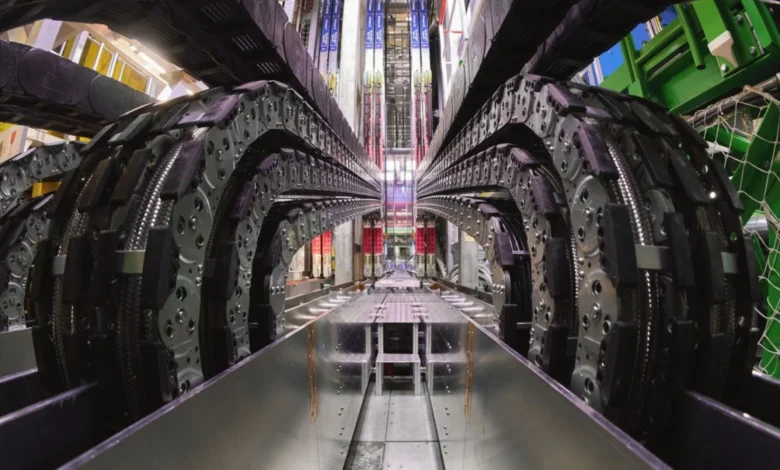
The LHC, a 17-mile-long ring of superconducting magnets located beneath the Franco-Swiss border, has served as the primary instrument for this discovery. By accelerating protons to nearly the speed of light and forcing them to collide, the facility generates energy densities comparable to those that existed moments after the Big Bang. This latest research leverages these high-energy collisions to probe distances far deeper than previously possible, effectively opening a new window into the architecture of spacetime.
Chronology of High-Energy Exploration
The journey toward the zeptoverse is the culmination of decades of incremental progress in particle physics. The timeline of this endeavor can be categorized by the milestones achieved since the inception of the LHC:
- 2008: The Large Hadron Collider completes its initial commissioning, marking the start of a new era in high-energy physics.
- 2012: The discovery of the Higgs boson confirms the mechanism by which particles acquire mass, validating the Standard Model of particle physics.
- 2015–2018: Run 2 of the LHC significantly increases collision energy, allowing for more detailed studies of top quarks and potential deviations from the Standard Model.
- 2022–2024: Upgrades to the High-Luminosity LHC (HL-LHC) allow for an unprecedented increase in the number of collisions per second, providing the massive datasets required to isolate rare, ultra-short-range interactions.
- November 2024: The collaborative research team presents the first empirical evidence of interactions occurring within the zeptometer regime, detailing these findings in a preprint paper currently undergoing rigorous academic scrutiny.
Supporting Data and Methodology
The research team reached this conclusion by analyzing "jet" data—cascades of subatomic particles that result from high-energy collisions. When protons collide, they shatter into their constituent parts—quarks and gluons. These particles rarely exist in isolation and immediately form "jets" of secondary particles. By measuring the angular distribution and energy decay of these jets with extreme precision, researchers can infer the nature of the primary collision at the zeptoscale.
Current data indicates that the interactions measured conform to high-energy predictions, yet there are subtle variations that suggest the influence of physics beyond the current Standard Model. The research team noted that the statistical significance of their findings is currently at a level that necessitates further data collection. However, the initial results demonstrate that the LHC is functioning not just as a particle factory, but as an incredibly powerful microscope capable of probing the very graininess of space itself.
Implications for Cosmological Mysteries
The most compelling aspect of the zeptoverse research lies in its potential to solve two of the greatest mysteries in modern cosmology: the matter-antimatter asymmetry and the composition of dark matter.
The Matter-Antimatter Asymmetry
According to the Standard Model, the Big Bang should have produced equal amounts of matter and antimatter. If this were true, the two would have annihilated each other, leaving behind nothing but a sea of radiation. Yet, the observable universe is dominated by matter. Physicists believe there must be a mechanism—a subtle preference in the laws of physics—that allowed matter to survive. By probing the zeptoscale, scientists are looking for evidence of "CP violation" (Charge-Parity violation) at energy scales previously unreachable, which could explain how this imbalance originated.
The Dark Matter Conundrum
Dark matter is estimated to constitute roughly 85% of the total matter in the universe. It does not emit, absorb, or reflect light, making it invisible to traditional telescopes. It is detected only through its gravitational influence on visible matter. The zeptoverse experiments may reveal the existence of "dark sectors"—new, undiscovered particles that interact very weakly with ordinary matter. If such particles exist, their interaction cross-sections would likely occur at the zeptoscale, making this new frontier the prime hunting ground for the elusive dark matter particle.
Official Responses and Academic Context
While the findings have not yet been subjected to the full rigor of peer-reviewed publication, the announcement at CERN has drawn significant attention from the international physics community. Dr. Elena Rossi, a theoretical physicist not directly involved in the study, noted that "the data provided by the LHC team represents a generational leap in our experimental reach. We are moving away from studying the ‘what’ of particle physics and beginning to map the ‘how’ of the fundamental structures of reality."
CERN officials have expressed optimism, emphasizing that the current findings are just the beginning of the High-Luminosity LHC era. "Our objective has always been to push the boundaries of what is measurable," a spokesperson for the organization stated during the seminar. "By refining our collision algorithms and increasing the luminosity of the beams, we are effectively sharpening our focus, allowing us to see things that were theoretically predicted but practically impossible to verify until now."
Broader Impact and Future Outlook
The transition into the zeptoverse marks a shift in scientific focus. Historically, particle physics has been preoccupied with finding new particles—the "particle zoo." While this remains a priority, the new research suggests that the future of the field lies in precision measurements. By observing how space and time behave at these sub-nanoscopic scales, physicists may be able to determine whether the fabric of the universe is continuous or quantized—a question that lies at the heart of the long-sought "Theory of Everything."
The implications extend beyond pure theory. Technology developed for the LHC, such as superconducting magnets and ultra-fast sensors, has historically transitioned into medical imaging (MRI) and cancer therapy (hadron therapy). The advancements required to measure the zeptoverse will likely drive further innovation in materials science and computational processing, as the volume of data generated requires increasingly sophisticated artificial intelligence and machine learning models to analyze.
As the research team prepares for the formal peer-review process, the global physics community is already planning follow-up studies. The upcoming cycles of the LHC will prioritize the validation of these initial measurements, with a focus on determining whether the observed zeptoscale phenomena are consistent across different types of particle collisions. If verified, these findings will redefine the boundaries of the Standard Model and likely necessitate a re-evaluation of the early universe’s conditions.
In the final analysis, the exploration of the zeptoverse represents the human desire to understand the foundational constraints of existence. By peering into the most minute dimensions, scientists are, paradoxically, looking at the macro-scale history of the cosmos. Every zeptometer probed brings humanity one step closer to understanding why the universe exists, why it is structured as it is, and what fundamental forces continue to shape the evolution of everything from the smallest subatomic particle to the largest galactic superclusters. The "zeptoverse" is no longer just a theoretical construct; it is now an active field of experimental investigation.