Waymo Halts Nationwide Highway Robotaxi Operations After California DMV Orders Suspension Following Viral Police Blockade Incident

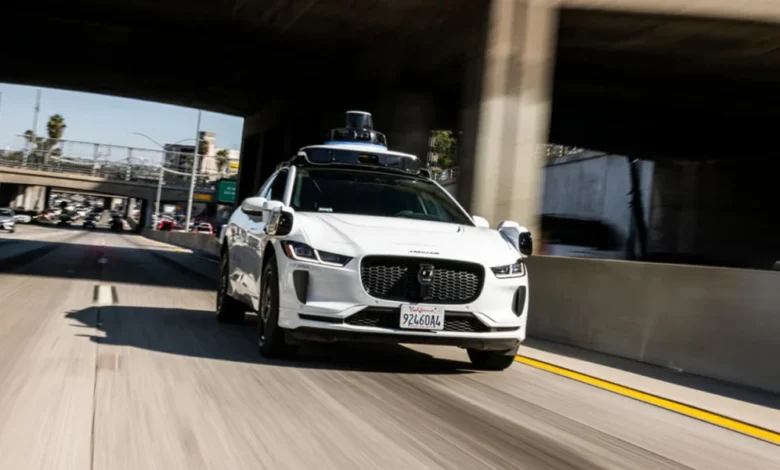
The landscape of autonomous transportation experienced a significant regulatory setback as Google’s robotaxi subsidiary, Waymo, announced the nationwide suspension of its highway operations. The decision comes in direct response to an enforcement action by the California Department of Motor Vehicles (DMV), triggered by a viral video depicting a driverless Waymo vehicle attempting to navigate past an active police blockade on a high-speed Northern California freeway.
While the incident that sparked the regulatory intervention occurred on Interstate 280, a vital artery through Silicon Valley, the implications of the state’s crackdown extend far beyond California’s borders. Waymo has proactively opted to pull its autonomous vehicles from high-speed roadways across all of its operational markets nationwide while it works to address regulatory concerns and software limitations related to construction zone navigation and traffic management protocols.
The sudden suspension highlights the ongoing tension between rapid technological deployment and rigorous regulatory oversight in the autonomous vehicle
sector. It also places a temporary halt on a major expansion phase for the company, which has spent years meticulously building its reputation as a safer, more reliable alternative to human drivers and competing autonomous platforms.
Chronology of Events: From Highway Expansion to Regulatory Crackdown
Waymo’s journey to highway operations represents a departure from traditional automated driving development strategies. Established as a pioneer in the autonomous space with roots dating back to Google’s self-driving car project in 2009, the company began offering commercial public rides on public roads in 2017.
Historically, the company bucked the industry trend favored by most driver-assist systems—such as Tesla’s Full Self-Driving or various Level 2 consumer applications—which typically debut on predictable, high-speed highways before tackling the unpredictable complexities of dense city streets. Waymo chose the inverse approach, mastering the intricate, low-speed, high-density environments of urban grid systems first. City streets present pedestrians, cyclists, unpredictable delivery vehicles, and complex traffic signals, making them statistically more prone to low-speed accidents, even if the severity of those incidents is generally lower than highway collisions.
After years of internal testing with safety drivers behind the wheel, Waymo officially introduced public rides on limited highway networks late last year. The integration of freeway access proved immensely popular, drastically reducing travel times across metropolitan areas like San Francisco and Silicon Valley, where users could seamlessly hail a Level 4 autonomous vehicle through the company’s dedicated mobile application 24 hours a day, seven days a week within geofenced boundaries.
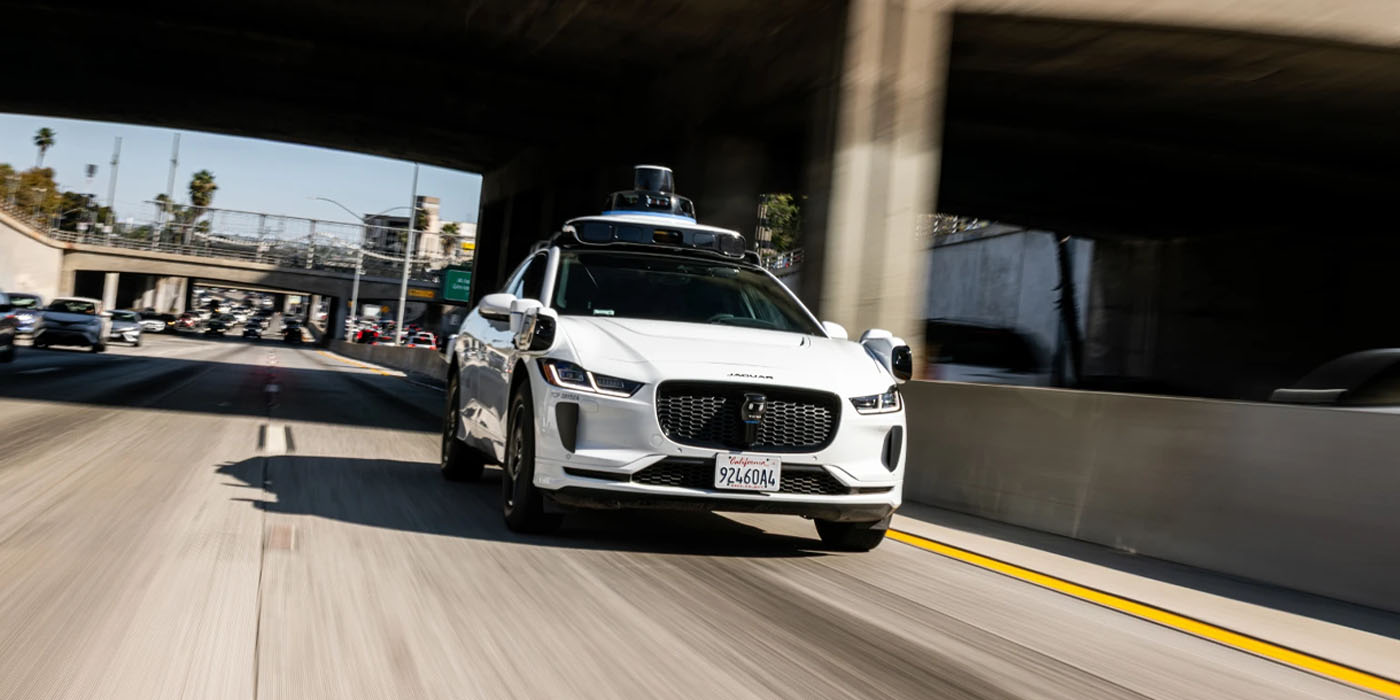
However, the momentum came to an abrupt halt following an incident on I-280. A widely circulated video captured a fleet vehicle accelerating in the far-left lane toward a California Highway Patrol (CHP) "traffic break"—a tactical maneuver where police cruisers use their emergency lights and spread across lanes to safely slow down or halt traffic ahead of roadway hazards or construction zones. Rather than falling in line behind the blockade, the Waymo vehicle attempted to maneuver past the cruisers, prompting a highway patrol officer to aggressively swerve in front of the autonomous taxi to force it to stop. Although some media reports indicated the source video may have been slightly accelerated by the original poster, the local news coverage and raw footage exposed a critical vulnerability in the vehicle’s decision-making matrix.
On November 11, the California DMV formally notified Waymo of its order to pause highway operations. Though the administrative action was kept quiet for a brief period, it culminated in the immediate statewide cessation of freeway driving, which Waymo swiftly mirrored across its other regional footprints nationwide.
Regulatory Scrutiny and the Issue of Construction Zones
The California DMV’s intervention was not merely a reactive measure to a single viral video on social media. According to regulatory filings and departmental communications, the state’s suspension order was anchored in a pattern of recurring compliance failures involving Waymo vehicles entering and navigating active construction zones improperly.
The DMV noted that state regulators had previously identified isolated instances of Waymo autonomous vehicles inadvertently intruding into restricted construction areas. While Waymo had reportedly implemented various software patches and corrective actions in response to those earlier warnings, the recurrence of similar navigational anomalies demonstrated to regulators that the underlying software logic remained insufficiently robust to handle complex, dynamic highway environments safely.
Under the terms of the DMV mandate, Waymo’s highway suspension will remain indefinite. The company is legally barred from resuming freeway operations in California until it can conclusively demonstrate to state regulators that "effective corrective actions" have been successfully developed, tested, and integrated into its autonomous driving stack.
The regulatory framework governing autonomous vehicles in California grants the DMV broad authority to suspend or revoke testing and deployment permits if a company’s vehicles are determined to pose an unreasonable risk to public safety. By extending the pause to all operational states voluntarily, Waymo aims to present a unified front of compliance and cooperation, mitigating the risk of piecemeal regulatory crackdowns in other jurisdictions such as Arizona, Texas, and Florida, where the company also maintains a significant physical footprint.
Safety Record and Competitive Standing
The highway suspension arrives at a complex juncture for Waymo. Commercially and statistically, the company has positioned itself as the undisputed leader in the commercial robotaxi industry, comfortably outpacing competitors like Tesla and various venture-backed startups.
To date, Waymo has accumulated over 271 million miles of autonomous operation on public roads. According to internal safety data released by the company, its autonomous driving system has successfully prevented an estimated 841 injuries since its inception. Proponents of autonomous technology frequently cite these metrics to argue that computer-driven vehicles, which do not suffer from fatigue, distraction, or emotional impairment, offer a statistically safer alternative to human drivers, who are responsible for tens of thousands of fatalities annually in the United States alone.

Furthermore, Waymo’s expansion pace has been aggressive. Just last month, the company announced a massive operational expansion, adding another 250 square miles of coverage across five major metropolitan areas. This geographic growth relies heavily on the efficiency of highway transit to stitch disparate urban service zones together into a cohesive, fast-moving transportation network.
When compared to competitors like Tesla—which continues to market its driver-assistance software under various levels of human supervision while promising a fully autonomous robotaxi future—Waymo stands out as a commercial reality, currently executing millions of driverless trips weekly. However, this market dominance brings heightened scrutiny. Every edge-case failure, unexpected maneuver, or regulatory reprimand is magnified by the public spotlight, particularly as traditional motorists and pedestrians adapt to sharing public infrastructure with driverless machinery.
Broader Industry Implications and the Path Forward
The temporary grounding of Waymo’s highway fleet carries significant ramifications for the broader autonomous vehicle industry. It serves as a stark reminder that achieving true Level 4 autonomy—where vehicles operate entirely without human intervention within defined parameters—is an iterative and fragile process.
Highways introduce unique operational design domains (ODDs) characterized by high velocities, unpredictable merging behaviors, erratic human drivers, and rapidly changing road geometry due to construction or emergency responder activities. While urban environments challenge AI systems with density and unpredictability, highways challenge them with kinetic energy and the absolute necessity for split-second, unambiguous compliance with traffic enforcement commands.
For Waymo, the immediate priority is engineering a software update capable of reliably recognizing, interpreting, and deferring to law enforcement traffic breaks and dynamic construction zone configurations. This requires refining machine-vision models and rule-based decision trees to ensure that emergency signals override standard navigational goals, such as reaching a destination as quickly as possible.
Industry analysts suggest that while the suspension is a temporary commercial and public relations hurdle, it is unlikely to derail Waymo’s long-term trajectory. Regulators and autonomous vehicle developers have long anticipated that edge cases would prompt intermittent pauses and policy adjustments. The collaborative posture adopted by Waymo—acknowledging the regulatory concerns without engaging in public disputes—suggests a desire to maintain a constructive dialogue with oversight bodies.
As Waymo engineers work behind the scenes to recalibrate their neural networks and navigation algorithms, the public and regulatory bodies will be watching closely. The eventual return of Waymo vehicles to the nation’s highways will serve as a crucial test case for whether autonomous systems can successfully learn from human-machine friction and meet the rigorous safety standards required for widespread public trust.
Related posts: