Japan’s Auto Industry Giants Unite to Standardise Core Components and Safeguard Global Competitiveness

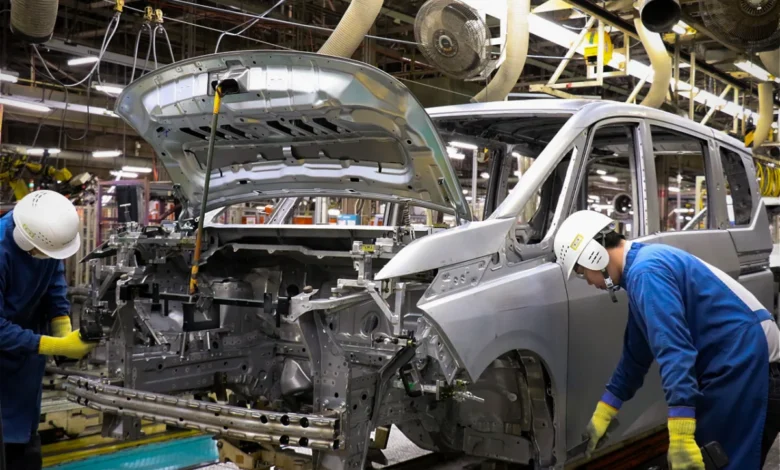
In a historic pivot toward unprecedented domestic cooperation, the Japan Automobile Manufacturers Association (JAMA) officially announced a sweeping cross-industry initiative aimed at standardizing fundamental manufacturing materials and components. Revealed on November 19, the collaborative framework brings together the nation’s leading original equipment manufacturers (OEMs)—including automotive titans Toyota Motor Corporation, Honda Motor Co., and Nissan Motor Co.—to streamline the production of steel, engineering resins and plastics, and complex wire harnesses. By establishing unified standards across these critical upstream supply categories, Japan’s automotive sector seeks to eliminate redundant development costs, optimize sprawling supply chains, and unlock vital capital reserves. These freed-up financial resources are slated for redeployment into next-generation mobility domains, specifically software-defined vehicles, advanced artificial intelligence, solid-state battery research, and autonomous driving architectures.
This strategic consolidation arrives at a pivotal juncture for the global automotive landscape. Japanese automakers, long renowned for their meticulous manufacturing prowess and Just-In-Time supply chain models, are facing mounting competitive pressure from fast-moving international rivals. Most notably, the rapid ascent of Chinese original equipment manufacturers—bolstered by state-backed subsidies, aggressive vertical integration, and dominant control over electric vehicle (EV) supply chains—has disrupted legacy market shares across Southeast Asia, Europe, and Latin America. By pooling their collective influence and engineering expertise, Japan’s legacy automakers are attempting to fortify their domestic industrial base, protect profit margins squeezed by inflationary pressures, and secure their long-term viability on the global stage.
The Genesis of JAMA’s Standardization Mandate
The roots of this unprecedented collaborative pact trace back to structural vulnerabilities exposed by the COVID-19 pandemic, subsequent semiconductor shortages, and geopolitical supply chain bottlenecks. For decades, Japanese OEMs maintained fiercely proprietary approaches to vehicle architecture. Each manufacturer demanded bespoke steel alloys, unique polymer formulations for interior and exterior components, and custom-engineered wire harness configurations tailored to specific vehicle models. While this philosophy fostered world-class product differentiation and supreme build quality, it also created immense administrative and manufacturing inefficiencies.
Within a single automotive conglomerate, dozens of variations of essentially identical steel grades or plastic polymers were often procured, handled, and processed separately. Wire harnesses, frequently described as the nervous system of modern automobiles, presented an even more acute bottleneck. Because wire layouts were custom-designed for every distinct model variant, manual assembly lines required extensive human labor, making the component prone to supply chain disruptions and escalating labor costs. As the global automotive paradigm shifts toward electrification and digital connectivity, the financial burden of maintaining these fragmented legacy practices has become unsustainable.
Recognizing that individual scale alone could no longer insulate domestic brands from global headwinds, JAMA spearheaded a series of closed-door executive consultations throughout mid-2023 and 2024. The consensus reached in November represents a fundamental cultural shift within Japan’s industrial ecosystem: a transition from fierce intra-national rivalry to cooperative pre-competitive alignment, designed to preserve the collective dominance of the nation’s automotive manufacturing cluster.
A Strategic Breakdown of Standardised Components
The scope of the JAMA standardisation initiative encompasses three foundational pillars of vehicle manufacturing: structural steel, advanced resins and plastics, and wire harnesses. Each category presents distinct operational challenges and financial implications for participating OEMs.
Steel and Raw Materials
Steel remains the structural backbone of modern automotive manufacturing, accounting for a substantial portion of a vehicle’s raw material cost. Under the new framework, JAMA members will work alongside domestic steelmakers—such as Nippon Steel and JFE Steel—to rationalise the vast catalog of steel grades currently utilised across different production lines. By consolidating specifications for high-tensile strength sheets, chassis components, and body panels, automakers can place larger, consolidated orders. This volume aggregation is projected to improve procurement pricing, simplify inventory management at stamping plants, and reduce the carbon intensity associated with niche steel production runs.
Resins and Engineering Plastics
The automotive industry’s reliance on plastics and composite resins has accelerated as manufacturers seek lightweight materials to extend the range of electric vehicles and improve fuel efficiency in internal combustion engine (ICE) models. Previously, interior trim, bumper fascias, and under-the-hood housing units were manufactured using a myriad of proprietary resin blends dictated by individual brand specifications. The standardisation drive will establish universal grades for commonly used polymers, such as polypropylene (PP), acrylonitrile butadiene styrene (ABS), and various engineering plastics. This move will not only lower raw material acquisition costs but also significantly streamline the post-consumer recycling process, aligning Japanese automakers with increasingly stringent international circular economy regulations.
Wire Harnesses
Perhaps the most labor-intensive component of automobile production, wire harnesses traditionally require meticulous, manual assembly due to their complex, model-specific routing. Standardising wire harness architecture involves creating modular wiring blocks, unified connector interfaces, and standardized gauge classifications. By moving toward modular electrical distribution systems, automakers can automate significant portions of the assembly process, reduce vehicle weight, and drastically cut the engineering hours required to design electrical systems for new vehicle models. Furthermore, standardized harnesses simplify aftermarket repairs and lower the risk of supply chain pinch points during unexpected manufacturing halts.
Chronology of Industry-Wide Consolidation
The path toward the November 19 announcement reflects a methodical, multi-year evolution in Japanese industrial policy and corporate strategy.
- Early 2022: In the wake of pandemic-induced supply chain shocks, JAMA begins informal working groups to evaluate shared logistics and procurement vulnerabilities among domestic tier-1 and tier-2 suppliers.
- Late 2022 to Mid-2023: Pilot discussions emerge regarding the standardisation of EV charging interfaces and battery module dimensions, proving that Japanese competitors could successfully collaborate on pre-competitive infrastructure.
- January 2024: Leadership changes at major OEMs, coupled with intensifying market share data from emerging EV powerhouses in China, catalyze a sense of urgency within the Ministry of Economy, Trade and Industry (METI) and JAMA.
- August 2024: Preliminary feasibility studies regarding raw material consolidation are circulated among executive boards at Toyota, Honda, Nissan, Mazda, and Subaru.
- November 19, 2024: JAMA officially unveils the comprehensive standardisation pact, setting the stage for phased implementation across upcoming vehicle platforms slated for commercial release in the latter half of the decade.
Economic Data and Market Realities
Financial analysts and industry researchers have long pointed to the margin-diluting effects of fragmented engineering within legacy automotive groups. According to recent industrial data compiled by automotive market research firms, component proliferation can inflate vehicle development costs by up to 15% to 20% compared to streamlined production models operating on shared global platforms.
By standardising basic steel and resin inputs, JAMA estimates that participating manufacturers could collectively shave billions of yen off their annual procurement expenditures. For context, Japan’s automotive sector produces approximately 8 to 9 million vehicles annually domestically, with total global production by Japanese brands exceeding 25 million units. Even a marginal efficiency gain of 1% to 3% across material and harness procurement yields hundreds of millions of dollars in capital savings.
Crucially, these financial savings arrive at a time when Japanese OEMs are experiencing compressed operating margins in key overseas markets. In China, once a lucrative profit engine for brands like Nissan and Honda, local automakers leveraging domestic battery supply chains and advanced digital cockpits have captured substantial market share. Data from the China Association of Automobile Manufacturers (CAAM) indicates that foreign brand market share in China has steadily declined, dropping below 40% for the first time in decades. Similar competitive pressures are materializing in Europe, where affordable Chinese electric vehicles are rapidly penetrating local dealer networks.
Faced with these pressures, Japanese automakers cannot afford to dissipate capital on redundant engineering tasks for non-differentiating parts. The standardisation initiative directly addresses this vulnerability, ensuring that R&D budgets are ruthlessly prioritized toward technologies that directly influence consumer purchasing decisions: software user interfaces, autonomous driving sensors, and advanced battery chemistry.
Reactions and Stakeholder Perspectives
While the official announcement from JAMA has been warmly received by financial markets, industry stakeholders emphasize that successful implementation will require unprecedented levels of trust and coordination throughout the extended supply chain.
Tier-1 and Tier-2 Supplier Response
Component suppliers, who have historically operated under strict build-to-print directives from individual automakers, face a complex transition period. Representatives from Japan’s influential Autoparts Industries Association have expressed cautious optimism. While standardisation may initially require retooling manufacturing plants and adjusting product catalogs, suppliers ultimately stand to benefit from longer production runs, reduced inventory holding costs, and more predictable demand forecasts. Smaller tier-2 and tier-3 sub-suppliers, who have struggled with low profitability amid rising raw material and energy costs, view unified standards as a potential stabilising force that could ease pricing pressures.
Governmental and Regulatory Alignment
METI has offered quiet backing to the JAMA initiative, viewing it as a vital component of Japan’s broader industrial strategy to maintain technological sovereignty and economic security. Government officials have emphasized that standardisation efforts must remain compliant with international anti-monopoly frameworks, ensuring that pre-competitive cooperation does not stifle overall market innovation or unfairly disadvantage independent market entrants. Furthermore, Japanese trade bodies are looking toward international harmonization, hoping to align their newly established material standards with European Union and North American regulatory frameworks to facilitate smoother global trade.
Broader Impact and Long-Term Implications
The decision by Japan’s automotive establishment to standardise core components marks a watershed moment for an industry traditionally defined by fierce corporate independence. Beyond immediate cost savings, the implications of this pact extend deep into the future of global mobility.
First, the standardisation of resins and polymers directly supports corporate sustainability targets. By utilizing uniform plastic formulations, automakers can establish closed-loop recycling loops more efficiently, making it easier to dismantle end-of-life vehicles and recover high-grade materials for secondary manufacturing. This capability will become legally mandatory in key export markets, such as the European Union, where stringent end-of-life vehicle (ELV) directives are taking effect.
Second, by standardising wire harnesses and structural steel, Japanese OEMs can accelerate their platform development cycles. As the industry transitions toward software-defined vehicles—where hardware remains relatively static and vehicle capabilities are upgraded via over-the-air (OTA) software updates—the underlying physical architecture must be as streamlined and cost-effective as possible. Eliminating custom mechanical engineering for basic components allows engineering teams to concentrate entirely on software integration, human-machine interface (HMI) design, and powertrain electrification.
Finally, the JAMA initiative sends a clear signal to global competitors that Japan’s automotive sector is prepared to leverage its collective might to defend its industrial legacy. While the immediate catalyst may be the fierce price competition emanating from Chinese OEMs, the long-term outcome will likely be a more agile, resilient, and financially disciplined Japanese automotive industry. As implementation phases roll out across boardrooms and factory floors in the coming months, the success of this unprecedented collaboration will serve as a global bellwether for how legacy industrial giants can adapt, unite, and thrive in an era of profound technological transformation.