BMW i3 Touring First Look and Technical Specifications of the Neue Klasse Electric Wagon


The automotive industry has caught its first glimpse of the highly anticipated BMW i3 Touring, as camouflaged prototypes of the all-electric wagon were recently spotted undergoing road testing. This development follows the official launch of the sedan variant last month, marking a significant expansion of BMW’s "Neue Klasse" (New Class) lineup. The i3 Touring represents a critical junction for the Bavarian automaker, blending the traditional European preference for versatile estate cars with the cutting-edge electric vehicle (EV) architecture that will define the brand’s future. As BMW prepares to transition its core models to dedicated electric platforms, the i3 Touring emerges as a direct competitor to the growing segment of premium electric wagons, including the Audi A6 e-tron Avant and the Porsche Taycan Sport Turismo.
The Evolution of the Neue Klasse Design Language
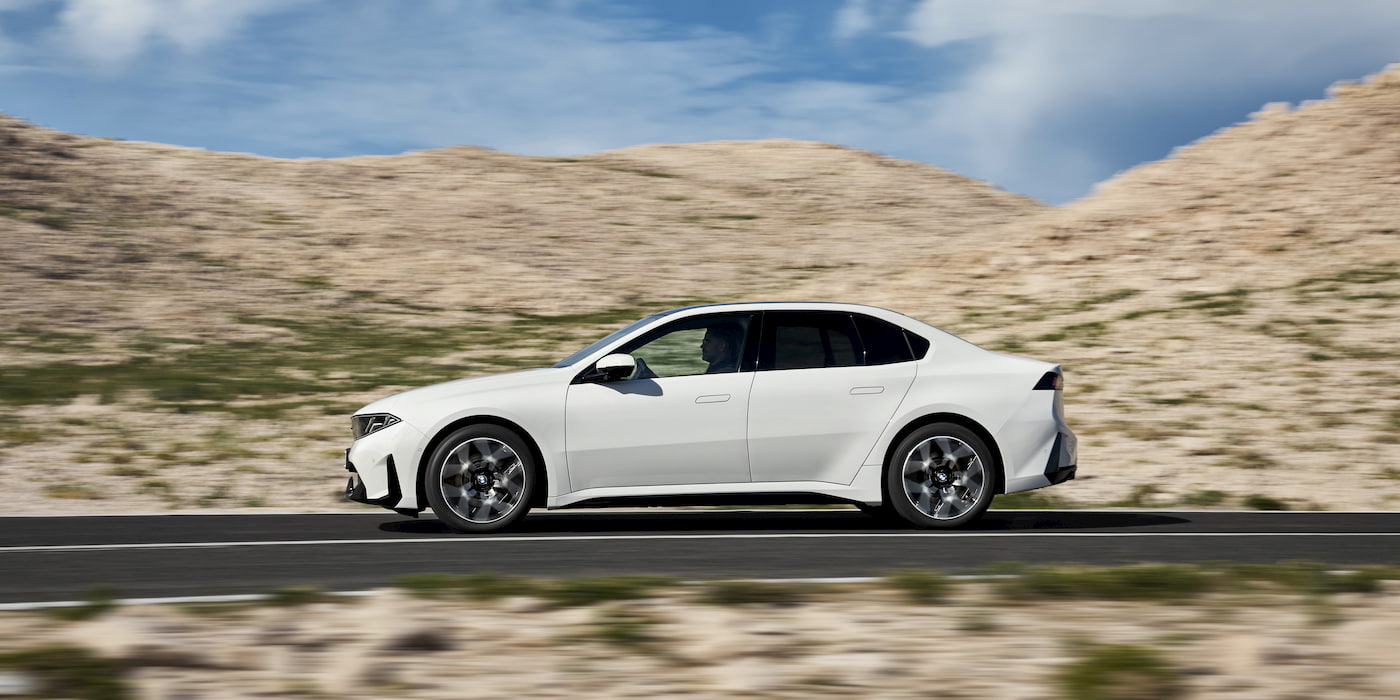
The spotted prototype, while heavily draped in camouflage, reveals a silhouette that distinguishes itself clearly from its sedan counterpart. The i3 Touring features a significantly elongated rear end and a gently sloping roofline that terminates in a functional tailgate. Observers have noted that the design language appears to bridge the gap between a traditional boxy wagon and a more aerodynamic fastback, drawing comparisons to the Kia EV4 hatchback and fastback concepts. This aerodynamic sculpting is not merely aesthetic; for an electric wagon, minimizing drag is essential to preserving the high-range figures established by the sedan version.
Despite the structural changes at the rear, the front fascia is expected to remain identical to the i3 sedan. This includes the reimagined BMW kidney grille, which has been redesigned for the Neue Klasse era to be wider and more integrated with the lighting elements. The vehicle features BMW’s new twin headlight signature, which utilizes vertical LED strips rather than the traditional circular "angel eyes." Furthermore, the redesigned BMW emblem, which debuted on the Vision Neue Klasse concept, will be a prominent feature on the hood, signaling a new chapter in the brand’s visual identity.

Technical Foundations: The Gen6 eDrive and 800V Architecture
At the heart of the BMW i3 Touring lies the sixth generation of BMW’s eDrive technology (Gen6). This powertrain represents a monumental leap over the Gen5 systems currently found in models like the i4 and iX. The i3 Touring is built upon an 800-volt electrical architecture, a move that places BMW in the upper echelon of EV performance alongside brands like Lucid, Porsche, and Hyundai/Kia.
The primary advantage of the 800V system is its ability to support ultra-fast charging speeds. The i3 is capable of accepting DC fast-charging at rates up to 400 kW. Under optimal conditions, this allows the vehicle to recover approximately 250 miles (440 km) of range in just 10 minutes. For long-distance travelers, this reduces the "refueling" experience to a timeframe comparable to traditional internal combustion engine (ICE) stops. For the North American market, BMW has confirmed that the 2027 model year i3 will feature a native North American Charging Standard (NACS) port, ensuring seamless integration with the Tesla Supercharger network and other NACS-compliant infrastructure.
The energy storage for the high-performance i3 50 xDrive variant is a massive 108.7 kWh battery pack. Unlike previous generations that used prismatic cells, the Gen6 batteries utilize new cylindrical cells. These cells offer a 20% increase in energy density and contribute to a 30% improvement in charging speed and overall vehicle range.
Range Performance and Aerodynamic Trade-offs
The BMW i3 sedan has already set a high benchmark for efficiency, achieving a WLTP-rated range of up to 566 miles (912 km) on a single charge. This makes it one of the longest-range electric vehicles currently available in the European market. On the United States’ EPA testing cycle, which is generally more conservative, the i3 50 xDrive is estimated to provide approximately 440 miles of range.

While the Touring variant utilizes the same 108.7 kWh battery and Gen6 motors, industry analysts expect a slight reduction in total range compared to the sedan. The increased surface area of the wagon’s rear and the different aerodynamic profile typically result in higher drag coefficients. However, BMW engineers have historically minimized this gap in their ICE "Touring" models, and it is expected that the i3 Touring will still offer well over 500 miles of WLTP range, maintaining its status as a leader in long-distance electric mobility.
Interior Innovation: The Panoramic Vision Interface
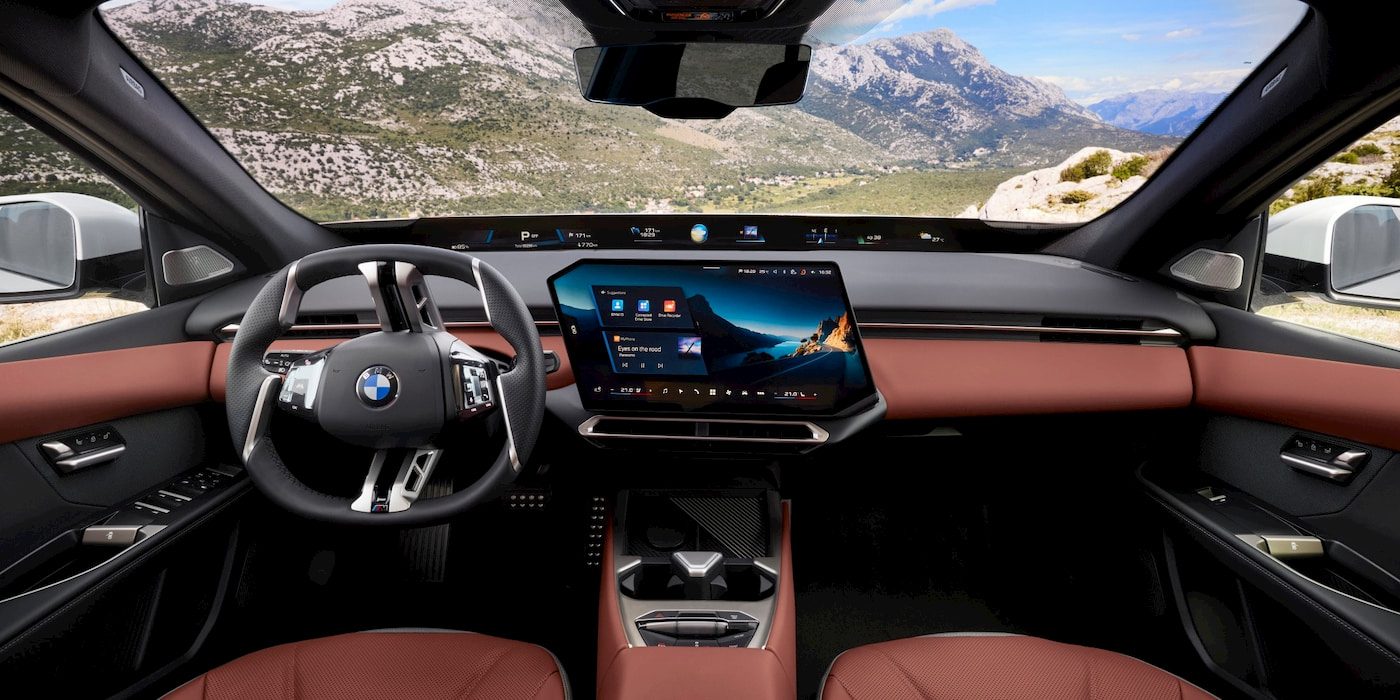
The cabin of the i3 Touring is set to mirror the minimalist, high-tech environment of the sedan. BMW is moving away from the traditional cluttered dashboard in favor of the Neue Klasse "User Experience." The centerpiece of this interior is the BMW Panoramic Vision display. This 43-inch screen spans the entire base of the windshield, acting as a highly advanced head-up display that projects information across the driver’s entire field of vision. This allows the driver to keep their eyes on the road while receiving navigation, speed, and media data.
Complementing the Panoramic Vision is a 17.9-inch floating central infotainment display. This screen serves as the primary interface for vehicle settings and secondary functions. BMW has also focused on sustainability within the cabin, utilizing a high percentage of recycled textiles and secondary raw materials, moving away from traditional leather and chrome to reduce the vehicle’s overall carbon footprint during production.
Pricing and Market Strategy
BMW has already opened the order books for the i3 sedan in several key markets, providing a clear indication of the price bracket the Touring model will inhabit. In Germany, the i3 50 xDrive First Edition is priced at €75,340 (approximately $86,400), while the standard entry-level model begins at €65,900 ($75,500). In the United Kingdom, the First Edition starts at £57,905 ($76,500) on-the-road (OTR), with the standard version arriving this autumn at £53,005 ($70,000).
Historically, BMW’s Touring models command a premium over their sedan counterparts, typically ranging from $2,000 to $5,000 depending on the market and trim level. Therefore, it is logical to project that the i3 Touring will start in the neighborhood of €68,000 to €70,000 in Europe. Despite the higher price point, the Touring is expected to see high demand in regions like Germany, Scandinavia, and the UK, where the "estate" body style remains a preferred choice for families and professionals who require additional cargo capacity without the higher center of gravity associated with SUVs.
Chronology of the Neue Klasse Rollout
The launch of the i3 Touring is a vital component of a broader multi-year strategy. The timeline for the Neue Klasse rollout is as follows:
- June 2024: Official sales launch of the BMW i3 Sedan in Europe.
- July 2024: First spy photos of the i3 Touring (wagon) emerge during road testing.
- Summer 2024: Production of the i3 sedan commences at the BMW Group Plant Munich.
- Autumn 2024: Standard (non-First Edition) i3 sedan models go on sale; first deliveries to European customers.
- Late 2024 / Early 2025: Expected official debut of the i3 Touring production model.
- 2026: Launch of the iX3 SUV, the first model to officially bear the Neue Klasse designation in the SUV segment.
- 2027: Arrival of the i3 and i3 Touring in the North American market, featuring NACS charging ports.
Manufacturing and Economic Impact
The production of the i3 and its Touring variant is centered at BMW’s main plant in Munich. This facility is currently undergoing a massive transformation to become the first site in BMW’s global production network to manufacture exclusively all-electric vehicles by the end of 2027. The integration of the i3 onto the assembly lines represents a shift in BMW’s manufacturing philosophy, moving toward a more flexible "iFACTORY" approach that emphasizes digitalization and resource efficiency.
This transition is not without its challenges. BMW is investing billions of euros into battery assembly sites and retooling existing lines. However, the surge in demand—evidenced by BMW opening i3 orders months early due to consumer interest—suggests that the market is ready for a dedicated EV platform from the brand.
Competitive Analysis and Broader Implications
The BMW i3 Touring enters a market that is surprisingly underserved. While the SUV market is saturated with electric options, the electric wagon segment is relatively niche. The i3 Touring’s primary competition will be the Audi A6 e-tron Avant, which also boasts high-range figures and fast-charging capabilities.
From a strategic standpoint, the i3 Touring allows BMW to retain its loyal customer base that values driving dynamics. Wagons offer a lower center of gravity and better handling characteristics than SUVs like the iX3, while providing nearly comparable utility. By offering the i3 in both sedan and Touring forms, BMW is effectively covering the "heart" of the premium mid-size segment.
The success of the i3 Touring will be a litmus test for the Neue Klasse platform. If BMW can successfully translate its reputation for "The Ultimate Driving Machine" into a versatile, long-range electric wagon, it will solidify its position against both legacy automakers and new EV-only entrants. With production beginning this summer and the first sedan deliveries scheduled for the fall, the automotive world will soon see if BMW’s massive bet on the Neue Klasse architecture pays off in the showroom.
Related posts: