Stellantis Brampton Plant Sale Sparks Outrage Among Unions and Government Officials Amid Rising U.S.-Canada Trade Tensions

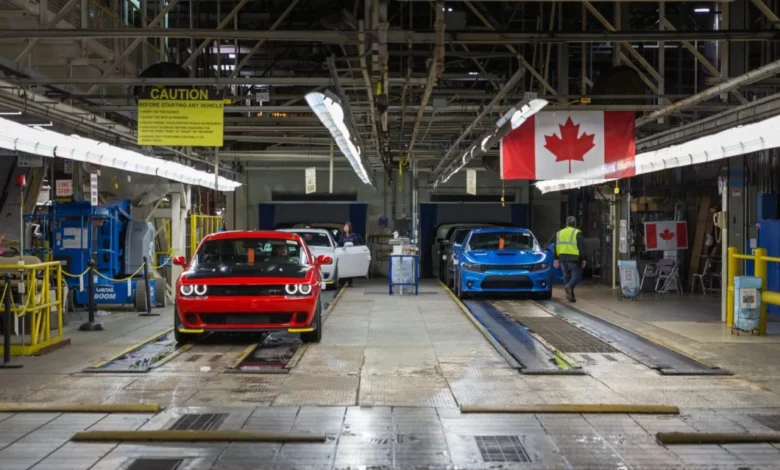
The potential sale of the historic Brampton Assembly plant in Ontario, Canada, to a low-volume defense vehicle manufacturer has ignited a fierce political and labor backlash, threatening to strain industrial relations and cross-border trade dynamics further. Originally opened in 1986 by the American Motors Corporation (AMC) and absorbed by the Chrysler-Jeep group just a year later, the sprawling manufacturing facility has long been a cornerstone of the Canadian automotive sector. However, the plant has remained entirely idle since late 2023, leaving its workforce of approximately 2,200 employees indefinitely laid off. While these displaced workers have been cushioned by a temporary compensation package yielding roughly 70 percent of their historical wages, the prospect of transferring ownership from a high-volume global automaker to a specialized defense contractor has raised alarms across provincial and federal levels of government, as well as with major labor unions representing Canadian autoworkers.
Historical Chronology of the Brampton Assembly Plant
To understand the magnitude of the current crisis surrounding the Brampton facility, it is essential to examine its nearly four-decade operational history. The plant was conceived and constructed during a transformative era of North American automotive consolidation.
- 1986: The facility officially opens its doors under the ownership of the American Motors Corporation, designed to inject modern manufacturing techniques and capacity into the Canadian industrial landscape.
- 1987: Following Chrysler’s acquisition of AMC, the plant is integrated into the Chrysler-Jeep corporate umbrella, marking the beginning of decades of high-volume passenger car production under various corporate iterations (DaimlerChrysler, FCA, and finally Stellantis).
- 2005–2023: The Brampton plant gains widespread renown for assembling large, rear-wheel-drive passenger vehicles. For years, it served as the exclusive global production home for the Chrysler 300 sedan, the Dodge Charger, and the Dodge Challenger. These models became cultural icons of American muscle and executive sedans, driving billions of dollars in economic activity through regional supply chains.
- Late 2023: Stellantis officially halts production at the Brampton facility to prepare for a multi-year retooling project aimed at transitioning the plant to build a new architecture of vehicles. During this shutdown, approximately 2,200 hourly workers are placed on indefinite layoff status, cushioned by negotiated transitional compensation packages.
- 2024–Present: Amid shifting macroeconomic conditions, escalating U.S.-Canada trade frictions, and corporate strategy realignments under Stellantis, reports emerge regarding the potential divestment of the plant to a niche defense vehicle manufacturer rather than completing the promised retooling for next-generation automotive production.
Economic Impact and Supporting Data
The idling of the Brampton Assembly plant and its potential sale represent a significant contraction of Canada’s automotive manufacturing footprint. According to labor and economic impact models, the loss of 2,200 direct jobs at the assembly plant carries a severe multiplier effect throughout the regional economy. Industry analysts estimate that for every direct job created in automotive assembly, an additional six to seven jobs are supported within the upstream supply chain—including parts manufacturers, logistics providers, raw material suppliers, and local service economies in the Greater Toronto Area.
The compensation package currently supporting the laid-off workers—valued at roughly 70 percent of their active wages—provides short-term financial relief, but it is finite. Labor representatives note that these temporary measures are rapidly approaching their expiration horizons, escalating pressure on both the employer and policymakers to secure a sustainable, long-term operational future for the facility. The substitution of a high-volume automotive production line with a low-volume defense contractor implies a drastically reduced headcount, potentially vaporizing hundreds of skilled manufacturing jobs and permanently altering the industrial capacity of Ontario’s manufacturing corridor.
Reactions from Unions and Government Officials
The prospect of transitioning the Brampton facility away from commercial automotive production has drawn sharp rebukes from labor organizations, most notably Unifor, which represents Canadian autoworkers. Union leadership has argued that any sale of the plant to a low-volume operator violates the spirit of past investment commitments and collective bargaining agreements designed to secure the long-term viability of Canada’s manufacturing sector. Unifor officials have stressed that autoworkers possess specialized skills tailored to high-volume commercial vehicle production, and a pivot to defense manufacturing does not guarantee the retention of the existing workforce or wage structures.
Simultaneously, political stakeholders at both the provincial and federal levels have expressed profound dissatisfaction. Government officials, who have historically provided substantial public subsidies and infrastructure support to automakers operating within Canadian borders, view the potential sale as a breach of faith regarding regional economic development. Lawmakers are facing mounting pressure from constituents to intervene in the transaction, leveraging regulatory approvals, trade agreements, and conditional public funding clawbacks to compel Stellantis to honor its prior modernization commitments.
Broader Implications and the U.S.-Canada Trade Context
The turmoil surrounding the Brampton facility cannot be viewed in a vacuum; it is inextricably linked to broader geopolitical and macroeconomic pressures, specifically the simmering trade tensions between the United States and Canada. As automotive supply chains face increasing scrutiny over domestic content requirements, regulatory harmonization, and shifting tariff policies under various trade pacts, multinational corporations like Stellantis are aggressively recalibrating their global manufacturing footprints.
The decision to offload or repurpose a major assembly plant like Brampton reflects a broader industry trend toward capital preservation and risk mitigation in the face of sluggish electric vehicle adoption curves, regulatory uncertainty, and rising input costs. However, for Canada, the loss of a major vehicle assembly plant threatens to erode its competitive standing in the North American automotive ecosystem, which relies heavily on integrated cross-border supply chains.
If the sale to a defense vehicle manufacturer proceeds, it will serve as a bellwether for the shifting priorities of legacy automakers in North America—prioritizing lean, specialized operations over massive, unionized high-volume factories. For the 2,200 affected workers and the broader Canadian manufacturing economy, however, the development marks a sobering turning point, signaling that even deeply entrenched industrial hubs are vulnerable to the volatile winds of international trade wars and corporate restructuring.
Related posts: