When Gas Hits Seven Dollars a Gallon: Survey Data and the Reality of the EV Transition in Late 2026

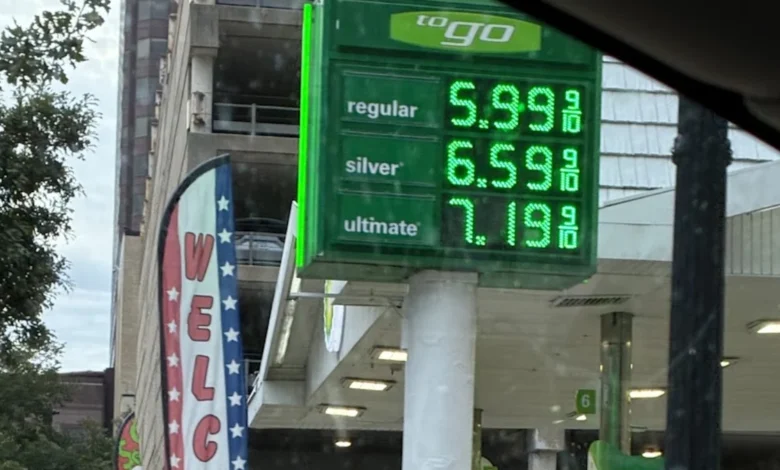
The milestone that many automotive industry analysts once considered a worst-case scenario has officially materialized across major metropolitan areas in the United States. In late September 2026, fuel prices at downtown pumps—such as a BP station in central Chicago—surged past the seven-dollar threshold, with premium 93-octane gasoline reaching $7.19 per gallon. This dramatic increase brings a harsh financial reality to American motorists, echoing price points previously seen only in heavily taxed European markets. The escalation arrives on the heels of mounting global supply chain pressures and geopolitical disruptions throughout the spring and summer of 2026, forcing a hard reassessment of consumer behavior regarding internal combustion engine (ICE) vehicles versus battery-electric vehicles (BEVs) and plug-in hybrids (PHEVs).
To understand how consumers might react to such extreme pricing pressures, automotive publication Electrek conducted a detailed sidebar survey in April 2026. Posing the question of how high fuel prices would need to climb to convince the most dedicated opponents of electric vehicles to make the switch, the survey captured over 2,800 reader responses over a seven-day period. At the time of the survey, a seven-dollar national average appeared to be a distant, almost hypothetical ceiling. However, with reality catching up to speculation faster than anticipated, the findings of that spring survey offer a fascinating look into consumer psychology, long-term economic calculation, and the fundamental barriers holding back absolute adoption of electrified transportation.
![Survey rewind: how much pain at the pump will it take to switch to EV? [update]](https://electrek.co/wp-content/uploads/sites/3/2026/04/IMG_7201.jpg?quality=82&strip=all&w=1600)
Chronology of a Pricing Shock: From April Predictions to September Realities
The trajectory of fuel costs over the course of 2026 highlights the volatility of traditional energy markets and the compounding factors influencing consumer choices.
- April 2026: Electrek launches its reader survey examining consumer thresholds for fuel prices. At this stage, standard regular unleaded hovers at manageable national averages, though analysts warn of looming supply restrictions. Over half of the survey respondents express skepticism that any price point, even upwards of $10 per gallon, would be enough to shift the mindset of the most entrenched ICE loyalists.
- May through August 2026: A series of international energy supply bottlenecks and shifting trade dynamics drive steady increases at the pump. Wholesale crude oil prices climb, subsequently pushing retail prices upward across the United States.
- September 19, 2026: Analysts release comprehensive reports detailing the broader geopolitical oil conflicts impacting global markets, demonstrating that the price hikes are tied to complex international supply chains rather than localized supply disruptions.
- September 26, 2026: Photographic evidence from downtown Chicago confirms premium gasoline reaching $7.19 per gallon, turning what was once a hypothetical survey metric into an inescapable daily expense for urban commuters.
Analyzing the Survey Data: The Hardened ICE Loyalist
The April survey yielded nuanced insights that challenge the simplistic notion that high gas prices alone will automatically drive widespread EV adoption. With more than 2,800 responses collected, the primary takeaway was not uniform agreement, but rather a deep-seated skepticism regarding the flexibility of the most stubborn fossil fuel advocates.
Nearly half of the survey respondents concluded that there is simply no price threshold high enough to force a conversion for a segment of drivers. Rather than relying purely on domestic economic theory, several respondents pointed to real-world precedents in international markets where high fuel costs have long been the norm.
![Survey rewind: how much pain at the pump will it take to switch to EV? [update]](https://electrek.co/wp-content/uploads/sites/3/2026/04/ev-numbers.png?w=1024)
For instance, European motorists have absorbed high fuel expenses for decades due to heavy energy taxation. Drawing comparisons to the Netherlands, where petrol prices converted to American measurements frequently exceed $11 per gallon, international observers noted that prolonged exposure to high fuel costs has not completely eradicated internal combustion engines. Instead, a core group of drivers remains committed to traditional powertrains, suggesting that voluntary conversion hits a hard ceiling among ideological opponents of electrification, leaving regulatory mandates as the only remaining catalyst for complete market saturation.
Economic Rationality Versus Pain at the Pump
Beyond consumer stubbornness, the survey responses and subsequent economic commentary highlighted a more pragmatic deterrent to immediate EV adoption: the high upfront capital cost of purchasing a new or used electric vehicle compared to retaining an existing, paid-off combustion vehicle.
Many vehicle owners operate on a strict total cost of ownership (TCO) model. For a consumer whose current vehicle is fully depreciated and mechanically reliable, a temporary or even sustained spike in monthly fuel expenditures from $90 to $200 often remains substantially cheaper than incurring a new auto loan or absorbing the rapid depreciation associated with purchasing a modern electric vehicle. In essence, the immediate financial pain of high gas prices does not always outweigh the capital expenditure required to transition to a new vehicle platform. Until an existing vehicle reaches the end of its reliable operational lifespan, the rational economic choice for many budget-conscious consumers is to absorb the higher fuel costs rather than invest in a new asset class.
![Survey rewind: how much pain at the pump will it take to switch to EV? [update]](https://electrek.co/wp-content/uploads/sites/3/2025/03/DES-1038_Electrek-Banners_EVs_0797c2.png)
Furthermore, consumer expectations regarding the longevity of vehicle assets play a critical role. With modern automobiles capable of lasting upward of 15 to 20 years with proper maintenance, drivers view vehicle acquisition as a long-term commitment. When fuel price spikes are perceived as temporary anomalies rather than permanent economic shifts, consumers tend to delay major capital investments, betting that commodity markets will eventually stabilize.
The Counter-Variable: Rising Electricity Rates and Energy Independence
A recurring debate among automotive analysts and consumers alike centers on the parallel trajectory of electricity rates. As utility companies face increased demand driven by industrial electrification, data centers, and consumer charging, electricity prices in many regions have begun to rise at a faster percentage rate than baseline petroleum products. Critics of aggressive EV adoption argue that escalating utility costs threaten to neutralize the operational savings historically associated with plugging in rather than fueling up.
However, proponents of electrification counter this argument by highlighting a fundamental structural advantage unique to electric vehicles: the decentralized capability of energy generation. Unlike petroleum, which relies entirely on centralized refining, global distribution networks, and retail pump pricing, electricity can be generated, stored, and managed at the residential level.
![Survey rewind: how much pain at the pump will it take to switch to EV? [update]](https://electrek.co/wp-content/themes/ninetofive/dist/images/google-preferred-source-badge-dark.png)
The integration of rooftop solar arrays, home battery storage systems—such as Tesla Powerwalls or similar residential energy ecosystems—and bidirectional-capable electric vehicles introduces a paradigm shift in personal economics. Industry experts frequently characterize this convergence as true residential energy independence. By pairing home solar generation with a battery and an EV, consumers effectively bypass both the traditional gas pump and the centralized utility grid for a significant portion of their daily driving needs.
While off-grid survival scenarios, such as electric vehicles operating in remote environments like the Atacama Desert utilizing mobile solar configurations, represent an extreme application of this technology, the everyday application is increasingly practical. Homeowners who generate their own power lock in their energy costs over decades, shielding themselves entirely from the volatility of international oil markets and unpredictable utility rate hikes.
Implications for the Future of Personal Mobility
The crossing of the seven-dollar threshold in major U.S. cities serves as a stress test for the American automotive market. It accelerates the financial calculus for high-mileage drivers, commercial fleets, and suburban commuters, making the cost-per-mile advantage of electric propulsion increasingly difficult to ignore. Yet, the persistent resistance among a dedicated faction of internal combustion supporters underscores that consumer choices are driven by a complex mix of economic calculations, infrastructure availability, and psychological attachment to traditional technology.
![Survey rewind: how much pain at the pump will it take to switch to EV? [update]](https://electrek.co/wp-content/themes/ninetofive/dist/images/google-preferred-source-badge-light.png)
As the automotive sector navigates the remainder of the decade, the primary drivers of EV adoption will likely rely less on sudden punitive spikes at fuel pumps and more on the sustained expansion of affordable vehicle inventory, the continued maturation of the used EV market, and the widespread adoption of localized home energy solutions. The transition is undeniably underway, but as late 2026 demonstrates, the journey toward a fully electrified transportation network remains uneven, protracted, and deeply tied to the broader macroeconomic forces shaping global energy markets.
Related posts: