France book South Africa rematch in Nations Championship final with bonus-point victory over Argentina

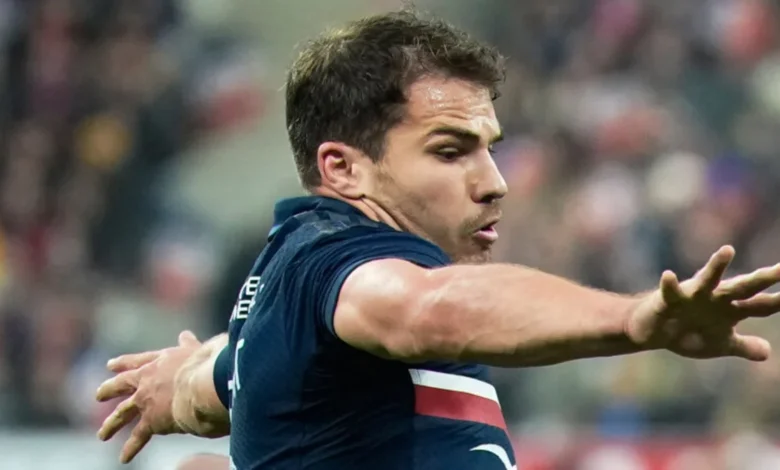
France have secured their place in the inaugural Nations Championship final, delivering a clinical 45-17 bonus-point victory over Argentina on Saturday to set up a mouth-watering rematch against South Africa. Following a high-stakes scenario where England’s 37-12 win over New Zealand earlier in the day forced France into an "all-or-nothing" performance, the French side responded with a seven-try masterclass at the Stade de France. The result confirms that the two powerhouses of international rugby—France and South Africa—will collide once more at Twickenham on November 29, just one week after their dramatic 21-19 encounter in Paris.
The Path to the Final: A High-Stakes Scenario
The complexity of the Nations Championship qualification reached its zenith this weekend. With South Africa having already secured their spot by topping the southern hemisphere pool despite a recent setback against Ireland, the second finalist remained uncertain until the final whistle blew in Paris.
England’s comprehensive defeat of the All Blacks earlier in the day shifted the mathematical requirements for Les Bleus. To overtake the chasing pack and solidify their position, France required not just a win, but a victory accompanied by a four-try bonus point. The pressure was palpable, yet the French squad, bolstered by the return of key tactical personnel, displayed the composure of a team operating at the height of its powers.
Match Chronology: A Seven-Try Masterclass
The match began with a sense of volatility. Argentina, known for their grit and tactical unpredictability, briefly held a 10-7 lead mid-way through the first half. A converted try by centre Justo Piccardo, supplemented by a penalty from fly-half Tomas Albornoz, provided the Pumas with a momentary glimmer of hope that they could derail the French campaign.
However, the French response was methodical and relentless. Lock Mickaël Guillard and hooker Peato Mauvaka bridged the gap in the first half, stabilizing the French effort before the interval. The turning point arrived shortly after the break when the tactical gamble to reinstate Matthieu Jalibert at fly-half paid dividends. Jalibert, who had been cleared for action following a remarkably swift recovery from a torn thigh muscle, displayed his trademark vision to set up centre Kalvin Gourgues for his first try of the night.
The game effectively reached its conclusion in the 64th minute. With France already leading 21-10, Emilien Gailleton powered over for the crucial fourth try—the bonus point that guaranteed their passage to the final. The situation deteriorated further for the visitors when refereeing officials upgraded a yellow card for Pumas prop Mayco Vivas to a red, reducing Argentina to 14 men for the final quarter.
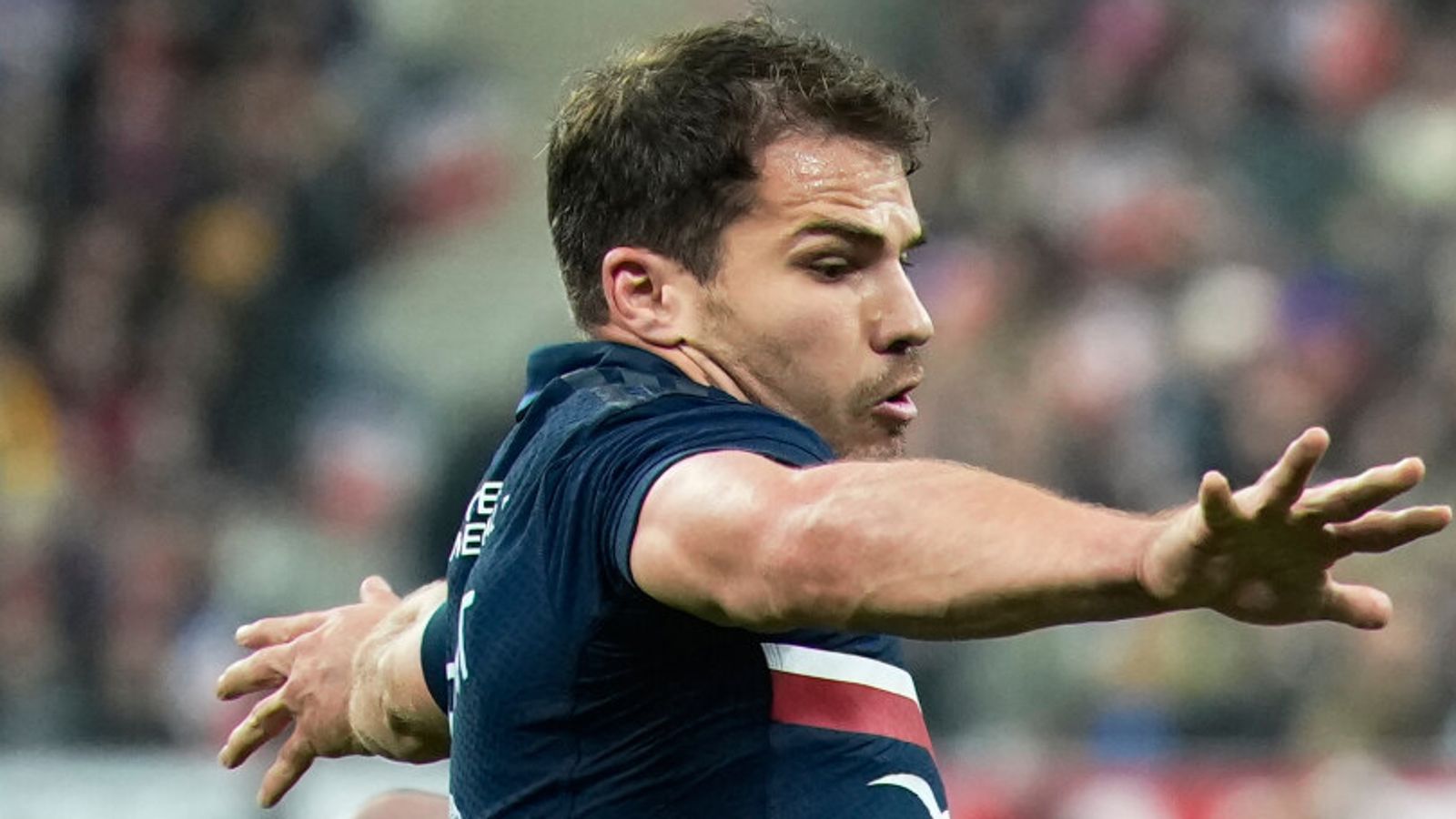
Capitalizing on the numerical advantage, France accelerated. Lock Tyler Duguid muscled his way through the Argentine defensive line, followed by a moment of individual brilliance from Gourgues, who sprinted from near the halfway line to touch down in the left corner. The rout was completed by Louis Bielle-Biarrey, who secured his 31st try in just 30 test appearances, assisted by a perfectly weighted kick from captain Antoine Dupont.
Tactical Shifts and Personnel Impact
The return of Antoine Dupont to his natural scrum-half position was arguably the most significant factor in France’s fluid attacking performance. Having experimented with Dupont at fly-half during the narrow win over the Springboks last week, head coach Fabien Galthié opted to restore the status quo, allowing Dupont to orchestrate the game from the base of the ruck.
The synergy between Dupont and Jalibert provided the necessary tactical balance. While Jalibert provided the distribution and short-range creativity, Dupont’s influence in the closing stages—specifically his tactical kicking to set up Bielle-Biarrey—demonstrated why he remains the premier playmaker in world rugby. Furthermore, the performance of Kalvin Gourgues, who stepped up as a makeshift kicker to slot five conversions, highlighted the depth and adaptability of the French squad.
Pre-match Tributes
Beyond the sporting intensity, the evening was marked by a moment of collective reflection. Before kickoff, both teams and the capacity crowd observed a poignant tribute to Federico Martín Aramburú. The former Argentina international and stalwart of French rugby was tragically killed in Paris four years ago. The gesture served as a somber reminder of the deep historical and emotional ties between the two rugby nations, providing a backdrop of respect that contrasted with the fierce competition on the pitch.
Statistical Overview and Performance Analysis
France’s dominance was reflected in the final statistics. Securing seven tries against an Argentine side typically known for its defensive resilience is a testament to the pace and precision of the French backline.

- Tries: France (7) – Guillard, Mauvaka, Gourgues (2), Gailleton, Duguid, Bielle-Biarrey.
- Goal Kicking: Kalvin Gourgues (5/7 conversions).
- Discipline: Argentina (1 Red Card – Mayco Vivas).
- Possession and Territory: France maintained an average of 62% possession throughout the second half, effectively strangling the Argentine attack.
The victory also highlights France’s current trajectory. Having defeated the Springboks just seven days prior, the French team enters the final with significant psychological momentum. However, rugby analysts note that the Twickenham final presents a different set of variables. Neutral ground often levels the playing field, and the Springboks—known for their meticulous analysis—will undoubtedly make adjustments to their defensive structure to account for the pace of players like Gourgues and Bielle-Biarrey.
Broader Implications for the Nations Championship
The Nations Championship has proven to be a watershed moment for the sport, providing a structured, high-stakes tournament format that bridges the gap between traditional test windows and the World Cup cycle. By reaching the final, France has solidified its position as the premier European representative in the new global hierarchy.
For Argentina, the tournament has been a mixed bag of competitive performances and disciplinary challenges. The red card to Vivas, while arguably harsh in the context of the game’s momentum, underscored the difficulty teams face when attempting to contain the modern French attacking game, which relies on rapid ball recycling and offloading out of contact.
The Road to Twickenham: A Final Preview
The November 29 final at Twickenham is being billed as the definitive test of the current global rugby order. The Springboks, under the leadership of Rassie Erasmus, have consistently shown an ability to win "ugly" when necessary, but their loss in Paris last week exposed vulnerabilities against high-tempo, offload-heavy rugby.
For France, the primary challenge will be maintaining their intensity over consecutive weeks against a South African pack that is likely to return to a more physical, forward-dominated game plan. The absence of injury concerns for Jalibert and the continued form of Dupont suggest that France will head to London with a clean bill of health and a tactical blueprint that has already proven successful once this month.
As the international rugby community turns its gaze toward the Twickenham final, the result of this weekend’s match serves as a compelling prelude. France has not only secured a trophy opportunity but has also validated the tactical evolution of their game, proving that they are no longer just a team of flair, but one of clinical, tournament-winning efficiency. The rematch with South Africa now stands as the crowning fixture of the season, promising a clash of styles and a battle for the inaugural title that will likely define the tactical discourse in rugby for the coming years.
Related posts: