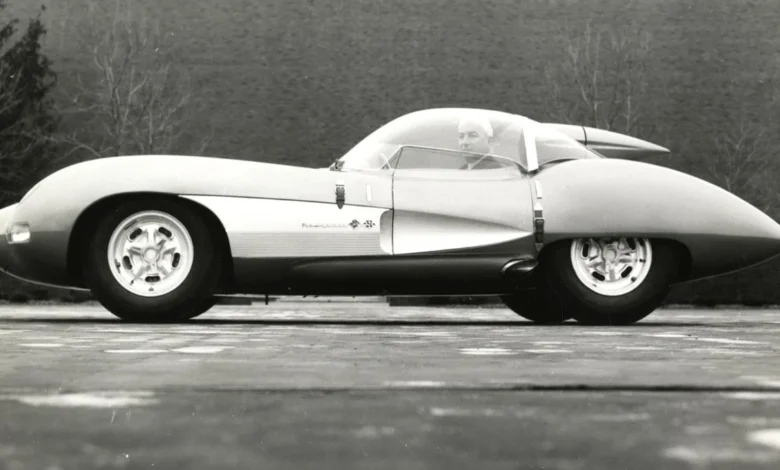
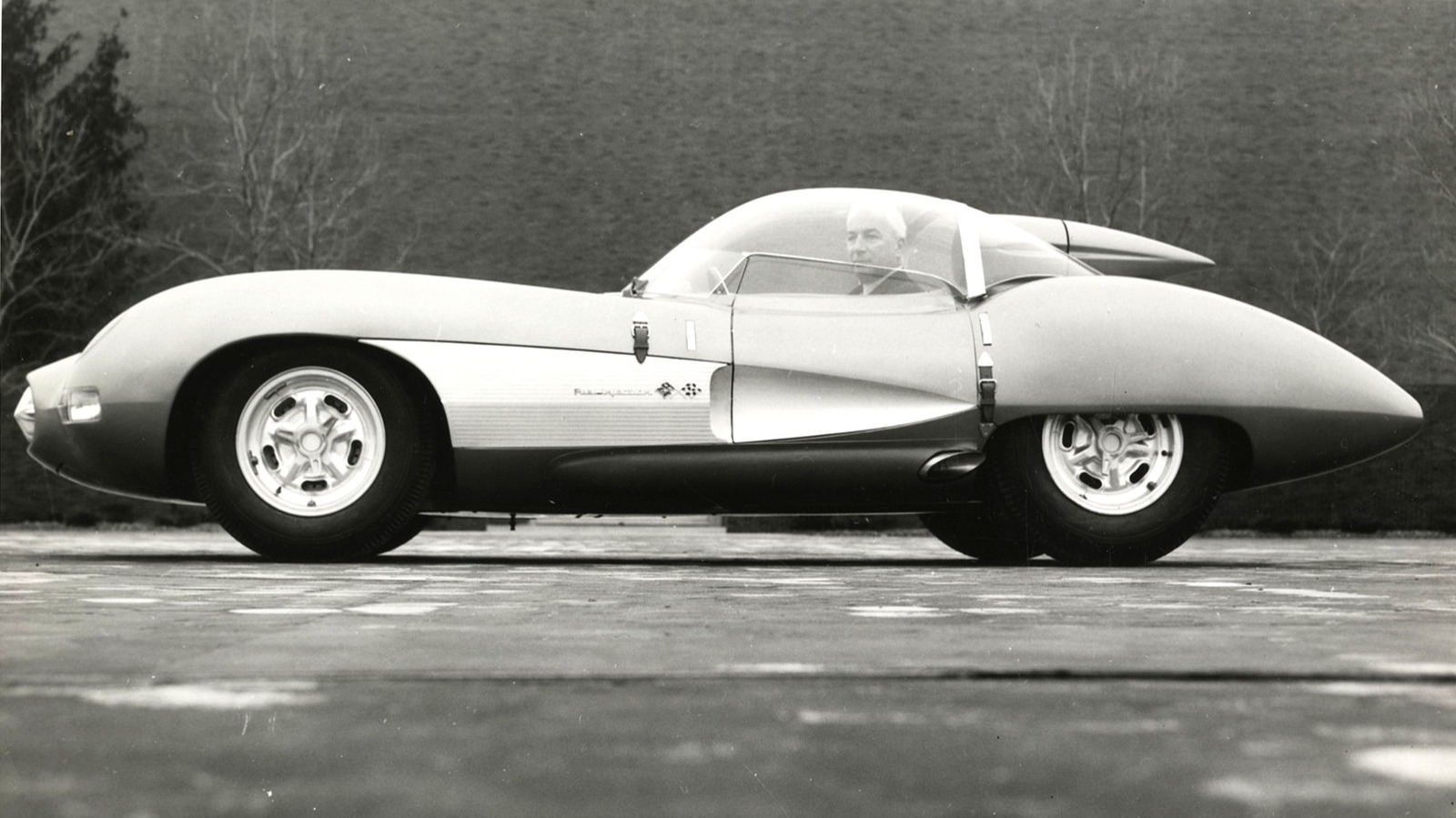
The history of the American automotive industry is inextricably linked to the contributions of immigrants who arrived on its shores with nothing but technical expertise and a singular vision. While contemporary political discourse occasionally attempts to frame immigration as a detriment to infrastructure and mobility, the story of Zora Arkus-Duntov serves as a definitive counter-narrative. Known universally as the "Father of the Corvette," Arkus-Duntov did not merely work on cars; he fundamentally altered the DNA of American performance, transforming a lukewarm boulevard cruiser into a global benchmark for the supercar. His journey from a childhood in Russia to the drafting rooms of General Motors is a testament to the transformative power of cross-cultural engineering expertise.
Born in Brussels in 1909 to Jewish parents, Arkus-Duntov’s life was shaped by the geopolitical turbulence of 20th-century Europe. His path to the United States was not a straight line, but a harrowing odyssey that required him to navigate the collapse of democratic nations and the rise of totalitarian regimes. By the time he joined the ranks of General Motors—a company named after Louis Chevrolet, another prominent immigrant—he had already lived several lifetimes of professional and personal peril.
A Legacy Forged in Conflict and Engineering
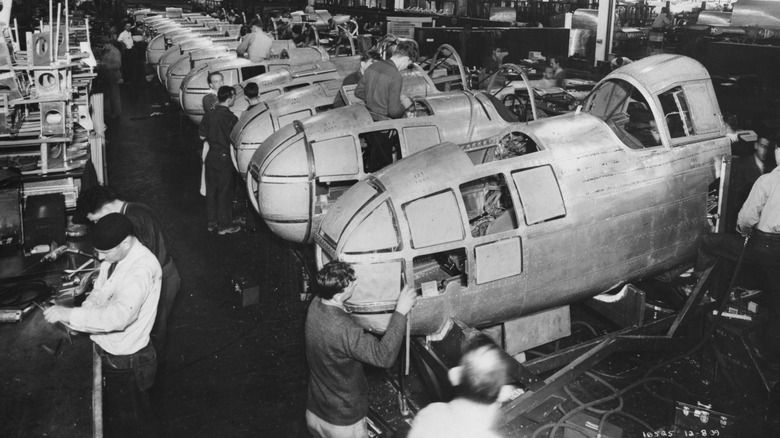
Arkus-Duntov’s commitment to the Allied cause during World War II was both ideological and personal. As a staunch opponent of the Nazi regime, he served as a tail gunner in the French Air Force. The logistical difficulty of his escape from occupied France is a story of automotive grit; his wife, Elfi, famously navigated the chaos of the German advance in a pre-war MG roadster, traversing secondary roads to reunite with him in Toulouse. Their eventual migration to New York in 1940 marked the beginning of his formal contribution to American industry.
Upon arriving in the United States, Arkus-Duntov did not immediately seek employment at a major automaker. Instead, he and his brother, Yura, founded Ardun Mechanical. This firm, which grew to employ 300 people, focused on the production of munitions for the war effort. However, the technical innovations developed at Ardun would eventually echo through the halls of Detroit. Arkus-Duntov engineered high-performance cylinder heads for the Ford Flathead V8, a project that effectively "unflattened" the engine to accommodate overhead valves and hemispherical combustion chambers. This design, while initially marketed to truck fleets, inadvertently laid the groundwork for the post-war hot-rod culture that would define American muscle for decades.
The Bridge Between European Racing and American Muscle
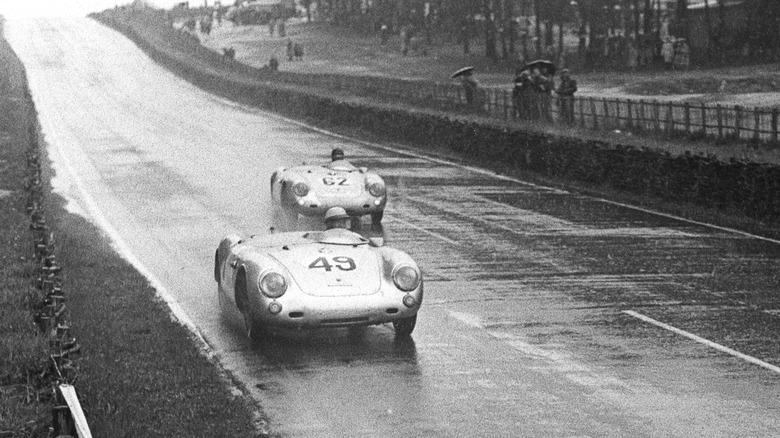
Arkus-Duntov’s pedigree as a professional driver was well-established long before his tenure at Chevrolet. His racing efforts in the 1940s and early 1950s included attempts at the Indianapolis 500 and competitive stints in British sports cars. His prowess on the track was so profound that he was recruited by the Porsche factory team. In 1954 and 1955, while technically under contract with General Motors, he piloted a Porsche 550 to class victories at the 24 Hours of Le Mans.
This dual life—working for an American corporate giant while racing for a European competitor—created significant friction within GM’s executive suites. Nevertheless, his time on the international circuit provided him with a clear vision of what a world-class sports car should be. He observed the nimble, mid-engine architectures dominating European endurance racing and began to advocate for similar innovations within the Corvette program, a vision that would take decades to fully realize but remains the cornerstone of the modern C8 Corvette.
The Duntov Letter and the Evolution of the Corvette
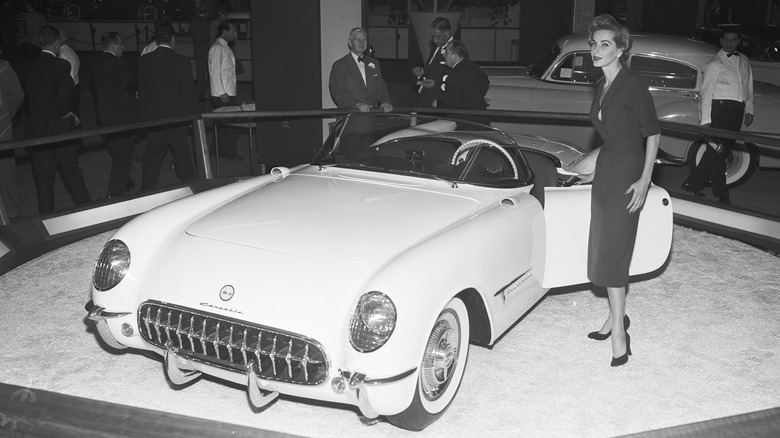
The genesis of the modern Corvette can be traced to a single, pivotal document: the "Duntov Letter." After being hired by Chevrolet in May 1953, Arkus-Duntov sent a three-page memorandum to Maurice Olley, the director of Research and Development at General Motors. The document was a masterclass in market analysis and mechanical strategy. It argued that the nascent hot-rodding movement was not a fringe subculture, but a growing demographic of consumers demanding performance.
Arkus-Duntov proposed that the Corvette be transformed from a stylistic exercise into a high-performance vehicle powered by the burgeoning small-block V8. His insights persuaded GM leadership to invest in the platform, effectively saving the Corvette from potential cancellation and securing its status as the "halo" car for the entire Chevrolet brand. This shift in strategy aligned the company with the emerging performance-oriented American consumer, setting a standard for power-to-weight ratios and handling that competitors struggled to match for years.
Chronology of Influence
- 1909: Zora Arkus-Duntov is born in Brussels.
- 1940: Arkus-Duntov flees occupied France for New York, founding Ardun Mechanical.
- 1947: Development of the Ardun cylinder heads for the Ford Flathead V8.
- 1952: Arkus-Duntov competes at Le Mans for the Allard team.
- 1953: Joins General Motors; writes the "Duntov Letter" advocating for the V8 Corvette.
- 1954-1955: Secures class victories at Le Mans while driving for Porsche.
- 1975: Receives his personal Corvette, a 1974 Stingray, which later enters the National Corvette Museum.
- 1996: Passes away at the age of 86, leaving behind a four-generation legacy.
The 1965 Paradigm: A Refined Ideal
Among the many iterations of the Corvette he oversaw, Arkus-Duntov reportedly favored the 1965 model. He viewed it as the most refined iteration of the early generations, particularly praising the Ramjet fuel-injection system. This preference highlights his engineering philosophy: he prioritized mechanical efficiency and technical sophistication over mere displacement. While the 1965 fuel-injected model was expensive—carrying a $538 premium over the base price—it represented the pinnacle of his desire to bring race-bred technology to the street.
The financial data from the era provides context for his choices. While the fuel-injected 327-cubic-inch V8 produced 375 horsepower, it was competing for attention with the 396-cubic-inch big block that offered 425 horsepower at a lower price point. Arkus-Duntov’s preference for the fuel-injected unit, despite its lack of raw "bang-for-the-buck," confirms his belief that precision and throttle response were the true metrics of a superior automobile.
The FBI Investigation and the Rosenberg Connection
One of the most unusual chapters in his life involves his connection to Julius Rosenberg, the infamous atomic spy. During his time at Ardun Mechanical, Arkus-Duntov provided metal-grinding services for Rosenberg’s business. Following the FBI’s investigation into the espionage ring, Yura Arkus-Duntov was interrogated regarding their interactions with the couple.
Evidence suggests that while the business relationship was professional, the FBI scrutinized the brothers for potential technical information leaks. Had the Bureau chosen to pursue a more aggressive inquiry, the fallout could have effectively ended Arkus-Duntov’s career in the United States before it began. Instead, the investigation concluded without charges, allowing him to continue his work. This incident remains a sobering reminder of the political volatility of the early Cold War era and how narrowly the history of the American sports car avoided a potential truncation.
Broader Impact and Industry Implications
The life of Zora Arkus-Duntov is a case study in the value of global mobility and the exchange of ideas. By importing European racing standards, engineering rigor, and a refusal to settle for mediocre performance, he catalyzed an entire industry. His work forced General Motors to adopt a culture of innovation that prioritized the driver’s experience above mere cost-cutting.
Today, the Corvette stands as a symbol of American engineering prowess. That it was guided into existence by an immigrant who fought against tyranny in Europe and navigated the complexities of post-war American corporate life is not a coincidence, but a reflection of the competitive advantage found in diverse talent. The "Father of the Corvette" remains a central figure in automotive history, not only for the machines he built but for the cultural bridge he constructed between the traditions of European motorsport and the boundless ambition of the American automotive market. His legacy continues in every mid-engined vehicle that rolls off the assembly line, fulfilling the vision he articulated in that pivotal letter over seven decades ago.
Related posts: