Shocking EV Reality: Retired Couple’s Two-Month Fuel Cost Total Just $7 After Switching to Urban Public Transit

For first-time electric vehicle buyers, one of the most frequently asked questions centers on operational expenses, particularly the recurring cost of electricity. While prospective owners often debate the financial merits of home-charging installations versus public infrastructure reliance, real-world data frequently defies conventional expectations. A recent case study shared by an electric vehicle owner provides a striking example of these modern economic realities: following two months of ownership, the total expenditure required to power their battery-electric vehicle amounted to just $7 per month.
While fuel expenditures—whether measured in gasoline, diesel, or electricity—vary widely depending on individual driving habits, geographic location, and vehicle efficiency, this specific user’s experience highlights an emerging lifestyle trend. Rather than utilizing an EV for a long-distance rural commute, a Reddit user known online as Suitable-Truth-350 adopted an entirely different mobility model by relocating to a major metropolitan area designed for active pedestrianism and robust public transit.
The Lifestyle Shift: Trading Suburban Highways for Urban Walkability
The transition began when the couple retired from a car-dependent, rural-suburban region and moved to a large, highly walkable city serviced by a comprehensive light rail network. Their primary objective was straightforward: to minimize automobile reliance to the greatest extent possible.

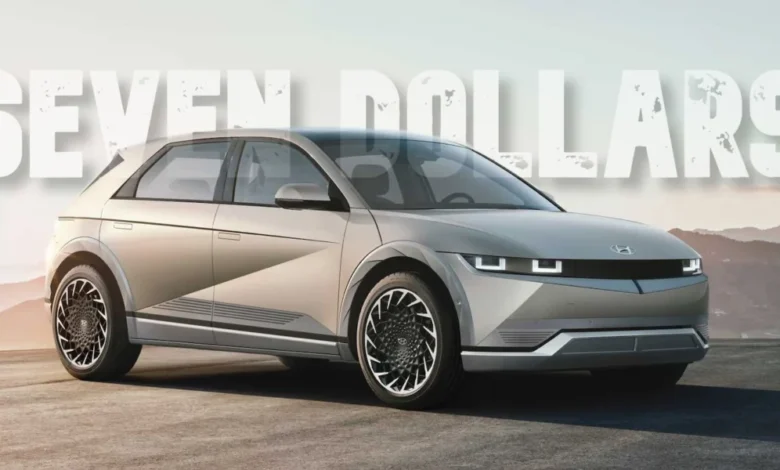
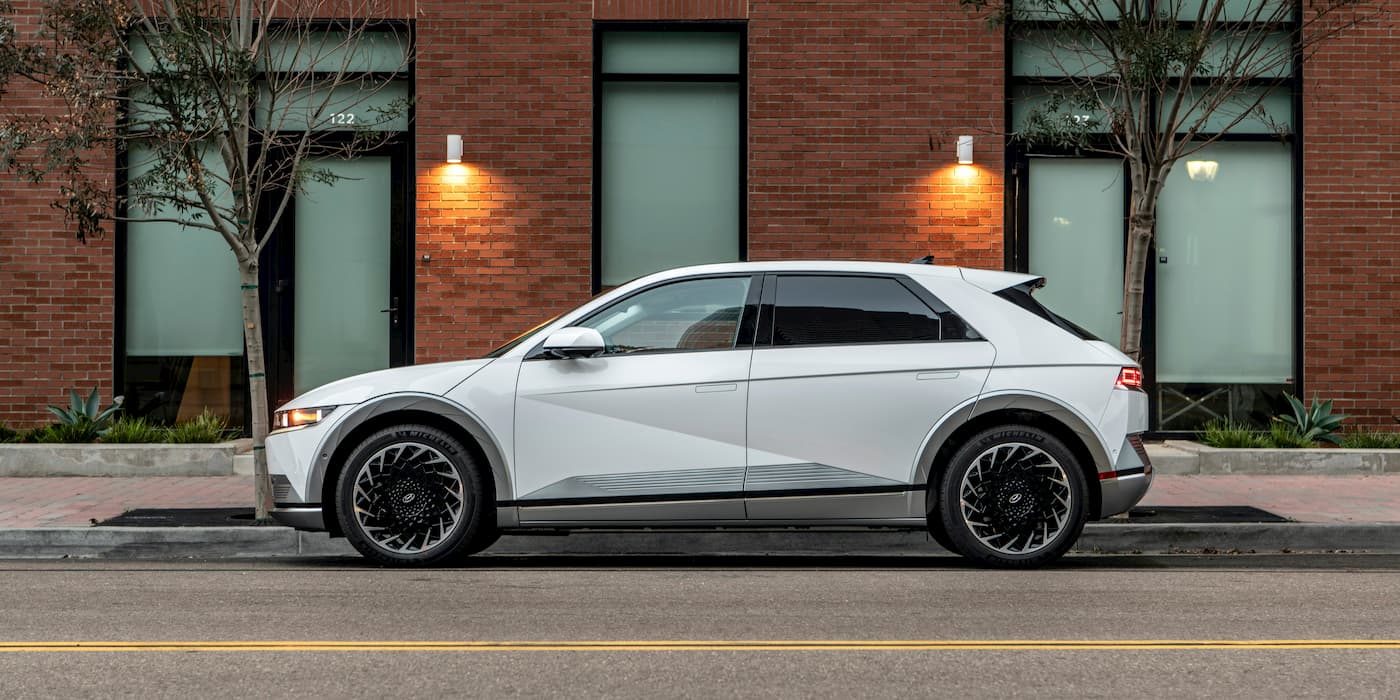
In August, the couple took delivery of a new Hyundai Ioniq 5. Despite integrating the vehicle into their retirement routine—primarily reserved for weekend trips to visit friends in rural areas, regional shopping excursions, and navigation across the greater Chicagoland area—their reliance on daily driving dropped precipitously. Their primary mobility shifted to walking and public transit, reserving the automobile strictly for specific tasks unsuited for the light rail network.
This minimalist driving strategy produced an unexpected milestone: two full months elapsed before the vehicle required its first battery recharge. According to the owner, the subsequent charging session took less than 30 minutes to replenish the battery pack to an 80 percent state of charge, incurring a total public charging cost of $13. Spread across the two-month period, this translates to roughly $6.50 to $7 per month in energy costs.
Reflecting on the initial months of ownership, the owner expressed high satisfaction with the vehicle’s driving dynamics, noting that the instantaneous torque, responsive pickup, and silent, smooth operation offered a stark contrast to internal combustion engine (ICE) vehicles they had previously driven. They added that the overall experience has permanently altered their perception of modern mobility, removing any desire to return to gasoline-powered automobiles.
Daily Driving Realities Versus Public Perception
This anecdotal account underscores a broader disconnect between public perception regarding electric vehicle utility and actual driving patterns documented by transportation authorities. For years, automotive analysts and EV advocates have noted that range anxiety—the fear of running out of battery power far from a charging station—typically dissipates rapidly once consumers experience day-to-day EV ownership. However, for urban and suburban retirees who maintain modest daily travel requirements, the challenge is rarely about managing long distances, but rather recognizing how infrequently the vehicle is actually utilized.
Comprehensive data from the American Automobile Association (AAA) annual driving survey reveals that the average motorist in the United States covers less than 29 miles per day. This average daily mileage falls comfortably within the operational limits of virtually every battery-electric vehicle currently on the market, including older or lower-range pre-owned models. Furthermore, AAA research indicates that only 30 percent of Americans undertake at least one traditional summer road trip annually, with the average one-way trip length resting at approximately 235 miles.
While a 235-mile journey might stretch the limits of vehicles equipped with smaller battery packs—such as city-oriented hatchbacks with lower EPA-estimated ranges—modern charging infrastructure easily mitigates these distances. Even the shortest-range new EVs available can complete such trips with a single, highly efficient 30-minute fast-charging stop.
The Evolution of Public Charging Infrastructure
The feasibility of long-distance electric travel has transformed significantly over recent years. Driven by sustained public and private investments, the public charging network across North America has expanded rapidly, becoming faster, more reliable, and more ubiquitous than many hesitant consumers realize. Modern DC fast-charging stations are capable of delivering hundreds of kilowatts of power, reducing replenishment times to levels comparable to traditional refueling stops.
Consequently, multi-bay charging hubs, plug-and-charge capabilities, and interoperable networks are turning long-distance charging from an inconvenience into a routine errand. As new fast-charging locations come online weekly, extended charging delays are increasingly becoming the exception rather than the rule for long-distance motorists.

Financial Implications and Comparative Operating Costs
While the average EV owner will undoubtedly incur higher monthly electricity expenditures than the $7 recorded by the Chicago-area retirees—particularly those who commute long distances for work—the overall economics remain heavily favored toward electrification. Amid sustained fuel price fluctuations where premium gasoline and diesel prices remain elevated in many regions, the cost per mile for an electric vehicle continues to offer substantial savings over internal combustion equivalents.
Whether charging overnight at residential rates or utilizing commercial DC fast chargers during sporadic road trips, the cost of electricity per equivalent gallon of fuel remains significantly lower. Even for drivers who rely entirely on public fast-charging infrastructure without the benefit of home charging, the per-mile energy expense typically undercuts traditional fossil fuels by a wide margin.
Broader Economic and Environmental Impact
The convergence of urban density, accessible public transit, and electric vehicle adoption points toward a shifting paradigm in modern transportation planning. As more municipalities invest in walkable infrastructure and light rail corridors, households are increasingly discovering that zero-emission vehicles do not need to serve as high-mileage daily drivers to justify their acquisition. Instead, they can function as efficient, low-maintenance secondary assets for occasional regional travel, drastically reducing household carbon footprints while lowering overall cost-of-ownership burdens.
Ultimately, the experience of these recent retirees illustrates that the future of mobility is not solely about replacing every gasoline car with an identical electric equivalent, but about rethinking how personal transportation integrates into a broader, multimodal lifestyle. By combining urban walkability with the efficiency of modern electric vehicles, motorists can achieve unprecedented levels of economy, proving that sustainable transportation can align seamlessly with financial prudence and driving enjoyment.
Related posts: