Automotive AI Intelligence Brief: SpaceX-Tesla Synergy, Volkswagen Data Pipelines, and the Rise of Physical AI

The intersection of artificial intelligence and the automotive sector is undergoing a profound structural evolution, marked by high-stakes corporate realignments, massive reductions in physical testing overheads, and the blurring lines between traditional vehicle manufacturing and general-purpose robotics. The latest edition of the Automotive AI Intelligence Brief highlights a pivotal moment for the industry, underscored by strategic shifts led by visionary figures and legacy original equipment manufacturers (OEMs) alike. At the core of this transformation is the realization that automobiles are increasingly being conceptualized not merely as standalone consumer products, but as rolling hardware nodes designed to deploy and monetize physical artificial intelligence at scale.
This paradigm shift is reshaping corporate strategies, research and development (R&D) expenditures, and supply chain dependencies across global markets. As autonomous driving architectures mature, automakers are racing to integrate advanced silicon, cloud infrastructure, and generative AI pipelines to compress development cycles. Concurrently, the boundaries of the automotive ecosystem are expanding outward into humanoid robotics and open-source collaboration platforms, signaling a broader industrial revolution driven by machine learning advancements.
The Tesla-SpaceX Convergence and the Pivot to Physical AI
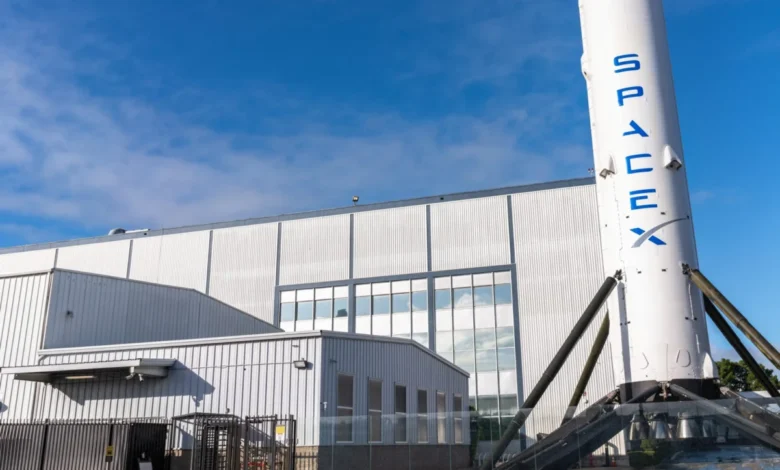
At the center of recent industry discourse is Elon Musk’s growing support for a structural or operational convergence between electric vehicle pioneer Tesla and aerospace manufacturer SpaceX. While corporate discussions regarding such a merger remain fluid and subject to complex regulatory and shareholder evaluations, analysts suggest that a formal integration would codify a strategic pivot that has been silently underway for years.
For the better part of a decade, Tesla has transitioned its public narrative from a pure-play electric car manufacturer to an applied artificial intelligence and robotics enterprise. Financial analysts note that under a combined SpaceX-Tesla entity, automotive hardware could increasingly be viewed by its leadership as a secondary distribution channel—essentially a physical vessel or edge device utilized to collect vast real-world telemetry, train neural networks, and eventually distribute physical AI applications, ranging from Full Self-Driving (FSD) software to humanoid robotics like the Optimus platform.
This strategic recalibration addresses a fundamental economic reality: global automotive profit margins face persistent downward pressure due to intense price competition, rising material costs, and expensive capital expenditures. By contrast, proprietary physical AI ecosystems command software-like margins and scalability. Industry observers point out that if Tesla’s vehicles become primarily hardware hosts for a broader AI software stack, the valuation metrics and operational priorities of the company will shift permanently away from traditional automotive metrics—such as units delivered per quarter—and toward active AI compute hours, fleet utilization rates, and autonomous miles driven.
Accelerating R&D: Volkswagen’s Data Pipeline Revolution
While Tesla explores cross-industry consolidation, legacy European automotive giants are deploying targeted technological alliances to modernize their own software stacks and development pipelines. Volkswagen Group has recently unveiled a sophisticated, Porsche-led data pipeline initiative developed in close collaboration with tech heavyweights Nvidia, Microsoft, and computer vision platform Voxel51.
The primary objective of this high-performance data infrastructure is as ambitious as it is vital for cost containment: targeting up to a 90% reduction in physical test drives. Historically, validating advanced driver-assistance systems (ADAS) and autonomous driving features required millions of miles of real-world road testing across diverse geographic locations, weather conditions, and traffic scenarios. This process is exceptionally time-consuming, labor-intensive, and capital-heavy.
By leveraging Nvidia’s advanced accelerated computing architecture, Microsoft’s scalable cloud capabilities, and Voxel51’s specialized computer vision data curation tools, the Porsche-led pipeline allows engineering teams to simulate, curate, and analyze edge-case driving scenarios within virtual environments. High-fidelity simulation and synthetic data generation enable developers to train and test neural networks against millions of variations of rare driving events—such as sudden pedestrian jaywalking or erratic hazard maneuvers—without ever sending a physical prototype onto public highways.
Industry analysts view the Volkswagen initiative as a blueprint for legacy automakers struggling to balance soaring R&D budgets with the rapid pace of software development seen in Silicon Valley competitors. If successful, cutting physical test drives by up to 90% will dramatically accelerate time-to-market for next-generation vehicle architectures while preserving billions of dollars in operational expenditure.
Open-Source Collaboration: Tier IV and TUM Bring Nvidia Hyperion to Autoware
In the realm of open-source autonomous mobility, significant strides are being made to democratize high-performance AV hardware architectures. Tier IV, a foundational contributor to the open-source autonomous driving software project Autoware, has announced a strategic partnership with the Technical University of Munich (TUM).
This collaboration focuses on integrating Nvidia’s Hyperion reference architecture into open-source Autoware projects. The Nvidia Hyperion platform provides a standardized, production-ready sensor suite and compute framework—incorporating cameras, radars, lidars, and centralized processing units—designed to streamline the development of Level 3 and Level 4 autonomous systems.
Historically, proprietary autonomous driving stacks have relied on closed, highly expensive, vertically integrated hardware and software ecosystems. By bringing the Nvidia Hyperion hardware blueprint into the open-source Autoware community, Tier IV and TUM aim to lower the barrier to entry for tier-one suppliers, academic institutions, and emerging electric vehicle startups. This open-source synergy facilitates faster validation, greater interoperability, and community-driven peer review of autonomous codebases, challenging the monopolistic tendencies of proprietary tech giants and fostering a more collaborative global R&D environment.
Beyond the Road: Chery’s Aimoga and the Consumer Home Robot Market
The expanding definition of automotive artificial intelligence is perhaps best illustrated by the diversification of traditional carmakers into general-purpose robotics. Chery, one of China’s prominent automotive manufacturers, has seen its robotics subsidiary, Aimoga, officially open pre-orders for its flagship consumer home robot, dubbed Mobo.
The transition from building passenger vehicles to consumer robotics leverages core competencies that automakers have spent decades refining: precise actuator design, battery management systems, spatial awareness mapping, and real-time edge computing. Mobo is designed to navigate complex domestic environments, interact with household appliances, and assist users with daily tasks, utilizing many of the same neural network architectures and sensor fusion techniques found in modern autonomous driving systems.
Market researchers note that consumer robotics represents the next logical frontier for automotive-adjacent enterprises seeking to capture new revenue streams as global car markets mature. The underlying technologies—specifically spatial computing, natural language processing, and bipedal or wheeled mobility mechanics—share a deep technological lineage with autonomous vehicle research. Consequently, automotive groups are uniquely positioned to mass-produce consumer robots at price points that traditional electronics or pure-play robotics startups struggle to match initially.
Chronology of Recent Automotive AI Milestones
To understand the rapid pace of transformation within the sector, it is necessary to examine the chronological progression of key developments leading up to the current operational landscape:
- Early 2024: Major global automakers intensify cost-cutting measures, re-evaluating internal software divisions and pivoting toward strategic partnerships with cloud and silicon providers rather than building all software in-house.
- Mid 2024: Open-source autonomous driving initiatives gain traction as regulatory scrutiny over public testing of Level 2+ and Level 3 systems increases worldwide, forcing companies to rely more heavily on advanced simulation.
- Late 2024 to 2025: Collaborative validation pipelines, such as those pioneered by Porsche, Microsoft, and Nvidia, move from conceptual phases to active deployment within factory validation centers, demonstrating verifiable drops in physical test mileage.
- Early 2026: Discussions surrounding structural corporate realignments—including potential synergies between space exploration, clean energy, and physical AI hardware conglomerates—gain renewed attention among institutional investors.
- Current Period (Late 2026): Announcements like Tier IV and TUM’s integration of Nvidia Hyperion into Autoware, alongside Chery Aimoga’s commercialization of the Mobo home robot, underscore a diversified industry where automotive technology actively bleeds into open-source platforms and domestic robotics.
Economic and Technical Implications
The convergence of these events carries profound implications for the global automotive value chain. First, the capital expenditure profile of vehicle manufacturing is shifting permanently. As virtual validation pipelines reduce the necessity of physical test fleets, engineering budgets will increasingly be allocated toward cloud infrastructure, data labeling pipelines, and high-performance neural network training clusters.
Second, the supply chain is experiencing a realignment of power dynamics. Silicon giants and cloud hyperscalers—namely Nvidia and Microsoft—are becoming indispensable partners to legacy OEMs. Automakers that fail to secure robust technological alliances risk falling behind in the race for software-defined vehicle (SDV) supremacy. Conversely, those that successfully integrate modular hardware platforms like Nvidia Hyperion or establish agile data pipelines can iterate software updates at consumer-electronics speeds.
Finally, the philosophical definition of an automobile is undergoing an irreversible metamorphosis. When vehicles are evaluated primarily as edge devices for physical AI deployment, the traditional metrics of automotive manufacturing—horsepower, torque, and styling—take a backseat to compute capacity, neural network parameter size, and fleet data collection efficiency.
Conclusion
The latest intelligence brief illustrates an industry actively shedding its 20th-century industrial identity in favor of a dynamic, AI-driven future. Whether through Musk’s vision of physical AI hardware networks, Volkswagen’s simulation-driven data pipelines, Tier IV and TUM’s open-source democratization efforts, or Chery’s foray into domestic robotics, the message is clear. The future of the automotive industry will not be defined solely by the vehicles that roll off assembly lines, but by the intelligence embedded within them and the broader physical AI ecosystems they empower. As these technologies mature, the boundary between transportation, enterprise automation, and consumer robotics will continue to dissolve, ushering in a new era of industrial engineering.
Related posts: