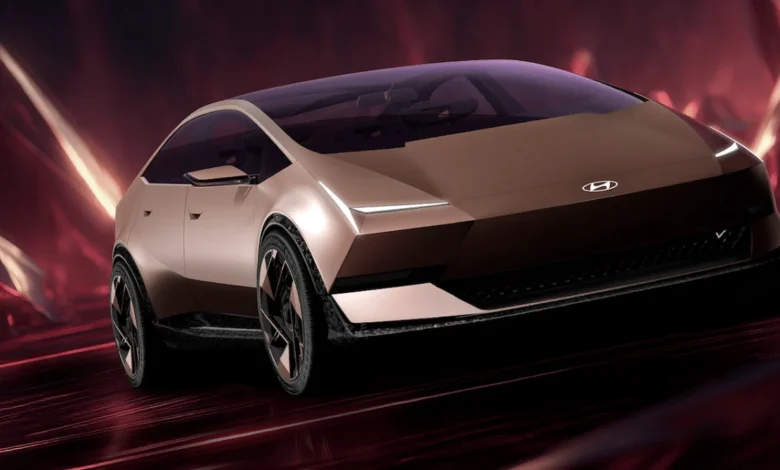
The global automotive landscape is currently witnessing a significant recalibration of market share as the Hyundai Motor Group (HMG) positions itself for a sustained period of expansion. According to the latest production dataset from Automotive World, HMG—which encompasses the Hyundai, Kia, and Genesis brands—recorded a production volume of slightly more than seven million vehicles in the previous calendar year. This figure is not merely a recovery from post-pandemic supply chain disruptions but serves as a foundation for a projected 6% growth trajectory. Industry analysts now forecast that the Group’s total output will approach 7.5 million units by 2026, driven by a robust pipeline of new models and a strategic realignment of its global manufacturing footprint.
This growth is underpinned by a diverse geographical production strategy that balances domestic dominance with aggressive expansion in emerging and established markets. Currently, Asia remains the primary engine of HMG’s manufacturing operations, with South Korea and India accounting for approximately 70% of total production. This is followed by North America at 15%, Europe at 11-12%, and South America at 3%. As the Group navigates the transition from internal combustion engines (ICE) to electric vehicles (EVs) and hybrids, the interplay between these regions will determine its ability to compete for the top spot among the world’s largest automakers.
Historical Context and the Path to Seven Million Units
The journey to a seven-million-unit annual production capacity represents a decades-long evolution for the South Korean conglomerate. In the early 2000s, Hyundai and Kia were often perceived as value-oriented brands with limited appeal in the premium or high-performance segments. However, a concerted effort to improve build quality, spearheaded by the "Quality First" initiative, laid the groundwork for the brand’s current reputation.
The mid-2010s marked a turning point with the launch of the Genesis brand as a standalone luxury entity in 2015. This allowed HMG to move upmarket, capturing higher profit margins that could be reinvested into research and development. By 2020, despite the global slowdown caused by the COVID-19 pandemic, HMG demonstrated remarkable resilience. While competitors struggled with semiconductor shortages, the Group’s integrated supply chain in South Korea allowed it to maintain higher production levels than many of its European and American counterparts.
The most recent surge in production follows the successful introduction of the Electric Global Modular Platform (E-GMP). This dedicated architecture has allowed the Group to launch a series of award-winning electric vehicles, including the Hyundai IONIQ 5, IONIQ 6, and the Kia EV6 and EV9. These models have not only boosted production numbers but have also fundamentally shifted consumer perception, positioning HMG as a technological leader in the EV space.
Regional Analysis: Asia as the Production Powerhouse
Asia continues to be the backbone of HMG’s global operations. In South Korea, the Ulsan plant remains the world’s largest integrated automobile manufacturing facility, serving as both a domestic supplier and a major export hub. The domestic market provides a stable base of demand, particularly for high-margin models like the Hyundai Grandeur and the Genesis G80 and GV80.
However, the most significant growth narrative within Asia is centered on India. Hyundai Motor India Limited (HMIL) has established itself as the second-largest automaker in the country, trailing only Maruti Suzuki. To support the forecasted growth toward 2026, HMG has undertaken strategic acquisitions, including the purchase of General Motors’ Talegaon plant in Maharashtra. This move is expected to increase HMG’s annual production capacity in India to approximately one million units.
The Indian market is particularly crucial because it serves as a launchpad for affordable yet feature-rich SUVs, such as the Hyundai Creta and Kia Seltos, which are exported to other emerging markets in the Middle East and Africa. By leveraging India’s cost-effective manufacturing environment, HMG can maintain competitive pricing while scaling up its global volume.
North American Expansion and the Impact of the IRA
North America accounts for 15% of HMG’s production, a figure that is expected to rise as the Group responds to the U.S. Inflation Reduction Act (IRA). The IRA provides significant tax credits for electric vehicles, provided they meet strict domestic assembly and battery sourcing requirements.
In response, HMG has accelerated the construction of the Hyundai Motor Group Metaplant America (HMGMA) in Bryan County, Georgia. This $7.6 billion facility is designed to produce a diverse range of EVs for the Hyundai, Kia, and Genesis brands. Once fully operational, the Metaplant is expected to have an annual capacity of 300,000 units, with the potential to expand to 500,000.
This localization strategy is not limited to assembly. HMG is also investing heavily in battery joint ventures with partners like LG Energy Solution and SK On to ensure a localized supply chain. Analysts suggest that the North American market will be the primary driver of the Group’s luxury and large SUV growth, with models like the Kia Telluride and the upcoming Hyundai IONIQ 9 (a three-row electric SUV) catering specifically to American consumer preferences.
Europe and South America: Specialized Roles
In Europe, which accounts for 11-12% of production, HMG operates key facilities in the Czech Republic (Hyundai) and Slovakia (Kia). These plants are specialized in producing compact and mid-sized vehicles that meet the stringent environmental standards of the European Union. The Kia Sportage and Hyundai Tucson, both available in hybrid and plug-in hybrid variants, are the mainstays of European production.
The European strategy is increasingly focused on the "EV3" and "EV5" models—smaller, more affordable electric vehicles designed to compete with both established European OEMs and incoming Chinese competitors. By maintaining a local manufacturing presence, HMG avoids the logistical costs and potential tariffs associated with importing vehicles from Asia.
South America, while currently representing only 3% of production, remains a vital strategic outpost. The Piracicaba plant in Brazil focuses on the HB20 and Creta models, which are tailored to local infrastructure and fuel requirements (including ethanol-blended fuels). While growth in this region is slower than in North America or India, HMG’s ability to adapt its platforms to local needs ensures a steady contribution to the global 7.5-million-unit goal.
The Genesis Factor: Driving Premium Growth
A critical component of the 6% growth forecast is the continued expansion of the Genesis brand. Luxury vehicles offer significantly higher margins than mass-market models, and Genesis has seen a meteoric rise in sales, particularly in the United States and South Korea.
The brand’s commitment to becoming an all-electric label by 2030 has necessitated a rapid expansion of its production capabilities. The integration of Genesis production into existing lines in Ulsan and the new dedicated EV lines in Georgia allows the Group to scale luxury production without the overhead of entirely separate factories. The introduction of the GV60 and the electrified versions of the G80 and GV70 has proven that the brand can compete with the likes of BMW, Mercedes-Benz, and Lexus on both performance and luxury.
Official Strategy and Executive Outlook
While HMG executives rarely provide public commentary on specific third-party production datasets, the Group’s "Strategy 2025" and subsequent updates align with the findings of the Automotive World report. Executive Chair Euisun Chung has frequently emphasized a transition from being a traditional "carmaker" to a "smart mobility solution provider."
In recent corporate briefings, HMG leadership has outlined a plan to sell 2 million EVs annually by 2030. Reaching 7.5 million total units by 2026 is a necessary stepping stone in this transition. The Group’s focus is currently on "Software-Defined Vehicles" (SDVs), where production growth is not just about physical units, but about the integration of advanced software that allows for over-the-air updates and new revenue streams through digital services.
Industry experts believe that HMG’s success is rooted in its "fast follower" turned "first mover" mentality. By aggressively investing in R&D during economic downturns, the Group has consistently emerged stronger than its peers.
Implications for the Global Automotive Market
The projected growth of Hyundai Motor Group to 7.5 million units by 2026 has profound implications for the global automotive hierarchy. If these targets are met, HMG will solidify its position as the world’s third-largest automaker, potentially closing the gap with Volkswagen Group and Toyota.
Several factors will determine the success of this expansion:
- Supply Chain Vertical Integration: HMG’s move to produce its own power electric systems and batteries will be crucial in maintaining margins as EV production scales.
- Technological Diversification: Unlike some competitors who have bet solely on BEVs (Battery Electric Vehicles), HMG continues to invest in Hydrogen fuel cell technology (via its HTWO brand) and high-efficiency hybrids, providing a hedge against fluctuating EV demand.
- Geopolitical Navigation: The Group’s ability to manage its operations in China—a market where it has recently struggled—while expanding in India and the U.S. will be a delicate balancing act.
In conclusion, the forecast of 6% growth for Hyundai Motor Group is a testament to a well-executed long-term strategy. By diversifying production across key regions and leaning into a high-tech, multi-brand approach, HMG is not just increasing its volume; it is redefining its role in the future of mobility. As new models continue to roll off assembly lines from Ulsan to Georgia, the Group appears well-positioned to meet the 7.5-million-unit milestone by 2026, marking a new chapter in its history of global automotive leadership.
Related posts: