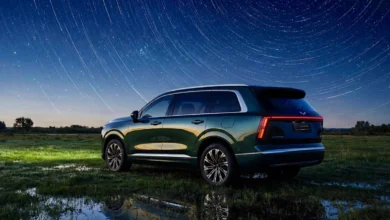
BYD Moves Upmarket with Yangwang Altior Flagship EV Featuring Suicide Doors and Advanced Battery Tech


The global automotive landscape is undergoing a monumental shift as electric vehicle manufacturers increasingly target the ultra-luxury segment, traditionally dominated by legacy European marques like Rolls-Royce and Mercedes-Maybach. Leading this charge is Chinese automotive giant BYD, which has steadily expanded its portfolio from affordable mass-market battery electric vehicles (BEVs) to high-performance, technologically advanced luxury offerings. Through its elite sub-brand Yangwang—often compared to BMW’s Rolls-Royce or Mercedes-Benz’s Maybach—BYD is preparing to unveil its most ambitious vehicle to date: the Yangwang Altior executive sedan.
Positioned at the absolute apex of BYD’s brand hierarchy, the Altior represents a calculated effort to challenge the established old-money hierarchy of ultra-luxury motoring. Ahead of its anticipated global debut, executives have begun trickling out specifications, design cues, and strategic insights that suggest the Altior will be much more than a simple luxury cruiser. Equipped with dramatic design elements like near 90-degree opening suicide doors, a gemstone-inspired front fascia, and potentially groundbreaking battery technology, the Altior is poised to make a profound statement on the international stage.
A New Benchmark for Yangwang’s Ultra-Luxury Portfolio
Yangwang was established as BYD’s pinnacle brand, designed to showcase the company’s most advanced engineering, highest performance thresholds, and most opulent craftsmanship. Up to this point, the Yangwang catalog has captured headlines through sheer technical audacity. The lineup includes the U7 executive sedan, the U8—a hardcore, water-floating off-road SUV—and the U9, a track-capable electric supercar.
Vehicles within the Yangwang ecosystem have historically served as the launchpads for BYD’s most disruptive proprietary technologies. These include the quad-motor e4 platform, capable of delivering well over 1,300 horsepower; second-generation Blade Batteries paired with ultra-fast Flash Charging capabilities; and the DiSus-X intelligent body control system, which allows vehicles to execute complex maneuvers, including dancing and driving on three wheels.

The Altior, however, shifts the focus from raw track performance and off-road capability toward uncompromising executive luxury and prestige. Following initial confirmations of the vehicle’s nomenclature earlier in the week, Yangwang General Manager Hu Xiaoqing provided a deeper look into the vehicle’s architectural styling on Friday. Most notably, Hu confirmed that the Altior will incorporate suicide doors—a signature touch of automotive aristocracy—marking a first for any production vehicle in the broader BYD stable.
Design Philosophy and Grand Proportions
The integration of suicide doors is expected to alter the ingress and egress experience for rear-seat passengers dramatically. According to Yangwang leadership, the doors are engineered to swing open nearly 90 degrees, creating a wide, unobstructed aperture that befits an executive limousine. This dramatic styling cue is paired with a redesigned front fascia previewed by Hu, featuring a dot-matrix gemstone grille flanked by crystal-inspired headlight clusters designed to catch and refract light dynamically.
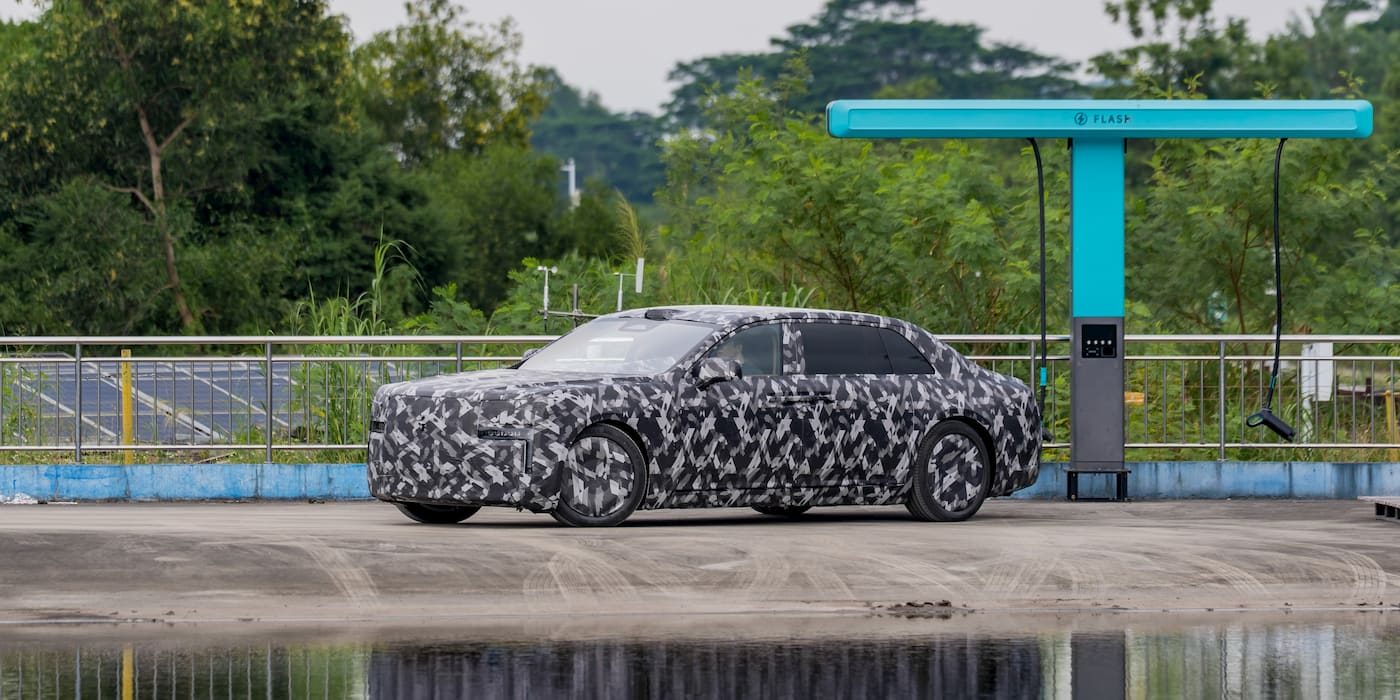
While official physical dimensions have yet to be fully cataloged by regulatory bodies, industry estimates place the Yangwang Altior at approximately 5,500 millimeters (or roughly 216 inches) in length. Spy photographs and disguised prototype imagery captured in testing late last month reveal a low-slung, commanding silhouette sharing dimensional proportions with heavyweights like the Mercedes-Maybach S-Class and the Rolls-Royce Phantom.
The aesthetic choices underscore BYD’s intention to court ultra-high-net-worth individuals who traditionally gravitate toward heritage European brands. By merging avant-garde lighting signatures with classic limousine proportions, the Altior aims to establish a distinct visual identity that communicates both technological futurism and timeless elegance.
A Strategic Global Debut in Dubai
In a notable departure from traditional product rollouts, BYD has opted to bypass its domestic market in China for the vehicle’s initial unveiling. General Manager Hu Xiaoqing confirmed last week that the global premiere of the Altior will take place in the United Arab Emirates, specifically targeting the lucrative luxury enclave of Dubai.
Industry reports and sources close to the project, cited by automotive publication CarNewsChina, indicate that the official unveiling is slated for approximately November 5. Choosing the UAE as the launchpad highlights the strategic importance of the Middle East in BYD’s broader internationalization roadmap. The region represents a dense concentration of consumers with a high appetite for bespoke, ultra-luxury vehicles, making it an ideal testing ground for a brand seeking to validate its luxury credentials outside of Asia.
Zheng Yu, Yangwang’s executive general manager, has described the forthcoming vehicle as incorporating "unprecedented disruptive technology." Promotional imagery released ahead of the launch has shown the Altior utilizing BYD Flash Charge infrastructure, strongly hinting at the inclusion of second-generation Blade Battery architecture capable of exceptionally rapid replenishments, potentially enabling meaningful ranges within a five-minute charging window.
The Solid-State Battery Speculation and Performance Heritage
Perhaps the most compelling subplot surrounding the Altior’s technical sheet is the persistent rumor regarding energy storage chemistry. While BYD has remained tight-lipped on specific powertrain configurations for this model, industry observers are closely monitoring whether the Altior will serve as the commercial pioneer for BYD’s much-anticipated solid-state batteries.
During an interview with Carwow.es last month, BYD Executive Vice President Stella Li indicated that the automaker’s inaugural production vehicle equipped with solid-state battery technology is scheduled to debut around 2027. Although it remains unconfirmed whether the Altior will feature this holy grail of EV chemistry at its November launch or via a subsequent production phase, the vehicle’s flagship status makes it the most logical candidate for early implementation.
Financially, the Altior is projected to sit comfortably at the top of BYD’s pricing pyramid. Current market intelligence and leaked pricing models suggest the vehicle will command a starting price in the 2 million yuan range, translating to roughly $300,000 USD. This positions the Altior significantly above Yangwang’s current offerings, such as the U7 sedan—which starts at 658,000 yuan ($98,000)—and eclipses the extended U8L SUV, which currently serves as the brand’s most expensive mass-produced vehicle at 1.45 million yuan ($217,000).

Market Implications and Competitive Landscape
The arrival of the Yangwang Altior marks a critical milestone not only for BYD, but for the entire Chinese electric vehicle manufacturing sector. For years, domestic Chinese automakers dominated lower and mid-tier segments through aggressive cost-scaling and efficient manufacturing practices. However, the maturation of domestic supply chains and proprietary technologies—such as advanced chassis controls, ultra-fast charging architectures, and high-density battery packs—has empowered these companies to challenge incumbent luxury manufacturers on their own turf.
By pricing the Altior near the $300,000 mark, BYD is directly challenging ultra-luxury stalwarts that have enjoyed decades of unchallenged supremacy in markets spanning the Middle East, Europe, and Asia. Success in this segment requires more than just impressive horsepower and cutting-edge software; it demands an intangible sense of prestige, flawless interior craftsmanship, and peerless ride comfort.
If the Yangwang Altior can successfully deliver on its promise of disruptive technology, exquisite materials, and superlative engineering—all while undercutting the pricing of comparable twelve-cylinder or ultra-exclusive battery-electric European limousines—it could permanently alter consumer perceptions of luxury automotive geography. As the November 5 debut in Dubai draws closer, the global automotive industry waits to see whether BYD’s latest flagship can successfully bridge the gap between technological innovation and timeless aristocratic luxury.
Related posts: