Volkswagen Group Halts Development of Electric ID. Golf at Wolfsburg Amid Severe Financial Strain and Strategic Architecture Overhaul

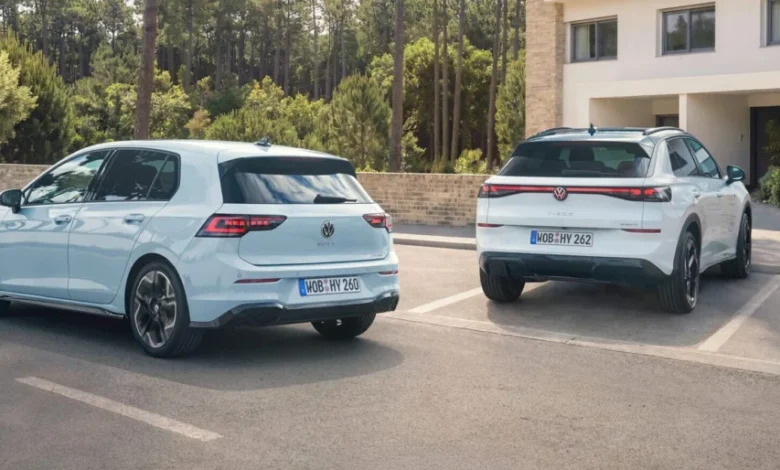
Volkswagen Group has made the contentious decision to temporarily suspend the internal development of its upcoming all-electric ID. Golf at its historic headquarters in Wolfsburg, Germany. This high-stakes strategic pause underscores the mounting financial pressure facing Europe’s largest automaker as it navigates a severe profitability crisis, declining sales in key overseas markets, and complex decisions regarding its next-generation vehicle architectures. With traditional internal combustion engine (ICE) Golf production slated to move to Mexico by 2027, the future of Wolfsburg’s most iconic model hangs in the balance, intensifying tensions between corporate leadership, financial stakeholders, and powerful labor unions.
Financial Turmoil and the €5.9 Billion Operating Loss
The suspension of the ID. Golf project comes directly on the heels of Volkswagen’s catastrophic third-quarter financial results, which revealed a massive €5.9 billion (approximately $6.5 billion) operating loss—the company’s largest financial deficit since the infamous 2015 "Dieselgate" emissions scandal. This sharp downturn was primarily precipitated by substantial write-downs on Volkswagen’s stake in Porsche, persistently deteriorating sales figures within the crucial Chinese market, and significantly thinner profit margins on its expanding portfolio of battery-electric vehicles (BEVs).
During internal briefings, Chief Financial Officer Arno Antlitz stressed the urgency of the situation, noting that the company can no longer afford to delay structural adaptations. "We cannot afford to lose any time and must act quickly and decisively," Antlitz told corporate teams.
Meanwhile, Brand Group Chief Executive Thomas Schäfer addressed employees in an internal memo, detailing the acute financial shortfalls at the company’s primary manufacturing hub. According to Schäfer’s memo, the Wolfsburg plant is currently lagging €300 million behind its internal cost-cutting targets. "We simply can’t afford this work right now," Schäfer stated, explicitly justifying the decision to freeze development funds for the electric hatchback until a more sustainable financial roadmap can be established.
Strategic Dilemma: The Architecture and Software Crossroads
At the heart of the ID. Golf’s development pause is a fundamental disagreement over underlying vehicle architecture and software platforms. Originally, the ID. Golf was slated to be among the pioneering models built on Volkswagen’s highly anticipated Scalable Systems Platform (SSP). However, the rollout of the SSP architecture has encountered persistent delays, slipping from its original 20-26 deployment target, with Audi and Porsche vehicles now prioritized to receive the technology first.
Concurrently, Volkswagen has been exploring alternative cost-saving measures, including a potential pivot toward a China-derived architecture developed in partnership with Xpeng. Reports indicate that Schäfer has proposed utilizing the China Electrical Architecture (CEA)—co-developed with Xpeng—for roughly three-quarters of the brand group’s upcoming volume models. Industry estimates suggest that manufacturing vehicles like a China-developed Tiguan on this alternative architecture could slash production costs by up to €8,000 ($9,000) per vehicle compared to European manufacturing benchmarks.
By freezing the development of the ID. Golf, Volkswagen executive leadership effectively avoids committing further capital to an undecided platform strategy. The automaker must determine whether to absorb higher production costs to maintain proprietary European engineering or adopt a more cost-effective Chinese architecture that could drastically improve vehicle margins.
Adding another layer of complexity is the software integration. Volkswagen’s software division, Cariad, has been collaborating via a multi-billion-dollar joint venture with American electric vehicle startup Rivian to develop next-generation electronic architectures. Despite Volkswagen’s broader budget cuts, Rivian recently reported that its partnership with the German automaker remains "very positive," with its revenue contribution climbing to $354 million in the third quarter. Nevertheless, Volkswagen must weigh whether the Rivian-derived software stack will seamlessly integrate with the volume-focused economics required for a mass-market electric vehicle like the ID. Golf.
Internal Reactions and Labor Unrest
The decision to pause the ID. Golf project has elicited varied responses from corporate executives and labor representatives. David Powels, Chief Financial Officer of the VW brand and its core brand group, characterized the freeze as a "specific measure" designed to "temporarily pause development work on the future ID. Golf at the VW brand until we can securely accommodate the necessary investments."
Conversely, the company’s works council expressed deep concern, noting that the freeze serves as "yet another sign of how strained the group’s financial situation is." However, labor representatives offered a more optimistic perspective regarding the production timeline, asserting that the temporary halt would not inherently delay the vehicle’s commercial launch and pledging to recover any lost scheduling time.
Market observers note that the electric ID. Golf’s timeline has already faced numerous setbacks, having previously slipped from an initial 2028 release window to an anticipated debut around 2030.
The development freeze compounds an already volatile labor climate across Volkswagen’s German facilities. Industrial relations have deteriorated significantly following management’s push for 100,000 job cuts across domestic operations and controversy surrounding Audi’s planned $4 billion manufacturing investment in Georgia, United States. In response to these sweeping austerity measures, the powerful IG Metall union has signaled the possibility of widespread strikes beginning January 1, heightening pressure on executive leadership to secure long-term stability for German plants.
Broader Industry Implications for Wolfsburg and the Golf Lineup
The ripple effects of the ID. Golf freeze extend far beyond a single vehicle program, threatening the strategic identity of Wolfsburg, the spiritual home of Volkswagen.
The traditional, internal combustion engine (ICE) powered Golf is officially scheduled to transition production from Wolfsburg to a manufacturing facility in Mexico by 2027. Consequently, the long-term viability of the Wolfsburg plant as a premier automotive manufacturing center is inextricably linked to the successful launch of the electric ID. Golf. With the EV’s development temporarily frozen and its platform architecture unresolved, the facility faces a transitional vacuum.
To compensate for delays in the all-electric rollout, Volkswagen is expected to extend the lifecycle and production run of related internal combustion and hybrid models, such as the Škoda Octavia and the Cupra Leon, keeping them on showroom floors longer than originally planned. This bridging strategy allows the broader Volkswagen Group to maintain sales volume in core European segments while deferring heavy capital expenditures on unproven BEV platforms.
Outlook: A Deferred Decision with High Stakes
Ultimately, Volkswagen’s decision to halt work on the electric ID. Golf is less about an immediate funding shortage and more about a strategic deferral. The automaker is refusing to pour additional capital into its most important future electric model until executive leadership finalizes fundamental questions regarding vehicle architecture and software integration.
For Wolfsburg, the situation highlights the painful dichotomy facing legacy European automakers: the urgent need to slash operating costs to compete with low-cost global rivals clashes directly with the necessity of investing heavily in next-generation electric mobility. Until Volkswagen resolves its architectural ambiguities and stabilizes its financial footing, the future of the ID. Golf—and by extension, the industrial heart of Wolfsburg—remains clouded in uncertainty.
Related posts: