Rivian Rolls Out Major Hardware Upgrades for Electric Commercial Vans with Extended Range and All-Wheel Drive

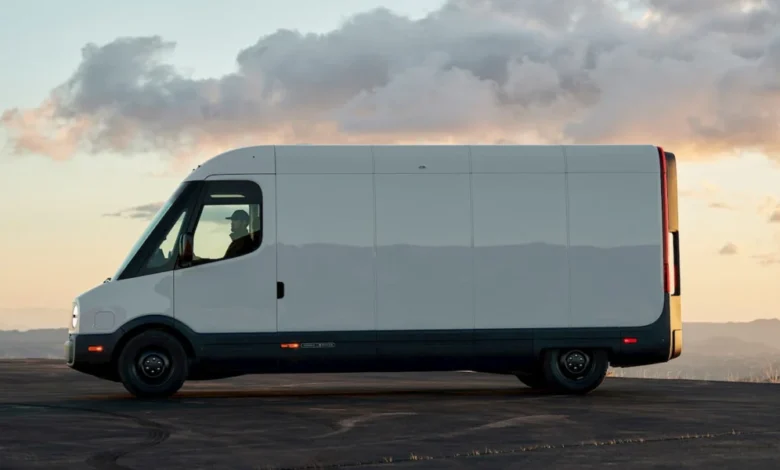
Rivian Automotive has officially commenced deliveries of its most substantial hardware overhaul for its electric commercial delivery vehicle (EDV) lineup since commercial production began in 2021. The prominent electric vehicle manufacturer confirmed in its third-quarter shareholder presentation that early October marked the initial wave of customer deployments for newly engineered variants featuring a significantly larger lithium iron phosphate (LFP) battery pack and an optional dual-motor all-wheel-drive (AWD) system. This long-awaited engineering update addresses a primary operational limitation that has capped the vehicle’s driving range at approximately 160 miles per charge since its inception.
The introduction of these upgraded configurations represents a pivotal milestone for Rivian’s commercial division. By expanding the vehicle’s operational capacity, the company aims to penetrate deeper into commercial delivery networks that demand extended mileage and enhanced traction capabilities, particularly outside densely populated urban centers.
Background and Chronology of the EDV Program
The genesis of Rivian’s commercial van program is deeply intertwined with major logistics investments, most notably a landmark partnership with retail giant Amazon. In 2019, Amazon placed an initial order for 100,000 custom electric delivery vans as part of its corporate commitment to achieve net-carbon neutrality across its operations by 2040. Rivian subsequently initiated limited production of the EDV platform in late 2021, with broad fleet deployments scaling up significantly throughout 2022 and subsequent years.
For several years, the standard architecture of the Rivian EDV remained relatively static. The vehicles relied on a front-wheel-drive layout powered by an LFP battery pack with a usable capacity of roughly 100 kilowatt-hours (kWh). While this configuration proved highly efficient and reliable for dense urban and suburban delivery routes—where stop-and-go traffic and lower average speeds minimized energy consumption—it presented a distinct operational ceiling. The EPA-rated range of approximately 160 miles restricted fleet operators from deploying the vans on longer suburban loops, rural distribution paths, or routes requiring operation in severe weather conditions without intermediate charging infrastructure.
Speculation regarding a comprehensive platform upgrade first gained official traction in early 2025. Following Amazon’s announcement that its Rivian fleet had expanded by 50% throughout the preceding year, Rivian disclosed in its fourth-quarter 2025 shareholder communication that it was actively developing a higher-capacity energy storage system and an all-wheel-drive powertrain variant. The stated objective of these developments was explicitly to expand route coverage into more challenging geographic networks.
This development cycle culminated in mid-September 2026, when official EPA certification documentation for the 2027 model-year EDV 700 series was published. By early October 2026, the first production units featuring the upgraded hardware packages successfully transitioned from manufacturing facilities to commercial fleet operators.
Technical Specifications of the New Hardware Variants

The centerpiece of the recent engineering update is a substantially larger energy storage system. Environmental Protection Agency certification filings for the 2027 EDV 700—the larger variant boasting 652 cubic feet of dedicated cargo volume—detail a new usable capacity of 129 kWh. Compared to the legacy 100 kWh LFP battery, this represents an approximate 29% increase in total onboard energy storage.
Alongside the high-capacity battery, Rivian has introduced a dual-motor all-wheel-drive configuration. This mechanical layout distributes torque across both front and rear axles, providing superior grip in low-traction environments such as mud, gravel, and snow-covered roadways frequently encountered in rural distribution sectors.
Fleet deployment data indicates that this major hardware refresh is presently restricted to the larger EDV 700 model. The compact EDV 500 variant, which offers a smaller cargo capacity, will continue to utilize the legacy front-wheel-drive layout and the standard 100 kWh battery configuration, catering primarily to inner-city logistics operations where space and payload constraints differ.
Analysis of Range Performance and Operational Utility
The integration of a 129 kWh battery pack yields direct performance improvements in vehicle range, though the exact mileage gains vary depending on the chosen drivetrain configuration.
Rivian’s internal testing and official product disclosures indicate that the front-wheel-drive version of the upgraded EDV 700 achieves a substantial 30% increase in driving range compared to the legacy model. Given the baseline rating of up to 160 miles, the front-wheel-drive iteration with the larger battery pack is projected to deliver an estimated operational range in the vicinity of 208 miles per charge.
Conversely, the dual-motor all-wheel-drive variant incurs a modest efficiency penalty due to the added weight and mechanical drag of the secondary electric motor and associated drivetrain components. EPA-related testing metrics suggest a slightly smaller percentage gain—approximately 23%—translating to an estimated real-world driving range of 195 to 200 miles on a single charge.
This performance profile effectively restores the original range targets that Rivian initially envisioned when commercial van deliveries commenced in 2022, prior to final regulatory ratings settling closer to the 160-mile threshold. Industry analysts note that sacrificing roughly a third of the potential range gain for the added utility of all-wheel-drive represents a highly favorable trade-off for fleet managers operating in diverse regional climates.
Market Implications and Diversification Beyond Amazon

The timing of Rivian’s hardware enhancement aligns with a critical strategic imperative: the diversification of its commercial client base. Since the conclusion of its initial exclusivity agreement with Amazon in late 2023, Rivian has pursued broader commercial adoption across various industries, including parcel delivery, telecommunications, utilities, and major retail logistics.
Despite these efforts, Amazon has remained the dominant recipient of the vast majority of Rivian’s commercial van production. However, recent industry sightings suggest that the commercial footprint may be expanding. Notably, logistics observers spotted a Rivian electric commercial van bearing the distinctive livery of Walmart+ on a vehicle transport carrier in Indiana, though neither corporation has formally announced a binding supply agreement.
The broader commercial vehicle landscape has also undergone significant consolidation. Over the preceding years, several prominent competitors in the electric delivery vehicle segment have experienced major operational retrenchments. General Motors elected to wind down production of its BrightDrop electric van line in Ontario, and commercial EV startup Canoo faced severe financial distress and subsequent bankruptcy proceedings. Consequently, Ford Motor Company’s E-Transit remains Rivian’s primary competitor in the full-size electric delivery vehicle market within the United States.
Strategic Outlook and Industry Reception
The deployment of a 200-mile electric van equipped with optional all-wheel-drive addresses a long-standing structural barrier within the commercial EV sector. While a 160-mile range proved highly effective for high-density, centralized urban delivery routes where overnight depot charging is readily available, it systematically excluded Rivian from competing for fleet contracts involving extensive rural distribution networks, regional utility maintenance, and cross-suburban operations where charging infrastructure remains sparse.
By bridging this capability gap, Rivian positions its commercial division to capture market share among enterprise fleets that require greater operational flexibility and weather-resilient drivetrain performance. The ongoing ability of the company to iterate on its production vehicles—contrasted against competitors scaling back operations—highlights a commitment to product maturation.
As Rivian navigates the operational challenges of scaling production and expanding its customer roster beyond its foundational partnership with Amazon, the success of the extended-range EDV variants will serve as a critical indicator of the company’s broader commercial viability and market penetration within the evolving commercial transportation sector.
Related posts: