Unveiling the Cosmos: How Elusive Ghost Particles and Antarctic Ice Are Revolutionizing Modern Physics

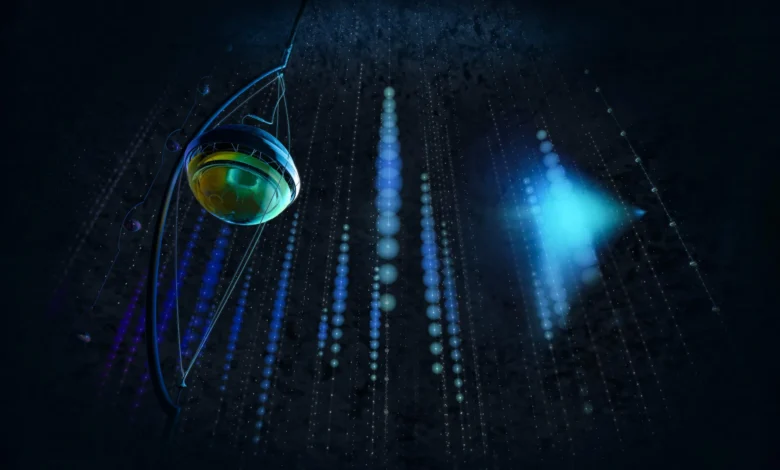
Deep beneath the freezing expanse of the South Pole, an invisible, high-stakes astronomical hunt is quietly unfolding. Every second, an unfathomable number of ghostly subatomic particles stream through the Earth and human bodies alike, leaving virtually no trace of their passage. These elusive entities, known to physicists as neutrinos, represent one of the greatest enduring mysteries in the natural sciences. Despite being among the most abundant matter in the cosmos, their nearly non-existent mass and lack of electrical charge render them notoriously difficult to capture. Yet, a breakthrough era in neutrino astrophysics is transforming how humanity perceives the universe, driven by groundbreaking observational facilities embedded in glacial ice and high-altitude deserts.
This paradigm shift in modern physics was recently underscored by the awarding of a Nobel Prize in Physics to physicist Francis Halzen. His recognition honors decades of pioneering work and decisive contributions to the IceCube Neutrino Observatory, a massive facility that successfully detected high-energy neutrinos originating from deep space. Alongside visionary engineers and theoretical physicists like George Fuller, a Distinguished Professor of Physics at the University of California San Diego who collaborated with Halzen on foundational early research, the scientific community is steadily decoding the messages carried by these cosmic couriers.
The significance of neutrino research extends far beyond theoretical curiosity. Over the decades, investigations into these infinitesimal objects have contributed directly to five separate Nobel Prizes, solidifying their central role in unlocking the fundamental laws of nature.
The Anatomy of a Ghost Particle
To understand why detecting neutrinos requires monumental engineering feats, one must examine their unique physical properties. Neutrinos belong to the class of elementary particles, meaning scientists currently believe they possess no smaller internal components. They manifest in three distinct flavors: electron neutrinos, muon neutrinos, and tau neutrinos.
Unlike protons or electrons, neutrinos carry zero electrical charge, rendering them completely immune to electromagnetic fields. While they do possess mass, it is astonishingly minute—potentially ten million times lighter than an electron. Because their exact mass and formation mechanisms remain elusive, researchers continue to probe their parameters in laboratories worldwide.
Most remarkably, neutrinos interact with ordinary matter through only one of the fundamental forces of nature: the weak nuclear force. This force operates on a scale roughly 20 orders of magnitude weaker than electromagnetism. Consequently, neutrinos can travel through light-years of solid lead as though it were empty space.
"Neutrinos are truly ghost-like particles," noted Professor Fuller, reflecting on their elusive nature. "It’s hard to stop them. It’s hard to catch them. How do we even know they exist or where they are?"
Estimates suggest the universe is saturated with approximately 10 to the 89th power of these particles—roughly one billion for every atom in existence. Roughly 100 billion neutrinos pass through every square centimeter of the human body every second, completely unnoticed. Yet, this very elusiveness makes them invaluable. Because they escape dense astrophysical environments like collapsing stars and black holes without scattering, they act as pristine messengers carrying uncorrupted data from the universe’s most extreme engines.
A Century-Long Scientific Chronology
The journey from a theoretical mathematical placeholder to detection in an Antarctic ice sheet spans nearly a century of relentless scientific inquiry.
- 1930: Theoretical physicist Wolfgang Pauli first proposes the existence of an undetectable neutral particle to resolve seemingly missing energy during radioactive beta decay. Initially terming them "neutrons," Pauli famously laments the difficulty of verifying his hypothesis, stating, "I have done a terrible thing, I have postulated a particle that cannot be detected."
- 1956: Physicists Clyde Cowan and Frederick Reines achieve the first experimental confirmation of the particle in an endeavor dubbed "Project Poltergeist," proving that neutrinos are tangible entities.
- 1990s: Physicist Francis Halzen recognizes the unique optical properties of the deep Antarctic ice sheet, conceptualizing a detector array capable of capturing faint particle interactions.
- 2010–2011: Construction of the IceCube Neutrino Observatory is finalized at the South Pole, embedding thousands of optical sensors into a cubic kilometer of pristine ice.
- Present Day: Modern collaborations like IceCube and the Simons Observatory in Chile merge particle physics with cosmology, linking high-energy neutrino astronomy to the earliest moments of the Big Bang.
Building an Observatory in the Ice
The realization of high-energy neutrino astronomy required an environment entirely isolated from the noise of human civilization and surface-level radiation. During the 1990s, Francis Halzen identified the deep ice at the geographic South Pole as the ultimate natural laboratory.
Buried between 1,450 and 2,450 meters beneath the surface, the Antarctic ice is subjected to immense pressure, squeezing out air bubbles and leaving it remarkably clear. This optical clarity allows light to travel long distances without scattering, creating an ideal medium for the IceCube Neutrino Observatory.
Constructing the facility was an engineering marvel. Researchers deployed specialized hot-water drills to melt deep cylindrical holes into the glacier, into which they lowered strings of digital optical modules, known as photomultiplier tubes.
These sensors do not look for the neutrinos directly. Instead, they scan for a faint, ghostly blue glow known as Cherenkov radiation. This optical phenomenon occurs when an ultra-high-energy neutrino collides with an atomic nucleus within the ice via the weak interaction, spawning a secondary charged particle—such as a muon—traveling faster than the phase velocity of light in that medium. By tracking the trajectory and intensity of this Cherenkov light cone, scientists can reconstruct the incoming direction and energy of the parent neutrino with remarkable precision.
Unlocking Deep Space and Cosmic Origins
While the Sun and Earth’s atmosphere constantly bombard the planet with low-energy neutrinos, IceCube’s primary mission is to capture rare, ultra-high-energy visitors from outside the solar system. These powerful cosmic rays carry energies up to billions of times greater than solar neutrinos, suggesting they are forged in the most violent cataclysms in the cosmos, such as active galactic nuclei, gamma-ray bursts, or supermassive black holes.
IceCube captures only a few dozen of these ultra-high-energy events annually. Yet, each detection provides a vital piece of the astrophysical puzzle.
"Some ultra-high-energy neutrinos detected at IceCube have roughly 10 billion times the energy of a typical neutrino from the Sun," Fuller explained. "We don’t really know where that neutrino came from. The fact that it got here at all may be saying something profound about the universe. In that sense, Halzen really is at the frontier of experimental fundamental particle physics."
Identifying the sources of these particles remains a premier objective for astrophysicists. By combining neutrino data with traditional telescope observations across electromagnetic spectrums—a field known as multi-messenger astronomy—researchers can pinpoint the precise cosmic accelerators responsible for these energetic outbursts.
Extending the Frontier: From Antarctica to the Atacama Desert
The quest to understand neutrinos is not confined to the polar ice caps. Modern research increasingly bridges particle physics with observational cosmology, seeking signals left behind by the universe’s formative moments.
At UC San Diego, researchers are applying complementary methodologies through the Simons Observatory, situated high in Chile’s Atacama Desert. Led by Distinguished Professor Brian Keating, this facility targets the cosmic microwave background (CMB)—the residual thermal radiation left over from the Big Bang.
While the Simons Observatory primarily examines the oldest light in the cosmos, its precision instruments are also sensitive to the cumulative effects of primordial neutrinos generated in the early universe. By analyzing subtle polarization patterns and temperature fluctuations in the CMB, cosmologists can extract data regarding the number and mass states of ancient neutrinos, offering constraints that terrestrial particle accelerators cannot achieve.
Implications for Future Discovery
The confluence of neutrino astronomy and cosmological observation marks a profound turning point for fundamental science. As observatories like IceCube undergo planned upgrades and international consortia design even larger next-generation detectors, humanity’s capacity to probe the invisible universe expands exponentially.
The implications of this research stretch across multiple disciplines. Beyond validating theories of particle physics and quantum mechanics, mapping the high-energy neutrino sky provides direct insight into the distribution of matter across intergalactic space, the life cycles of massive stars, and the dynamics governing black hole accretion disks.
Ultimately, the steady evolution of neutrino science has shifted these particles from theoretical anomalies into primary diagnostic tools for the cosmos. As researchers continue to refine their instruments and analyze the data streaming from the South Pole and the Chilean Andes, the ghost particles of the universe are finally beginning to surrender secrets they have guarded for billions of years.