The Enigma of Kevin Warsh and the Shadow of Fiscal Dominance Over the Federal Reserve

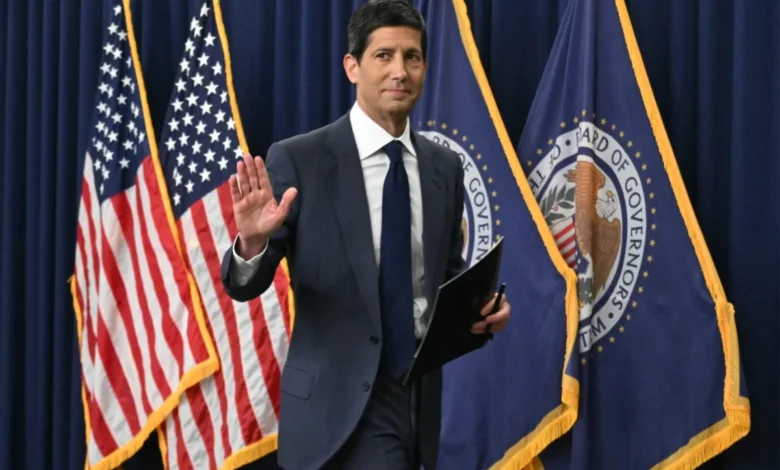
Wall Street is currently gripped by a profound sense of uncertainty as investors and analysts attempt to decipher the true policy orientation of Federal Reserve Chair Kevin Warsh. His tenure, characterized by a series of seemingly contradictory statements and actions, has left market participants struggling to categorize him within the traditional monetary policy framework of "hawks" who prioritize inflation control or "doves" who favor economic stimulus. While President Donald Trump’s selection of Warsh initially signaled an expectation of a more accommodative stance, his subsequent rhetoric and policy maneuvers have deviated significantly from these early market assumptions.
The confusion stems from a pattern of conflicting signals. Shortly after taking the helm, Warsh characterized inflation as a "choice," a statement widely interpreted as an aggressive, hawkish stance suggesting that the Fed would not tolerate price instability regardless of economic friction. Yet, as the summer of 2026 progressed, his narrative shifted toward a more nuanced approach. He began publicly advocating for a broader examination of alternative inflation metrics and suggested that the bond market might naturally perform a portion of the Fed’s tightening work—a clear hint that he viewed less aggressive, direct policy intervention as sufficient.
This oscillation reached a zenith during the August Jackson Hole conference, where Warsh delivered a speech that was decidedly hawkish in its tone and focus. This pivot culminated in the September Federal Reserve meeting, where he successfully steered the committee toward a unanimous rate hike. However, just weeks later, the momentum halted abruptly. Despite persistent, elevated inflation readings, Warsh declined to support further rate increases. His refusal to provide a clear rationale or forward-looking guidance created a vacuum of information, which the markets interpreted as a dovish retreat, further clouding the Fed’s long-term trajectory.
The Institutional Perspective: Rethinking the Hawk-Dove Paradigm
Robin Brooks, a senior fellow at the Brookings Institution, argues that the binary categorization of "hawk" or "dove" is no longer the appropriate analytical tool for the current environment. According to Brooks, the market’s fixation on these labels ignores the underlying structural pressures currently defining Fed policy. In a recent analysis, Brooks posited that the Fed’s messaging is not a reflection of a personal ideological shift by the Chairman, but rather a tactical response to the precarious state of U.S. federal debt.
The core of this theory is the concept of "yield curve management." With U.S. gross national debt surpassing $40 trillion and publicly held debt now accounting for 100% of GDP, the Federal Reserve is navigating an environment where the cost of borrowing has become a systemic threat to fiscal stability. In the 2026 fiscal year, which concluded in September, the federal government’s net interest payments eclipsed $1 trillion, officially exceeding the total annual budget for national defense. Under these conditions, the traditional mandates of the Fed—maintaining price stability and maximum employment—are increasingly subservient to the existential need to prevent a bond market collapse.
Chronology of Policy Divergence
The recent history of the Fed’s decision-making process illustrates the difficulty in mapping Warsh’s agenda:
- Early 2026: Warsh is appointed as Fed Chair; markets price in a "pro-growth" or dovish bias.
- Spring 2026: Warsh labels inflation a "choice," suggesting an inflation-targeting hawkishness.
- August 2026: Jackson Hole speech sets a hawkish tone, focusing on price stability.
- September 2026: The Federal Reserve implements a unanimous rate hike.
- Late October 2026: The Fed holds rates steady despite fresh, hot inflation data, causing market confusion.
- November 2026: Analysts begin to pivot toward the "fiscal dominance" hypothesis, linking Fed policy to Treasury Department maneuvers.
The Treasury-Fed Nexus and Implicit Coordination
Evidence suggests a de facto alignment between the Federal Reserve and the U.S. Treasury to keep borrowing costs within a sustainable range. Treasury Secretary Scott Bessent’s recent surprise announcement regarding the buyback of long-term bonds was viewed by many analysts as a calculated move to inject liquidity and stabilize yields. Furthermore, Bessent’s intervention in currency markets—specifically to support the Japanese yen—prevented Japan from needing to liquidate its significant holdings of U.S. Treasuries, a move that would have otherwise exerted upward pressure on American interest rates.
This coordination implies that the Fed is effectively managing the yield curve to prevent a surge in debt-servicing costs. While this helps preserve fiscal solvency in the short term, it creates a "fiscal dominance" scenario. In this regime, the central bank loses its independence to combat inflation because it is effectively trapped by the government’s need to finance its massive deficits. If the Fed were to raise rates to fight inflation, it would simultaneously increase the interest burden on the $40 trillion debt, potentially triggering a fiscal crisis.
Economic Data and the Debt-GDP Trap
The sustainability of the current U.S. fiscal trajectory depends heavily on the relationship between nominal GDP growth and interest rates. As long as the economy expands at a rate faster than the cost of servicing the debt, the burden remains manageable. However, the recent spike in bond yields—which at one point in 2026 significantly outperformed long-term CBO projections—has heightened anxieties among institutional investors.
The Congressional Budget Office (CBO) has recently modeled scenarios that highlight the fragility of the current path. In a simulation where interest rates remain just 150 basis points higher than the baseline estimate of 4.3%, the federal government’s net interest costs would balloon by an additional $4.9 trillion over the coming decade. Under such conditions, the debt-to-GDP ratio would climb to 133% by 2036.
Bank of America analysts have noted that if these higher-yield scenarios materialize, the effective interest rate on government debt would surpass long-term nominal GDP growth as early as fiscal year 2028. While nominal GDP growth remained a robust 5.6% in the third quarter of 2026—buoyed by the AI-driven productivity boom and elevated inflation—many economists warn that this growth is not guaranteed.
Broader Implications: The AI Boom and Global Stability
The U.S. economy has benefited from several idiosyncratic tailwinds that have provided a buffer against rising yields. The AI boom has been a primary engine of GDP growth, keeping the economy "hot" and preventing a contraction. However, there is a growing debate regarding whether these productivity gains will be permanent or if they are merely a cyclical bubble. Should the AI-driven growth engine stall, the ability of the U.S. to "grow out" of its debt would be severely compromised.
External factors have also played a role in suppressing yields. Political instability in France and ongoing fiscal dysfunction within the eurozone have periodically driven international capital toward the relative safety of U.S. Treasury bonds. This "safe-haven" demand has acted as a temporary floor for Treasury prices, keeping yields lower than they otherwise would be in a purely domestic-focused market. When the 10-year Treasury yield dipped back below 5% recently, it was less a sign of cooling inflation and more a reflection of global investors seeking refuge from European volatility.
The Path Toward Fiscal Dominance
The overarching implication of the current policy environment is that Kevin Warsh is operating within constraints that his predecessors did not face. His "hawkish" or "dovish" signals are secondary to the primary imperative of maintaining market confidence in U.S. sovereign debt. By keeping borrowing costs manageable, the Fed is essentially providing an insurance policy for the federal budget.
However, this policy is not without long-term risks. If inflation remains elevated and the Fed is perceived to be accommodating fiscal profligacy rather than enforcing price stability, the credibility of the dollar could be undermined. The market’s current confusion regarding Warsh’s stance is a symptom of this deeper tension: investors want a central bank that fights inflation, but they also require a central bank that ensures the government can continue to borrow at sustainable rates.
As the U.S. enters the next fiscal cycle, the focus will likely shift away from the semantics of "hawks" and "doves" and toward the objective reality of the yield curve. Whether the Federal Reserve can maintain its independence while the U.S. grapples with $40 trillion in debt remains the defining question for the global financial system. For now, the "Warsh doctrine" appears to be one of pragmatic management, prioritizing immediate yield stability over the rigid adherence to any singular ideological school of thought. The challenge for the Chair will be to navigate these turbulent waters without triggering the very fiscal dominance that he and the Fed are working so hard to contain.