Tesla Secures $30 Billion in New Credit Lines Amid Surging Capital Expenditures and Narrowing Profit Margins

Tesla has officially secured $30 billion in new revolving credit facilities, according to a regulatory filing released today. Arranged through major financial institutions Citi and Wells Fargo, the massive influx of debt financing comes at a critical juncture for the world’s leading electric vehicle manufacturer. The move highlights a striking strategic pivot for a company that spent its first decade and a half scaling operations almost exclusively on internal cash generation and meteoric sales growth.
The new credit lines, which carry maturity terms ranging from one to five years, completely replace a previously established $5 billion credit facility that remained largely untouched. While corporate filings indicate that Tesla does not immediately plan to draw down these funds through the remainder of the current calendar year, the sheer scale of the capitalization underscores growing financial pressures. As automotive markets mature, profit margins compress, and capital expenditures (CapEx) skyrocket toward ambitious futuristic technologies, Tesla is deliberately fortifying its balance sheet to safeguard its liquidity against future market headwinds.
A Decade of Exponential Growth Hits a Pandemic-Era Wall
To understand the magnitude of Tesla’s current financial maneuvering, one must examine the trajectory of the company over the past twenty years. For the first fifteen years of its modern production history, Tesla experienced a nearly uninterrupted upward trajectory in sales volume and revenue. Fueled by the successful global rollout of the Model S, Model X, Model 3, and Model Y, the company scaled at a pace virtually unprecedented in modern automotive history.
During this golden era of expansion, Wall Street routinely forgave aggressive spending and cash burn, comforted by what appeared to be an insatiable, near-infinite global demand for electric vehicles. Tesla’s valuation soared as it positioned itself not merely as a carmaker, but as a disruptive technology conglomerate poised to rewrite the rules of personal transport and energy storage.
However, this paradigm shifted abruptly in 2024. After reporting an impressive 38% year-over-year delivery growth rate in the prior period, Tesla encountered a sudden market saturation point and intensifying global competition—particularly from aggressive domestic EV manufacturers in China. For the full year of 2024, Tesla recorded a 1% year-over-year decline in deliveries, culminating in approximately 495,570 units delivered in a single quarter well below previous management guidance.
The deceleration in vehicle delivery growth immediately reverberated through the company’s bottom line. Profitability, once buoyed by high-volume manufacturing efficiencies and regulatory credit sales, grew increasingly volatile. In subsequent quarters, financial analysts noted that Tesla’s operating margins were increasingly sustained by one-time benefits, warranty adjustments, and tariff refunds rather than core automotive sales. Even with these accounting maneuvers factored in, net profits have remained exceptionally thin compared to the company’s lofty historical standards.
The Anatomy of Rising Capital Expenditures
Compounding the pressure on net income is a dramatic escalation in capital expenditures. Tesla is currently pouring billions of dollars into high-risk, long-term research and development initiatives, often described by critics as speculative or "pie-in-the-sky" ventures.
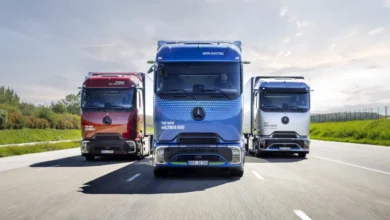
Chief among these capital-intensive projects is the development of autonomous transport systems, highlighted by the rollout of steering-wheel-less robotaxis such as the Cybercab. Furthermore, the company continues to dedicate engineering resources to next-generation performance vehicles, including the long-delayed Tesla Roadster—complete with speculative design patents and promised capabilities that push the boundaries of conventional automotive physics—alongside the low-volume ramp-up of the Tesla Semi and the visionary, albeit controversial, pursuit of large-scale humanoid robotics and artificial intelligence infrastructure.
The financial impact of these parallel initiatives has been immediate and profound. Tesla’s quarterly capital expenditures more than doubled year-over-year, and company guidance indicates that spending will remain elevated throughout the current fiscal cycle. Management has projected total capital expenditures to reach approximately $25 billion for the 2026 fiscal year—a staggering leap from the $8.5 billion recorded in 2025. Financial analysts tracking the firm anticipate that similar high levels of CapEx will persist into 2027 as Tesla attempts to industrialize its autonomous and AI ecosystems.
Cash Flow Realities and Balance Sheet Dynamics
Despite reporting a substantial cash reserve of roughly $43 billion at the close of its most recent quarterly financial report, the decision to secure a $30 billion credit facility signals a prudent—if defensive—re-evaluation of corporate liquidity.
The warning signs emerged clearly in the prior quarter, during which Tesla slipped into negative free cash flow territory for the first time since the turbulent sales downturn of early 2024. Prior to that inflection point, the company had maintained a multi-year streak of positive operating cash generation.
Automotive manufacturing is historically one of the most capital-intensive industries in the global economy, requiring continuous, massive investments in retooling, factory construction, supply chain security, and regulatory compliance. When combined with multi-billion-dollar bets on unproven product categories that may not generate commercial revenue for years, even a $43 billion cash cushion can begin to look vulnerable under sustained operational friction.
The newly acquired $30 billion credit line represents roughly equivalent to an entire quarter’s worth of Tesla’s total consolidated revenue at current run rates. When measured against the company’s razor-thin net quarterly profits—which have hovered in the low hundreds of millions of dollars recently—the sheer scale of the financial backing underscores the high-stakes gamble management is taking to fund its future roadmap.

Market Reception and Strategic Implications
The financial community has responded to the credit facility announcement with a mixture of pragmatic acknowledgment and cautious skepticism. On one hand, securing $30 billion from blue-chip institutions like Citi and Wells Fargo demonstrates that major financial markets retain strong confidence in Tesla’s fundamental creditworthiness and long-term asset value. The ability to lock down multi-year credit lines on favorable terms provides a vital financial safety net should macroeconomic conditions deteriorate or supply chain disruptions re-emerge.
On the other hand, analysts are closely scrutinizing the tangible return on investment (ROI) for Tesla’s surging capital expenditures. The company is currently attempting to commercialize or re-launch several major product lines—some of which were initially teased nearly a decade ago. While scheduled product updates and rollouts generate short-term investor enthusiasm, the commercial success of the Cybercab, the volume scaling of the Semi, and the ultimate market viability of the Roadster remain unproven.
Furthermore, CEO Elon Musk’s broader ambitions—including massive investments in artificial intelligence clusters and autonomous fleet management—require a sustained financial runway. The central question facing investors is whether these long-term bets will eventually yield the trillion-dollar ecosystems promised by leadership, or if they will continue to drain corporate capital without delivering proportional revenue growth.
Broader Industry Context and Outlook
Tesla’s transition from a self-funding growth machine to a corporation utilizing heavy debt facilities mirrors a broader maturation phase across the entire electric vehicle and automotive sector. As legacy automakers ramp up their own EV platforms and technology companies push deeper into autonomous mobility, the competitive landscape has grown fiercely contested.
For Tesla, the $30 billion credit line acts as both armor and ammunition. It provides the necessary liquidity to weather ongoing profit margin pressures while aggressively funding the next generation of transport technology. However, it also raises the financial stakes considerably. As the company navigates the remainder of 2026 and looks ahead to 2027, the execution of its ambitious product roadmap will determine whether this massive debt facility served as the foundation for its next technological leap, or a costly bridge over an increasingly difficult market terrain.
Related posts: