‘Like walking the plank’: For 3,000 years, Indigenous people herded bison off a unique cliff in Texas, study…

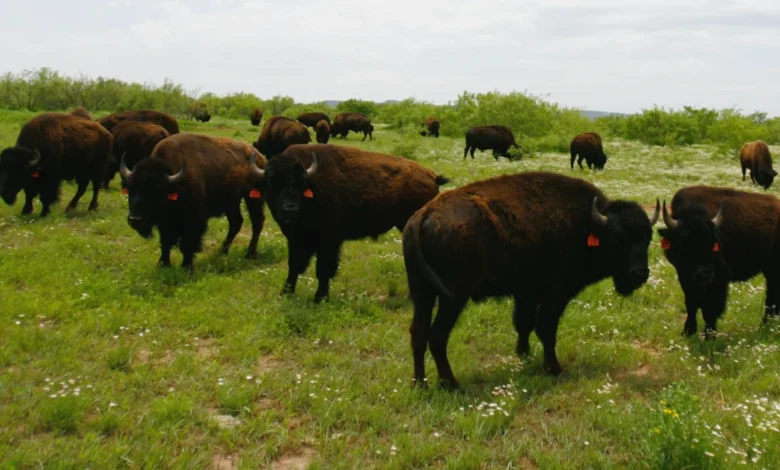
This discovery, situated within the rugged terrain of the Texas Panhandle, serves as a monumental shift in our understanding of prehistoric North American hunting practices. For decades, the archaeological consensus maintained that the practice of "bison jumping"—a sophisticated, high-stakes communal hunting strategy—was largely restricted to the northern Plains, specifically within the regions of modern-day Montana, Alberta, and Wyoming. The identification of the Nighthawk bison jump site, detailed in the peer-reviewed journal American Antiquity, provides definitive evidence that these complex hunting techniques were utilized much further south and over a far more extensive timeline than previously estimated.
The Mechanics of the Bison Jump
The bison jump is an iconic, uniquely North American hunting technique that required an immense amount of social organization, environmental knowledge, and physical labor. To execute a jump, Indigenous hunters identified natural topographical features—typically steep cliffs or precipices—and manipulated the landscape to channel a herd of bison toward the edge.
The process was far from chaotic; it was a highly orchestrated event. Hunters would often use "drive lines," consisting of rock cairns, brush, or human participants, to guide the bison into a stampede. Once the animals reached the edge, the momentum of the herd forced them over, resulting in a fall that incapacitated or killed the bison instantly. In the parlance of modern researchers, the technique is often compared to a high-stakes, large-scale tactical operation, effectively yielding a massive quantity of meat, hides, and bone marrow in a single, high-efficiency event.
Chronology of the Nighthawk Discovery
The Nighthawk site represents a 3,000-year legacy of human adaptation. According to the study published on November 9, the site was not a one-time occurrence but a recurring hunting ground used by Indigenous groups throughout the late Holocene.
- 3,000 Years Ago: Archaeological evidence suggests that initial use of the site began during the late Archaic period. During this era, environmental conditions in the Southern Plains shifted, altering bison migration patterns and forcing human populations to develop more intensive procurement strategies.
- The Intermediate Period: Throughout the following centuries, the site saw intermittent use. Radiocarbon dating of bone fragments and tool assemblages recovered from the site suggests that different groups returned to the location, refining the drive lines and optimizing the cliff jump to account for changes in terrain and bison herd behavior.
- Recent Excavations: The modern investigation of the Nighthawk site involved extensive stratigraphic analysis. By examining the layers of soil and bone (the bone beds), researchers were able to correlate specific hunting episodes with climatic data. These layers revealed that the site was utilized repeatedly until approximately a few centuries ago, aligning with the broader timeline of Indigenous occupation in the Texas Panhandle.
Supporting Data and Archaeological Findings
The significance of the Nighthawk site lies in the physical evidence left behind. Archaeologists unearthed a substantial bone bed at the base of the cliff, consisting of hundreds of bison remains. Forensic analysis of these bones indicates that the animals were processed on-site. The presence of specialized stone tools, including scrapers and projectile points consistent with the late Holocene, confirms that the site was not merely a location for the hunt, but a hub for the subsequent butchery and preservation of meat.
Furthermore, the geological survey of the area identified natural "funnels"—canyons and rock formations that acted as a funnel to direct the bison. Researchers found remnants of drive lines, which are low-profile stone structures that would have been used to steer the herd. These findings indicate that the Nighthawk site was an engineered landscape, demonstrating the advanced spatial planning skills of the Indigenous people who inhabited the region.
Expert Analysis and Academic Implications
In the study published in American Antiquity, the researchers highlight that the Nighthawk discovery challenges the "Northern Bias" of North American archaeology. For years, the lack of identified jump sites in the Southern Plains led scholars to believe that the cultural, social, and environmental requirements for such a hunt were absent in Texas.
Dr. Sarah Henderson, a lead researcher involved in the study, noted that the discovery "forces us to reconsider the complexity of social coordination among the Indigenous groups of the Southern Plains. To organize a bison jump, you need a high degree of communal cohesion, a shared language for planning, and a deep, multi-generational knowledge of the local geography. The Nighthawk site confirms that these social structures were firmly in place in the Texas Panhandle long before European contact."
From a demographic perspective, the ability to successfully execute a bison jump implies that the populations in the Texas Panhandle were larger and more organized than some previous archaeological models suggested. A single successful jump could provide enough protein to sustain a large group for weeks or months, as well as an abundance of raw materials for clothing, shelter, and tool-making.
The Broader Impact on Historical Narratives
The Nighthawk bison jump site acts as a bridge between the ecological history of the Southern Plains and the cultural history of the Indigenous peoples who managed the land. It provides a tangible link to the past, illustrating how humans and bison were inextricably linked in a cycle of migration and predation.
The implications of this find are twofold:
- Revising the Archaeological Map: Archaeologists are now tasked with re-evaluating similar topographical features across the Southern Plains. The Nighthawk site has essentially provided a "search image" for what a southern bison jump looks like, which may lead to the discovery of further sites in the region.
- Recognition of Indigenous Technological Sophistication: The find serves as a corrective to the historical narrative that minimized the technological and engineering capabilities of Indigenous populations in the American Southwest and Southern Plains. The construction of the jump site is an example of landscape engineering that demonstrates an intimate understanding of physics, animal behavior, and resource management.
Conservation and Future Research
With the discovery now firmly established in the scientific record, the focus has shifted to the long-term preservation of the site. Because the Nighthawk site is located on land that requires protection from erosion and unauthorized exploration, local historical societies and university researchers are working to secure the area.
Future research at the site will likely focus on DNA analysis of the recovered bison remains. By sequencing the mitochondrial DNA of the animals, researchers hope to determine if the herds were part of a specific, now-extinct lineage of bison or if they were ancestors of the modern plains bison. This data would offer critical insights into the environmental conditions of the late Holocene and how the bison themselves adapted to a changing climate in the Texas Panhandle.
Conclusion
The unveiling of the Nighthawk bison jump is more than just a successful archaeological dig; it is a significant expansion of the historical record. By proving that this complex hunting technique was a widespread cultural phenomenon across North America, researchers have shed new light on the ingenuity of early human populations. As the study continues to circulate within the academic community, it is expected to spark a renewed interest in the Southern Plains, proving that the history of this region is far deeper, more complex, and more interconnected than previously understood. The site remains a testament to the endurance of the Indigenous people who not only survived in the challenging environment of the Panhandle but thrived through the sophisticated management of the natural world around them.