Bridging the Quantum Divide: Theoretical Physicist Jonathan Halliwell on Decoherence, Cosmology, and the Multitude of Realities


The quest to harmonize the paradoxical rules of the microscopic universe with the tangible, predictable reality of everyday life remains one of the greatest intellectual endeavors in modern science. While quantum mechanics stands as arguably the most thoroughly verified framework in human history—yielding predictive accuracies to twelve decimal places and serving as the bedrock for modern electronics, global positioning systems, and emerging quantum computing technologies—it continues to provoke profound philosophical debate. At the heart of this enduring puzzle lies the transition from quantum behavior, characterized by probabilistic waves and multiple simultaneous states, to the solid, macroscopic world experienced by humanity.
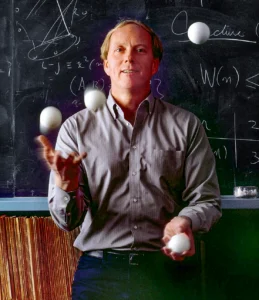
To unpack these foundational mysteries, theoretical physicist Jonathan Halliwell of Imperial College London recently joined hosts Steven Strogatz and Janna Levin on an episode of Quanta Magazine’s podcast, The Joy of Why. Delving into his extensive career at the intersection of quantum theory and cosmology, Halliwell illuminated how environmental interactions dissolve fragile quantum states, how the history of the universe can be evaluated without relying on external observers, and why embracing scientific mystery requires moving beyond rigid dogmas.
The Evolution of Quantum Cosmology and the Big Bang
Halliwell’s academic trajectory began in the field of quantum cosmology, a discipline that applies the laws of quantum mechanics to the universe in its entirety. This approach addresses a fundamental limitation in classical physics: when researchers trace the standard Big Bang model backward in time using general relativity and matter models, theorems formulated by physicists Roger Penrose, Stephen Hawking, and others dictate the inevitable emergence of a gravitational singularity—a point of infinite density and curvature where known physical laws break down.
To resolve this catastrophic breakdown, theoretical physicists look to quantum gravity. Although a comprehensive, unified theory of quantum gravity remains elusive four decades after Halliwell initially entered the field, researchers can construct simplified models by quantizing specific parameters of the early universe, such as its overall scale factor and select distortion metrics.
Applying these heuristic techniques yields a profoundly different picture of cosmic origins. Rather than terminating in a sharp, cone-like geometric point, the earliest epochs of the universe transition into a smooth, finite quantum geometry. This concept, popularized 40 years ago by Stephen Hawking and James Hartle, is known as the "no-boundary proposal" or "shuttlecock geometry." In this framework, the singularity is effectively smoothed out by quantum effects at the Planck scale, offering a mathematically compelling account of how space-time itself could have emerged from a quantum vacuum.
The Observer Dilemma and the Decoherent Histories Approach
Applying quantum mechanics to the entire cosmos immediately triggers a conceptual crisis regarding the role of the observer. In standard undergraduate textbooks, quantum theory frequently relies on the Copenhagen interpretation, which posits that microscopic systems exist in superpositions of multiple states until an external observer performs a measurement, causing the wave function to "collapse" into a definite outcome.
However, when the system under observation is the universe itself, an external observer is logically impossible, as any conscious observer must reside entirely within the cosmos. This realization drove Halliwell and his contemporaries to explore alternative formulations that eliminate the need for external measurement or wave function collapse.
Collaborating with physicists such as James Hartle and Murray Gell-Mann, researchers developed the "decoherent histories" approach—also known as the consistent histories framework. This formulation bypasses the traditional requirement of an external conscious observer by shifting the analytical focus to the correlations between present-day records—such as cosmic microwave background radiation, telescopic data, and physical detectors—and past events. By evaluating sets of alternative histories that decohere, physicists can determine probabilities for macroscopic outcomes without invoking metaphysical notions of wave function collapse in the remote past.
Decoherence: Erasing the Quantum-Classical Boundary
A central challenge in physics is explaining why everyday objects, such as chairs, planets, and human bodies, do not exhibit the bizarre phenomena observed at the atomic scale, such as superposition and interference. In the famous double-slit experiment, individual electrons or photons fired sequentially through a barrier with two slits produce an interference pattern on a back screen, demonstrating that a single quantum particle behaves like a wave and traverses both paths simultaneously. Yet, macroscopic objects never display such interference.
The mechanism responsible for this suppression is decoherence. As Halliwell explained during the discussion, macroscopic systems are perpetually subjected to a relentless "bombardment" from their surrounding environment—stray photons, background gas molecules, and minute electromagnetic fields. This constant interaction acts as a disruptive force that rapidly disperses delicate quantum phase relationships out into the environment, rendering the system effectively classical to local observers.
While the fundamental quantum entanglement and information remain conserved within the broader universe, they become practically inaccessible, leaking across spatial horizons beyond human retrieval. This continuous loss of phase coherence explains why macroscopic realism emerges naturally from underlying quantum mechanics without requiring human consciousness to anchor physical reality.
Testing Macrorealism: Bell and Leggett-Garg Inequalities
To rigorously test the boundaries where quantum mechanics transitions into classical behavior, physicists utilize mathematical frameworks designed to rule out classical explanations. Just as John Bell’s famous inequalities demonstrated that local hidden-variable theories cannot account for quantum entanglement, Anthony Leggett and Anupam Leggett-Garg formulated temporal inequalities to test macroscopic realism.
Leggett-Garg tests evaluate whether physical systems maintain definite properties over time independently of the measurement process. By performing sequential measurements on a system and calculating statistical correlations, researchers can determine whether the outcomes align with a classical model—wherein a system possesses definite values at all times—or whether they violate the inequality, thereby proving the necessity of quantum indefiniteness.
While experimentalists have successfully pushed interferometry to increasingly massive scales—such as complex molecules and biological viruses—confirming quantum behavior and ruling out pseudo-classical alternatives requires precise experimental designs that account for potential loopholes, such as measurement invasiveness or signal interference.
Embracing Scientific Mystery and Multiple Perspectives
Despite centuries of empirical verification, the foundational interpretations of quantum mechanics remain deeply contested. Schools of thought ranging from the Copenhagen interpretation and the many-worlds hypothesis to de Broglie-Bohm pilot-wave theory offer conflicting ontological accounts of what reality is at its most fundamental level.
Reflecting on these persistent theoretical divides, Halliwell emphasized the value of intellectual flexibility. Drawing parallels between his academic pursuits and personal practices like meditation and yoga, he noted that the discomfort many feel when confronting scientific uncertainty can be reframed. Rather than demanding definitive, mythologically satisfying answers from reductionist physics, scientists and the public alike can benefit from sitting comfortably with multiple competing perspectives and the infinite mystery of the cosmos.
As quantum information science and technology advance into the 21st century, the boundaries of quantum mechanics will continue to be pushed into ever-larger regimes. Whether future generations uncover new mathematical formulations or refine existing interpretations, the fundamental bizarreness of the quantum realm serves as a humbling reminder of the vast gulf between human intuition and the ultimate architecture of physical reality.