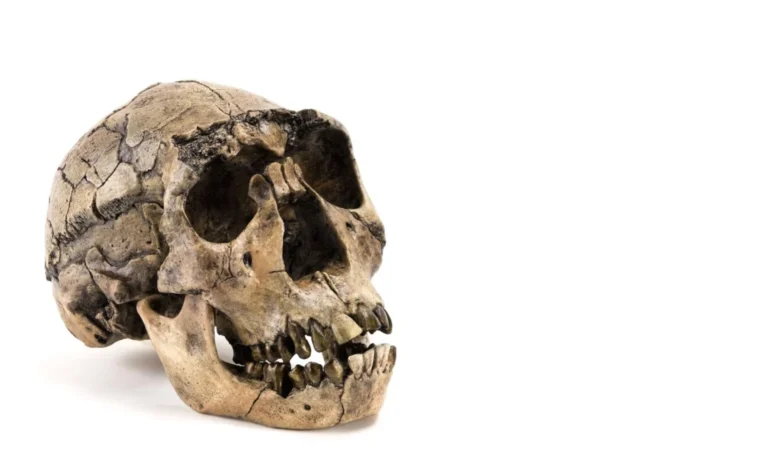
This discovery, published in the Proceedings of the National Academy of Sciences (PNAS) on November 16, provides compelling evidence that the biological legacy of our extinct hominin cousins continues to shape the anatomical and psychiatric landscape of modern humans. The study, conducted by evolutionary geneticists Hugo Zeberg and Svante Pääbo of the Max Planck Institute for Evolutionary Anthropology, focuses on a specific genetic variant in the SLC16A11 gene, which researchers have traced back to Neanderthal introgression—the process by which genetic material is transferred between species through interbreeding.
The Genetic Legacy of Neanderthal Interbreeding
The history of modern human migration out of Africa, occurring roughly 60,000 to 90,000 years ago, brought Homo sapiens into contact with Neanderthals residing in Eurasia. While the two groups diverged evolutionarily hundreds of thousands of years earlier, this contact resulted in limited, yet significant, interbreeding. As a result, non-African populations today carry approximately 1% to 2% of their DNA from Neanderthals.
For decades, anthropologists viewed this genetic contribution primarily as a relic of history, but recent technological advancements in paleogenomics have allowed researchers to pinpoint specific traits influenced by this archaic DNA. The SLC16A11 variant identified by Zeberg and Pääbo is particularly notable because of its functional impact on the human brain. While many Neanderthal-derived genes are associated with skin, hair, and immune system function, this specific variant appears to regulate the physical structure of the brain.
Chronology of the Discovery
The investigation into this variant did not happen in a vacuum. It represents the culmination of over a decade of research into the human genome:
- 2010: The first draft of the Neanderthal genome is completed by the Max Planck Institute team, led by Svante Pääbo.
- 2014: Researchers first identify the SLC16A11 gene as being highly prevalent in Native American and East Asian populations, noting its origin from archaic humans.
- 2018-2021: Large-scale genomic studies begin to link specific archaic variants to modern health conditions, including pain sensitivity and COVID-19 risk.
- November 2023: Zeberg and Pääbo publish their findings in PNAS, specifically isolating the variant’s role in the putamen, a structure in the forebrain.
Biological Implications: The Putamen and Schizophrenia
The putamen is a critical component of the basal ganglia, a group of structures in the brain responsible for regulating movement, learning, and certain cognitive processes. The study found that individuals carrying the Neanderthal-derived variant exhibit a smaller putamen compared to those who do not.
Crucially, the researchers emphasize that this anatomical difference does not equate to a deficit in mental capacity. Intelligence, memory, and executive function appear unaffected by this reduction in volume. Instead, the focus of the study shifted to the psychiatric implications of this structural variation.
Schizophrenia is a complex, polygenic disorder, and the genetic markers associated with it are numerous. The researchers discovered that the Neanderthal-derived variant in the SLC16A11 gene is associated with a lower risk of developing the disorder. This finding adds a new layer to the "thrifty gene" or "evolutionary trade-off" hypothesis, suggesting that some Neanderthal alleles may have provided protective benefits to early modern humans that persist in contemporary society.
Supporting Data and Methodology
To reach these conclusions, the researchers utilized data from the UK Biobank, a large-scale biomedical database and research resource. By analyzing the brain scans and genetic information of thousands of individuals, the team was able to conduct a genome-wide association study (GWAS).
The statistical significance of their findings was bolstered by the correlation between the variant’s presence and structural MRI data. While the effect size of the putamen shrinkage is relatively modest, it is statistically consistent across diverse populations. The study highlights that the variant affects the expression of the gene in the brain, thereby influencing cellular metabolism within the putamen. This metabolic shift is believed to be the underlying mechanism that alters the structure of the brain tissue over the course of an individual’s development.
Perspectives from the Scientific Community
While the study is pioneering, experts in the field suggest a cautious interpretation. "The brain is an incredibly plastic organ," notes Dr. Elena Rossi, an independent neurobiologist not involved in the study. "Finding a correlation between a genetic variant and a specific brain structure is a significant milestone, but we must be careful not to draw direct lines between small anatomical changes and complex human behaviors or clinical outcomes without extensive longitudinal validation."
Hugo Zeberg, in his correspondence with the scientific community, acknowledges the complexity of these findings. "Genetic differences between Neanderthals and modern humans still influence our brains today," Zeberg stated. "This is not just about the past; it is about understanding the biological spectrum of modern human health."
Broader Impact and Evolutionary Context
The implication that archaic human DNA plays a role in psychiatric health is significant for clinical medicine. If specific Neanderthal variants can offer protection against certain mental health disorders, it could open new pathways for pharmacological research. Understanding how these variants modulate gene expression in the brain might allow researchers to develop targeted therapies that mimic these protective biological processes.
Furthermore, this study challenges the traditional narrative that Neanderthal DNA is largely "junk" or detrimental to human health. While some inherited variants have been linked to an increased risk of autoimmune diseases or depression, others may have been essential for the survival of early humans as they adapted to new, harsher environments outside of Africa.
Future Directions
The research conducted by the Max Planck Institute opens several avenues for future study. One primary question remains: why did the Neanderthal variant persist in the human population? If it alters brain structure, it must have been subject to either natural selection or genetic drift. Researchers are now looking at whether this variant provided a selective advantage during the Paleolithic era, perhaps by optimizing motor skills or metabolic efficiency.
Additionally, the role of SLC16A11 in other tissues, such as the liver or pancreas, remains a subject of active research. Given that the gene is known to be involved in lipid metabolism, its role in the brain may be only one facet of a much broader systemic impact on human physiology.
As genomic sequencing becomes more accessible and datasets like the UK Biobank continue to grow, scientists expect to identify more of these "archaic remnants." Each discovery provides a clearer picture of our evolutionary trajectory, reminding us that we are the result of thousands of years of adaptation, migration, and integration.
The work of Zeberg and Pääbo serves as a testament to the power of interdisciplinary science, merging archaeology, evolutionary biology, and neuroscience to solve the mysteries of the human condition. While the shrinking of the putamen may seem like a minor anatomical quirk, its connection to schizophrenia risk underscores the profound influence of our ancestral history on our current medical realities. As the scientific community continues to map the Neanderthal influence on the modern brain, we move closer to a more comprehensive understanding of what it means to be human in the 21st century.