Dem probes could ‘torture’ young Trump officials with crushing legal bills, subpoenaed conservative warns

The political landscape in Washington is increasingly defined by intense legislative oversight and aggressive investigative strategies, setting the stage for renewed friction between congressional Democrats and conservative organizations. Recent statements from Democratic lawmakers regarding potential future investigations into President Donald Trump and his administration have ignited a fierce debate over the limits of congressional oversight, the weaponization of the legal system, and the collateral damage inflicted upon individuals working in public service and policy advocacy.
At the center of this controversy are warnings from conservative leaders who argue that heavy-handed investigative tactics—reminiscent of those employed during past special counsel probes—pose a severe threat to young professionals. These individuals, policy groups warn, face mounting reputational risks and financially crippling legal expenses simply for participating in conservative governance.
The Genesis of the Controversy: Slotkin’s "Deterrence Message"
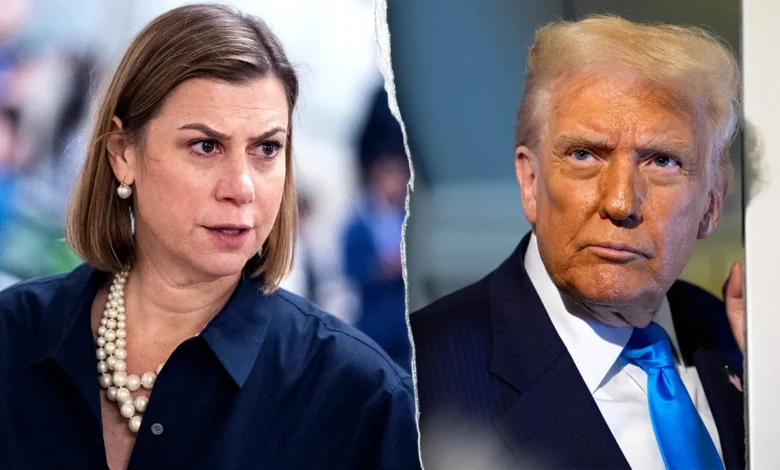
The current anxieties within the conservative movement trace back to remarks made earlier this month by Senator Elissa Slotkin, D-Mich., during an appearance at the University of Chicago’s Institute of Politics. During the event, Slotkin articulated a strategy for her party should they secure congressional majorities in future elections. She explicitly stated a desire to send a "deterrence message" not just to President Trump himself, but broadly to the personnel and aides who enabled his policy agenda.
Slotkin’s call for a deterrence mechanism aimed at future administration officials was swiftly met with sharp criticism from political opponents, who characterized the statements as an explicit threat to weaponize the machinery of the federal government against political adversaries. While representatives for Slotkin have defended the comments or dismissed subsequent criticism as manufactured outrage, the remarks have served as a rallying point for conservative institutions fearful of targeted retribution.
The Shadow of Past Probes: The Conservative Partnership Institute’s Ordeal

For organizations like the Conservative Partnership Institute (CPI), these warnings are not merely theoretical. Rachel Bovard, the vice president of programs at CPI, drew direct parallels between Slotkin’s rhetoric and the investigative tactics utilized by former Biden-appointed special counsel Jack Smith during his sweeping 2020 election interference probe.
According to Bovard, Smith’s investigation subjected her organization to an exhaustive subpoena process that demanded extensive, granular documentation, stretching far beyond the core allegations of the inquiry. CPI was forced to expend millions of dollars in legal fees to ensure full compliance. Bovard emphasized that despite these invasive demands, CPI was never formally or credibly accused of any criminal wrongdoing.
"Jack Smith was a test run in how to do this," Bovard asserted in recent interviews. She pointed out that the data collected during Smith’s tenure remains archived within the Federal Bureau of Investigation and the Department of Justice databases. Conservative critics contend that this vast repository of information creates a blueprint that a future Democratic administration could easily reactive for widespread political mapping and oversight blitzes.
Constitutional Boundaries and the Intent of Congressional Subpoenas
Legal scholars and former prosecutors emphasize that the constitutional authority of Congress to issue subpoenas and conduct investigations is not absolute. Under established constitutional principles, congressional oversight must be demonstrably tied to valid legislative functions rather than serving as a surrogate for law enforcement or punitive administrative measures.
Abhishek Kambli, a former federal prosecutor and partner at the law firm Holtzman Vogel, noted that public statements made by lawmakers boasting an "accountability agenda" or punitive deterrence can become powerful evidentiary tools for legal teams seeking to quash congressional subpoenas. If targets of these investigations can demonstrate in a court of law that the primary motivation behind a subpoena is political retribution or harassment rather than legitimate legislative inquiry, the legal foundation of the demand weakens significantly.
"If they just throw in boilerplate language that this is for legislative purpose, anyone challenging those subpoenas will have that entire record to demonstrate that it’s anything but that," Kambli explained.

Conversely, other legal experts highlight the broad latitude traditionally afforded to the legislative branch. Michael Morley, a law professor at the Florida State University College of Law, acknowledged that public threats of deterrence create negative optics and strain democratic norms. However, he maintained that Congress retains broad inherent authority to investigate executive branch agencies and the administrative apparatus it helps create, suggesting that such rhetoric, while normatively troubling, may not cross the strict threshold of a constitutional violation.
The Financial Toll as a Form of Deterrence
Beyond formal criminal prosecutions or contempt citations, legal analysts argue that the investigative process itself often functions as the primary penalty. Mounting a robust defense against congressional or federal subpoenas requires specialized legal counsel, which can rapidly accumulate exorbitant fees.
Legal observers note that for young professionals, entry-level staffers, and mid-level policy analysts entering public service, the prospect of facing severe legal bills or enduring reputational harm serves as a powerful deterrent. Critics of the current oversight trajectory argue that the intended effect is to shrink the talent pool available to conservative administrations by making public service prohibitively risky.
"There is no doubt that some members of Congress intend to use that process to bankrupt people who cannot afford legal representation," Kambli observed. "That is a real threat, regardless of whether anyone is ultimately prosecuted."
Historical Precedents and the Prosecution Threshold
The efficacy of congressional contempt citations ultimately relies on the executive branch’s willingness to prosecute non-compliance. Hans von Spakovsky, a senior legal fellow at Advancing American Freedom, pointed to historical precedents established during prior administrations to illustrate the limits of congressional enforcement.
During the Obama administration, the Department of Justice notably declined to prosecute then-Attorney General Eric Holder after the House of Representatives voted to hold him in criminal contempt for refusing to comply with subpoenas tied to the "Fast and Furious" gun-tracking investigation. This precedent underscores that even if Congress invokes its contempt powers, executive discretion plays a decisive role in whether enforcement actions proceed.
However, legal analysts caution that reliance on executive non-prosecution offers little comfort to private organizations and individuals caught in the crosshairs of expansive investigative mandates, where the cost of compliance alone can threaten financial solvency.
The Debate Over Preemptive Pardons and Future Implications
As the political climate anticipates future electoral cycles, discussions surrounding executive protections have intensified. Weeks prior to the recent congressional exchanges, President Trump indicated in interviews that he would consider issuing preemptive pardons to members of his administration before leaving office, drawing comparisons to historical instances of executive clemency.
While conservative leaders like Bovard view the contemplation of mass pardons as an unfortunate necessity in an era defined by aggressive investigative maneuvers—often termed "lawfare"—critics argue that such measures risk further eroding institutional norms. The prospect of routine, preemptive pardons highlights a deepening systemic distrust within the federal government, where both major political parties increasingly view the justice and oversight systems through a lens of potential partisan weaponization.
As both parties position themselves for future legislative battles and executive transitions, the fundamental tension between robust congressional oversight and the protection of constitutional rights remains unresolved. The ongoing debate over investigative intent, legal costs, and the personal risks borne by public servants underscores a profound and enduring polarization within the American political ecosystem.