Joe Manchin Launches Independent Leadership Council to Reshape American Political Landscape

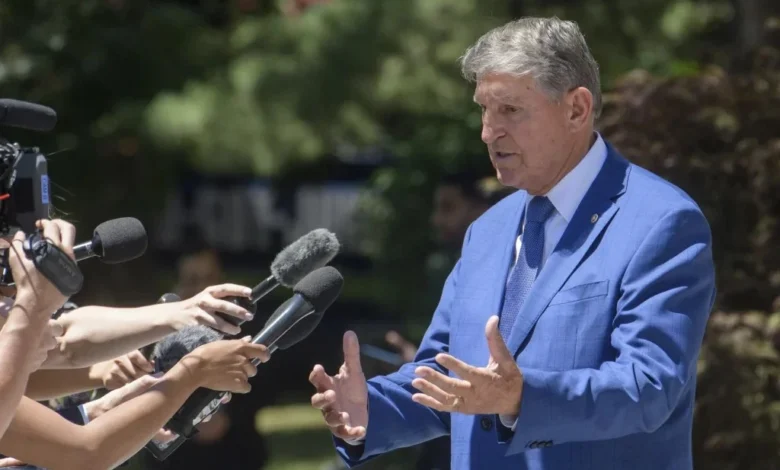
Former West Virginia Senator Joe Manchin, a figure synonymous with bipartisanship and political independence during his lengthy career, has embarked on a new endeavor to fundamentally alter the American electoral landscape. Manchin is spearheading the Independent Leadership Council, an initiative designed to actively identify, support, and elect independent candidates in competitive races across the United States. This strategic move, announced in his home state, comes at a pivotal moment in American politics, marked by increasing voter dissatisfaction with the two major parties and a growing desire for centrist governance.
The council’s stated purpose is clear: to strategize and implement methods for successfully electing independent candidates, thereby fostering a political environment more conducive to compromise and collaboration. Manchin’s initiative is particularly timely, aligning with a recent Gallup poll revealing a historic high of 45% of Americans identifying as political independents. This surging number underscores a profound shift in voter sentiment, reflecting widespread disillusionment with partisan gridlock and an appetite for alternatives to the traditional Republican and Democratic binary.
The Genesis of the Independent Leadership Council
The Independent Leadership Council represents a culmination of Manchin’s long-standing belief in the necessity of a strong, independent voice in American politics. Officially unveiled in July 2026, the council’s formation follows Manchin’s own high-profile decision in 2024 to change his party affiliation from Democrat to Independent, solidifying his commitment to a non-partisan approach. Manchin articulated his vision in an interview with Semafor, stating, "We’re trying to build a true independent network. Not a third party, but a movement of people that will bring our country and the people who are participating in politics today more towards the center." This distinction between a "movement" and a "third party" is crucial to understanding the strategic underpinnings of his new venture. Manchin aims to foster a collective of like-minded individuals who can transcend rigid party lines, rather than creating a new, potentially marginalized, political apparatus.
The Rising Tide of Independent Voters
The statistical backdrop against which Manchin’s council emerges is compelling. The Gallup poll, which indicated 45% of Americans identifying as independent, represents a significant historical peak. For decades, the proportion of self-identified independents has steadily climbed, often surpassing those identifying as either Republican or Democrat. This trend can be traced back to the late 20th century, accelerating particularly in the 21st century amidst heightened political polarization and perceived governmental dysfunction.
Historical Context of Voter Affiliation:
- Post-WWII Era to 1960s: Strong party loyalties, with Democrats often holding a plurality.
- 1970s onwards: Gradual decline in party identification, influenced by events like Vietnam, Watergate, and growing disillusionment.
- 2000s to Present: Accelerated growth of independents, often linked to increasing partisan animosity, legislative stalemates, and the perception that both major parties have moved too far from the center.
Reasons for the Shift:
- Polarization: Voters, particularly moderates, feel increasingly alienated by the ideological extremes of both major parties.
- Dissatisfaction with Governance: Persistent gridlock, failure to address critical national issues, and frequent government shutdowns contribute to a sense that the two-party system is failing.
- Desire for Pragmatism: Many voters express a preference for problem-solving and compromise over ideological purity.
- Demographic Changes: Younger generations, in particular, show less attachment to traditional party labels.
It’s important to note that "independent" is a broad category. It includes voters who lean towards one of the major parties but prefer not to formally affiliate, as well as those who are truly unaligned and cast votes based purely on candidate or issue. Manchin’s initiative targets the latter, seeking to empower genuinely independent voices.
Joe Manchin’s Political Journey: From Centrist Democrat to Independent Crusader
Joe Manchin’s political career, spanning over four decades, has consistently been characterized by a pragmatic, often maverick, approach. Born in Farmington, West Virginia, Manchin served in the West Virginia House of Delegates and Senate before being elected Secretary of State in 1999 and Governor in 2005. His tenure as governor was marked by fiscal conservatism and a focus on economic development, earning him a reputation as a moderate leader in a traditionally Democratic but increasingly Republican-leaning state.
He was first elected to the U.S. Senate in a special election in 2010, filling the seat of the late Robert C. Byrd. Throughout his 15 years in the Senate (2010-2025), Manchin was a pivotal figure, often described as the chamber’s most conservative Democrat. This positioning gave him immense leverage, particularly in a closely divided Senate, where his vote frequently determined the fate of major legislation.
Key Moments of Independence and Influence:
- Affordable Care Act (ACA): While ultimately voting for the ACA, Manchin consistently advocated for changes to reduce costs and enhance state flexibility, often clashing with more progressive elements of his party.
- Judicial Nominations: Perhaps one of his most notable breaks with the Democratic Party occurred in 2018 when he was the sole Democrat to vote in favor of confirming Brett Kavanaugh to the Supreme Court. This decision, made despite intense partisan pressure, underscored his willingness to prioritize his own assessment over party loyalty.
- Infrastructure Investment and Jobs Act (2021): Manchin was a key negotiator and proponent of this bipartisan bill, demonstrating his capacity to work across the aisle on significant policy.
- Build Back Better Act (2021): Famously, Manchin refused to support President Biden’s ambitious social spending and climate package, citing concerns about inflation and the national debt, effectively dooming the legislation. This act solidified his image as a centrist gatekeeper.
- Inflation Reduction Act (2022): Despite his previous opposition to Build Back Better, Manchin played a crucial role in negotiating a scaled-down version, the Inflation Reduction Act, demonstrating his influence in shaping legislative outcomes.
Manchin’s criticisms of the Democratic Party’s perceived leftward drift became increasingly vocal over time. He publicly stated that he had warned former President Joe Biden that his staff was taking him "too far to the left" in 2020. He also expressed strong disapproval of what he called the Democratic Party’s "embrace of socialist ideology," emphasizing his belief in capitalism and fiscal responsibility. His decision to switch to an Independent affiliation in 2024 was a logical extension of his political brand, allowing him to further shed party constraints and champion a more moderate path. At 78, Manchin’s continued activism reflects a deep-seated conviction that the American political system requires fundamental recalibration.
Strategy and Distinctions: A Movement, Not a Party
Manchin’s insistence on building an "independent network" rather than a "third party" is a strategic nuance born from a deep understanding of American electoral history. The U.S. political system, characterized by winner-take-all elections and significant structural advantages for established parties (e.g., ballot access laws, campaign finance regulations, media coverage), has historically proven inhospitable to third parties.
Challenges for Third Parties in the U.S.:
- Ballot Access: Obtaining ballot access in all 50 states is an arduous and expensive process, often requiring a significant number of signatures.
- Campaign Finance: Third parties struggle to compete with the vast fundraising machines of the major parties.
- Media Coverage: Mainstream media often focuses almost exclusively on the two major parties, marginalizing third-party candidates.
- "Spoiler Effect": Voters are often reluctant to support third-party candidates for fear of "wasting" their vote or inadvertently helping a candidate they strongly oppose.
- Lack of Infrastructure: Building a national party apparatus from scratch (local committees, volunteers, data operations) is a monumental task.
By focusing on electing individual independent candidates, Manchin’s council seeks to circumvent some of these systemic hurdles. An independent candidate, while still facing challenges, can often gain traction by emphasizing local issues, personal character, and a non-partisan problem-solving approach. As Manchin explained to CNN, "We’re not trying to start another party. We’re trying to get a person who can be committed to — and totally committed to — being an independent with an independent voice. They can vote with Democrats and Republicans when they’re right and speak out against them when they’re wrong." This approach seeks to cultivate a critical mass of elected officials who are accountable only to their constituents and their conscience, not a party platform. The ultimate goal is to foster a legislative environment where policy is crafted through genuine dialogue and compromise, "pulling towards the center" away from the fringes of both major parties.
Key Players and Alliances
The Independent Leadership Council is not solely Manchin’s endeavor; it represents a convergence of efforts from various influential figures and organizations.
Heather Bresch and Americans Together:
Manchin’s daughter, Heather Bresch, plays a significant role in this new initiative. Bresch is a prominent businesswoman, best known for her tenure as the CEO of Mylan, a major Fortune 500 pharmaceutical company. Her corporate background brings substantial organizational and strategic expertise to the council. She has also been actively involved with Americans Together, a centrist political nonprofit. Americans Together aims to bridge partisan divides and support common-sense policy solutions, making it a natural partner for Manchin’s vision. Bresch’s involvement ensures a strong operational foundation and leverages existing networks dedicated to promoting moderation in politics.
FreedomWorks President Adam Brandon and the Independent PAC:
Another intriguing alliance is with Adam Brandon, President of FreedomWorks. FreedomWorks is a conservative and libertarian advocacy group, known for its strong stance on limited government, free markets, and individual liberty. This collaboration might seem counterintuitive given Manchin’s often-moderate positions, but it highlights a shared frustration with the current political establishment and a desire for disruption. FreedomWorks’ Independent PAC has previously invested millions of dollars in supporting independent candidates, demonstrating a practical commitment to the cause. Examples include Bill Hill in Alaska and Representative Kevin Kiley (I-CA). This alliance suggests that "independence" can be interpreted differently across the political spectrum, and that some conservative elements are also seeking alternatives to the established Republican Party, perhaps driven by dissatisfaction with its direction or efficacy. The common ground appears to be a desire for candidates unencumbered by rigid party dictates, even if their ultimate policy leanings may differ.
Potential Impact and Implications
The formation of the Independent Leadership Council carries significant potential implications for American politics, both in the short and long term.
Electoral Impact:
- Competitive Elections: The council’s focus on "competitive elections" suggests a strategic approach to maximize impact. By targeting races where margins are thin, independent candidates could act as disruptors.
- "Spoiler Effect" Revisited: While Manchin aims to avoid the pitfalls of a third party, the presence of well-funded independent candidates could still draw votes away from major party candidates, potentially altering election outcomes. This could be a concern for both Democrats and Republicans.
- Voter Engagement: A credible independent movement could energize disillusioned voters, potentially increasing turnout among those who feel unrepresented by the major parties.
Legislative Impact:
- Increased Bipartisanship: The core premise is that more independents would lead to greater cooperation and a focus on practical solutions. Freed from party loyalty, these individuals could vote purely on merit, fostering a more collaborative legislative environment.
- Policy Shifts: A bloc of independents could force major parties to moderate their platforms to appeal to a broader base, pushing policy discussions towards the center.
- Potential for Gridlock: Conversely, if independents do not form a cohesive voting bloc or align strategically, their presence could further fragment legislative power, potentially leading to new forms of gridlock if compromises remain elusive.
Party System Impact:
- Erosion of Two-Party Dominance: While not forming a third party, a successful independent movement could gradually weaken the stranglehold of the Democratic and Republican parties, forcing them to become more responsive to the electorate’s centrist leanings.
- Internal Party Reforms: Facing genuine threats from independent candidates, the major parties might be compelled to address their internal ideological divides and appeal more broadly to moderate voters.
Challenges Ahead:
Despite the momentum, Manchin’s initiative faces substantial challenges:
- Funding and Resources: While Manchin and his allies bring significant resources, building a national network capable of competing with the major parties’ infrastructure is immensely costly.
- Candidate Recruitment: Finding credible, charismatic, and genuinely independent candidates who can appeal to diverse electorates is difficult.
- Voter Education: Convincing voters to abandon deeply ingrained party affiliations and trust an independent path requires sustained effort.
- Defining "Independence": The term "independent" can be ambiguous. Ensuring that candidates supported by the council truly embody a non-partisan, centrist ethos will be crucial to maintaining the movement’s credibility.
Expert Analysis and Reactions
Political analysts are watching Manchin’s initiative with a mixture of skepticism and cautious optimism. Many political scientists point to the historical difficulty of establishing any viable alternative to the two major parties in the U.S., citing the structural barriers inherent in the electoral system. However, the unprecedented level of voter dissatisfaction and polarization provides a unique window of opportunity that was not present in previous attempts to foster third-party or independent movements.
Some strategists believe that Manchin’s "movement, not a party" approach is shrewd, focusing on electing individuals rather than building a fragile party infrastructure. They suggest that a small but influential bloc of independents in Congress could indeed force a shift in legislative dynamics. Others remain skeptical, warning that even well-funded independent campaigns often struggle to gain widespread traction against the well-oiled machines of the Democrats and Republicans.
Reactions from the major parties are likely to be mixed. Democrats might view the effort as a potential drain on their centrist vote share, particularly in swing districts. Republicans, especially those on the more moderate wing, might see it as a reflection of their own party’s internal struggles, while the more conservative elements might dismiss it as a fringe effort. Both parties, however, will undoubtedly monitor the council’s progress closely, especially as it begins to endorse and fund candidates in key races. The specter of a "spoiler" effect, where an independent candidate inadvertently sways an election outcome, is a perennial concern for established parties.
Conclusion
Joe Manchin’s Independent Leadership Council represents a bold and ambitious attempt to address what he perceives as a fundamental crisis in American democracy: the inability of the two major parties to effectively govern and represent the broad center of the electorate. Built upon Manchin’s own legacy as a bipartisan broker and fueled by a significant and growing contingent of independent voters, the council seeks to inject new life into American politics by empowering non-aligned candidates. While the path ahead is fraught with challenges inherent in disrupting a deeply entrenched two-party system, the initiative’s strategic approach, combined with the widespread desire for moderation and compromise, positions it as a significant development in the ongoing evolution of the American political landscape. Its success or failure will undoubtedly offer profound insights into the future direction of American governance and the enduring power of the independent voice.