The Paradox of Modern American Discourse: Why We Disagree on Everything Yet Argue About So Little

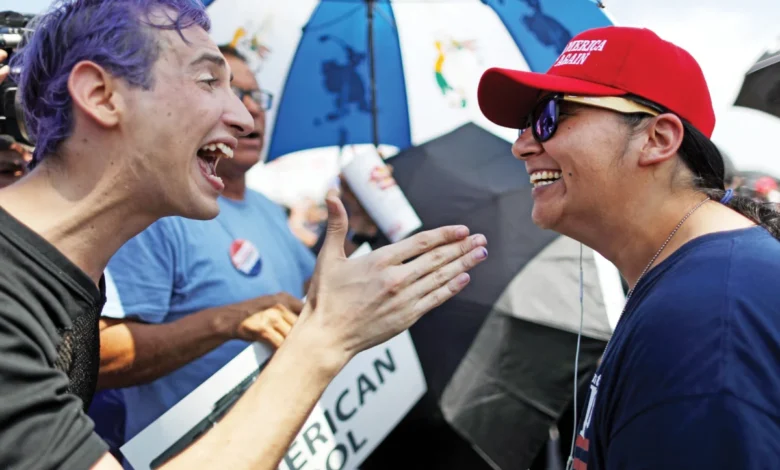
Americans find themselves navigating an era defined by deep ideological fractures, where the public sphere is saturated with bitter disagreements over fundamental values, institutional trust, and the direction of the nation. Yet, beneath the surface of this profound political polarization lies a curious paradox: while the volume of our collective noise has never been higher, the substantive depth of our actual engagement has rarely felt more shallow. Citizens across the political spectrum appear increasingly entrenched in their respective camps, exchanging standardized talking points rather than engaging in genuine debate. This dynamic has transformed the American civic landscape into a fragmented theater of cultural grievances, raising critical questions about the future of public discourse, freedom of speech, and societal cohesion.
The Roots of Deepening Political Polarization
To understand the current state of American civic life, one must examine the structural and technological shifts that have accelerated political polarization over the past two decades. The transition from traditional, centralized media consumption to decentralized, algorithm-driven digital platforms has fundamentally altered how citizens consume information and interact with opposing viewpoints.
Social media ecosystems are engineered to maximize user engagement, a metric that is frequently optimized by promoting emotionally charged, divisive content. Consequently, individuals are routinely sorted into ideological echo chambers where their preexisting beliefs are continually validated, and dissenting perspectives are marginalized or caricatured. This architectural design of modern communication tools has fostered an environment where nuance is systematically penalized, and absolute ideological conformity is rewarded.

Political scientists note that this polarization extends far beyond disagreement on specific policy proposals. It has evolved into what is known as "affective polarization"—a phenomenon where voters not only disagree with the opposing party’s platform but increasingly harbor profound distrust, animosity, and moral disapproval toward members of the opposing party themselves. In this climate, politics ceases to be a mechanism for negotiating pragmatic compromises and instead transforms into an existential struggle for cultural and institutional dominance.
The Paradox of High Noise and Low Substance
Despite the constant state of cultural warfare playing out across digital and traditional media channels, a distinct paradox persists: Americans argue extensively about surface-level cultural symbols while frequently bypassing foundational systemic issues. Debates over corporate governance, institutional curriculum, media representation, and symbolic gestures routinely consume public attention, often overshadowing complex policy discussions regarding economic mobility, infrastructure modernization, healthcare access, and fiscal sustainability.
This phenomenon is driven in part by the economics of modern activism and political mobilization. Outrage is a highly efficient currency in the attention economy. Viral campaigns, performative boycotts, and high-profile social media disputes generate immediate visibility and fundraising momentum for advocacy groups on both the political left and right. However, this focus on symbolic victories and symbolic defeats rarely translates into durable, constructive policy solutions.
When public discourse is dominated by reactionary flashpoints rather than sustained, evidence-based deliberation, society struggles to build consensus around long-term challenges. Citizens become hyper-aware of every cultural infraction committed by their political rivals, yet deeply detached from the legislative and administrative processes that shape their daily lives.

A Chronology of Modern Cultural Flashpoints
The evolution of this polarized environment can be traced through a series of escalating cultural and political friction points over recent years:
- The Early 2010s: The widespread adoption of smartphones and the maturation of social media platforms shift political activism from physical organizing spaces to digital networks, enabling rapid mobilization and decentralized messaging.
- The Mid-2010s: Cultural debates increasingly permeate institutions of higher education, corporate boardrooms, and professional organizations, leading to heightened scrutiny over speech, inclusivity, and ideological alignment.
- The Late 2010s to 2020: High-profile social justice movements intersect with a volatile political climate, transforming corporate branding, public monuments, and institutional policies into major battlegrounds of cultural identity.
- The Post-Pandemic Era (2021–Present): Disagreements over public health mandates, educational curricula, and digital censorship further erode institutional trust, embedding political polarization deeply into everyday social interactions and family dynamics.
Societal Implications and the Erosion of Institutional Trust
The long-term implications of this persistent polarization extend to the foundational institutions that sustain democratic governance. Public confidence in the judiciary, legislative bodies, traditional journalism, academia, and electoral systems has experienced sustained declines. When citizens lose faith in the neutrality and legitimacy of core civic institutions, the mechanisms for peaceful dispute resolution begin to fray.
Furthermore, the chilling effect on freedom of expression remains a prominent concern for sociologists and legal scholars alike. As public shaming and professional retaliation become commonplace tools for enforcing ideological orthodoxy within various industries, individuals increasingly self-censor. This erosion of open inquiry stifles creativity, scientific advancement, and policy innovation, ultimately weakening the collective capacity to address complex national problems.
Prominent cultural critics and public intellectuals have repeatedly warned that a society incapable of engaging in rigorous, good-faith disagreement is ill-equipped to maintain a functioning pluralistic democracy. Without shared baseline facts and a baseline commitment to procedural norms, political compromise becomes viewed as betrayal rather than statesmanship.

Pathways Toward Restoring Constructive Discourse
Addressing the deep-seated divisions within American society requires a multifaceted approach involving institutional reform, media literacy, and individual behavioral shifts. Civil society organizations, educators, and community leaders are increasingly exploring initiatives designed to foster cross-ideological dialogue and bridge-building.
- Media Literacy Education: Equipping students and the broader public with the critical thinking skills necessary to identify misinformation, recognize algorithmic manipulation, and evaluate source credibility is vital for reducing susceptibility to polarized narratives.
- Institutional Reform: Universities, professional associations, and corporations must actively cultivate environments that protect viewpoint diversity and encourage rigorous, respectful debate rather than enforcing ideological conformity.
- Local Engagement: Re-centering civic participation at the local level—where community members must cooperate on tangible municipal issues such as schools, zoning, and public safety—has proven effective in humanizing political opponents and fostering pragmatic cooperation.
Ultimately, navigating the paradox of modern American discourse requires a conscious collective effort to elevate the quality of public debate. While disagreements over fundamental values are an inevitable and healthy component of a diverse, free society, the ability to debate with intellectual humility and mutual respect remains the ultimate safeguard of the democratic experiment.