Seattle Mayor Katie Wilson Faces Scrutiny Following Awkward Joint Interview on City Surveillance and Gun Violence Reduction Plans


The intersection of municipal governance, public safety policy, and media relations became a focal point in the Pacific Northwest this week, following a tense on-camera exchange involving Seattle Mayor Katie Wilson, Seattle Police Assistant Chief Nicole Powell, and Amy Barden, chief of the city’s Community Assisted Response and Engagement (CARE) Department. The interview, conducted by KOMO News reporter Chris Daniels, centered on the city’s multifaceted strategy to combat rising gun violence and the controversial role of automated surveillance technology. The resulting media interaction quickly circulated across digital platforms, drawing intense public commentary and renewing political debate surrounding urban safety protocols, law enforcement resources, and mayoral consistency.
Background and Context of the Surveillance Debate
The controversy highlights a longstanding friction point between municipal leadership and law enforcement agencies regarding the deployment of automated surveillance systems. During her 2024 mayoral campaign, Mayor Wilson—a self-identified socialist and Democrat—consistently voiced skepticism toward expanding closed-circuit television (CCTV) and automated license plate recognition technology, such as Flock-type cameras, within urban environments. Her campaign rhetoric frequently aligned with privacy advocates who argued that expansive camera networks fail to deter crime while disproportionately infringing upon civil liberties and heightening community vulnerability.
In September of the previous year, public policy statements attributed to Wilson underscored her administration’s cautious stance. She remarked that the proliferation of surveillance infrastructure would not inherently foster safer neighborhoods, instead suggesting it could compromise residents’ privacy. However, upon assuming office, the practical realities of governing a major metropolitan area grappling with high-profile violent crime incidents prompted a policy pivot. Rather than executing an immediate expansion, Wilson enacted a temporary pause on the installation of new cameras, ordering a comprehensive data-security, privacy, and storage audit. Municipal authorities indicated that the findings of this evaluation would dictate the future trajectory of the city’s surveillance network.

Chronology of the KOMO News Interview
The pivotal moment occurred during a joint media availability designed to outline the city’s updated gun violence reduction framework. Reporter Chris Daniels directed a direct inquiry toward Assistant Police Chief Nicole Powell, asking whether the newly deployed surveillance cameras could serve as an effective instrument in resolving Seattle’s backlog of unsolved violent crime cases, including high-profile incidents like the recent shooting at the Bite of Seattle event.
Upon hearing the question, Assistant Chief Powell hesitated visibly, lowering her gaze and pausing for an extended duration before attempting to respond. Before the police official could fully articulate a position, Mayor Wilson interjected, stepping in to answer on behalf of the administration. Wilson acknowledged that cameras function as a useful tool for solving crimes, citing existing footage from the Seattle Center and surrounding commercial areas.
Following the mayor’s intervention, video footage captured Assistant Chief Powell displaying non-verbal cues characterized by nervous glances, a brief chuckle, and frequent looks off-camera. Pressing further, the reporter inquired about the specific metrics established to measure the success of the gun violence reduction plan. Wilson responded by stating that the administration’s ultimate benchmarks include achieving zero homicides, reducing overall homicides, and decreasing the frequency of gunfire incidents.
When the reporter redirected the inquiry to ensure input from the law enforcement and community response leadership present, Amy Barden of the CARE Department addressed the press. Barden broadened the discussion beyond tactical surveillance, emphasizing a holistic approach that incorporates social service referrals and long-term personal improvement metrics for individuals at risk of involvement in violent crime.

Assistant Chief Powell subsequently added perspective, endorsing the holistic framework as a proven strategy utilized in other metropolitan jurisdictions that necessitates cross-departmental collaboration.
Public Reactions and Digital Fallout
The video clip of the interview generated significant traction across social media platforms, eliciting sharply contrasting reactions from political observers, advocacy organizations, and local residents. Critics of the mayoral administration pointed to the exchange as evidence of executive overreach and administrative confusion regarding core public safety tools.
Prominent digital commentary accounts, including the political tracking platform "End Wokeness," focused heavily on Assistant Chief Powell’s visible hesitation and body language during the questioning. Similarly, the local political advocacy group Future 42 released a public critique, questioning the consistency of an administration that previously restricted camera deployment now defending their utility as investigative tools. These organizations framed the incident as symptomatic of broader leadership challenges facing the city as it navigates complex public safety crises.
Supporters of the administration, conversely, argue that the joint appearance demonstrates a unified, inter-agency approach to addressing urban violence through a combination of traditional law enforcement, community-based response units, and preventative social programming. They emphasize that the ongoing data audit represents a measured, transparent method to balance public security needs with privacy safeguards.
Implications for the Wilson Administration
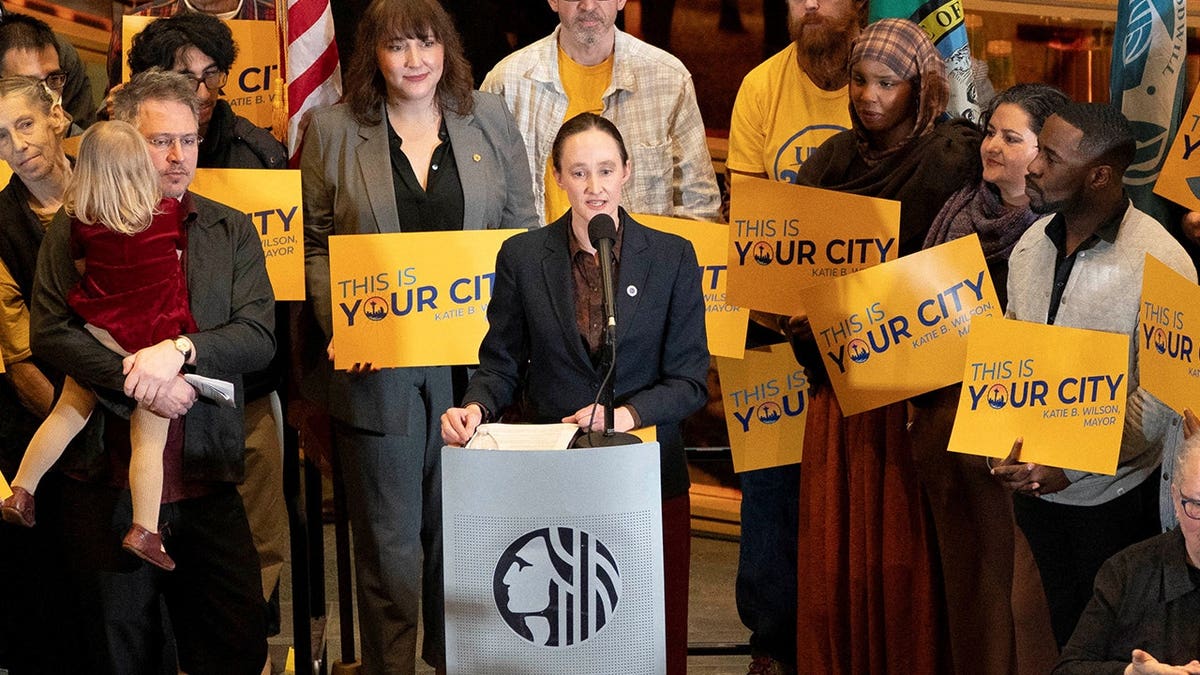
The incident arrives at a politically sensitive juncture for Mayor Wilson, whose administration has faced sustained public scrutiny over neighborhood safety, economic revitalization policies, and municipal consistency. The impending release of the city’s privacy and data-governance audit—anticipated by the end of the month—will serve as a critical test for the mayor’s policy trajectory.
The findings of this audit are expected to provide the empirical foundation for Wilson’s upcoming decision regarding whether to lift the moratorium on surveillance expansion or permanently alter the city’s technological infrastructure for law enforcement. Observers note that the decision will carry substantial political weight, testing the balance between progressive privacy commitments and mounting pressure from business owners, residents, and police leadership demanding more robust tools to combat violent crime.
As municipal stakeholders await the publication of the audit, the episode underscores the delicate dynamics inherent in modern urban governance, where administrative policy, law enforcement operations, and public communication intersect under the constant scrutiny of media and digital platforms.