Unlocking the Quantum Clock: How Scientists Plan to Prove That Time Flows at Multiple Sperates Simultaneously

The nature of time has captivated philosophers, mathematicians, and physicists for centuries. From the rhythmic swinging of pendulums to the digital readouts of modern smartphones, human civilization relies on the continuous measurement of duration. Yet, despite its omnipresence in daily life, time remains one of the most enigmatic concepts in modern physics. While classical mechanics treated time as an absolute, universal backdrop against which events unfold, the twentieth century dismantled that intuition. Albert Einstein’s revolutionary theories of relativity demonstrated that time is malleable, stretching and contracting depending on velocity and the strength of gravitational fields.
Now, modern theoretical and experimental physics stands on the precipice of another paradigm shift. By merging the principles of Einstein’s relativity with the strange, counterintuitive rules of quantum mechanics, an international team of researchers has formulated a groundbreaking method to detect what they term the "quantum superposition of times." Published in the prestigious journal Physical Review Letters, the study outlines how cutting-edge trapped-ion atomic clocks could soon reveal a universe where different rates of time coexist in a single quantum state. If successful, this research could bridge the long-standing chasm between relativity and quantum physics, offering crucial insights into the elusive framework of quantum gravity.
The Conundrum of Time: Relativity Meets the Quantum Realm
To understand the magnitude of the recent breakthrough, one must examine the foundational conflict of modern physics. On one hand, Einstein’s general and special theories of relativity describe a smooth, continuous spacetime fabric. In this macroscopic realm, time is relative. A clock moving at high speeds or situated deep within a powerful gravitational well ticks more slowly compared to a clock at rest in weaker gravity—a phenomenon known as time dilation. This effect is not merely theoretical; it is accounted for daily by global positioning system (GPS) satellites, which must continuously adjust their onboard clocks to synchronize with receivers on Earth’s surface.
On the other hand, quantum mechanics governs the microscopic universe of atoms and subatomic particles. In the quantum realm, particles do not possess definite, fixed states until they are observed. Instead, they can exist in a "superposition," embodying multiple possibilities or locations simultaneously. When quantum mechanics is applied to clocks, theoretical physicists have long pondered a profound question: If motion and gravity dictate the passage of time, and a quantum particle can exist in a superposition of multiple motions or positions simultaneously, can a clock exist in a superposition of different times?
Until recently, this concept remained untestable. Scientists had never directly observed a system where different rates of time flowed concurrently for the same object. The primary obstacle has been the staggering delicacy of quantum effects, which typically vanish when exposed to the thermal and electromagnetic disturbances of the macroscopic world.
Bridging the Gap: The Role of Advanced Atomic Clocks
Enter the atomic clock, the most precise timekeeping apparatus ever engineered by human ingenuity. Unlike traditional mechanical clocks that rely on gears and pendulums, or quartz watches that measure the vibrations of a crystal, atomic clocks measure time by tracking the hyper-consistent electromagnetic frequencies emitted or absorbed by atoms—such as cesium, strontium, or trapped ions—as they transition between energy states.
The precision of these devices is astronomical. Modern strontium optical lattice clocks, for instance, are so accurate that they would neither gain nor lose a single second over billions of years—longer than the current age of the universe. This extreme sensitivity has already allowed scientists to measure relativistic time dilation on macroscopic scales previously deemed impossible. In recent years, physicists have demonstrated that modern optical clocks can detect minute differences in the flow of time when separated vertically by a mere millimeter, effectively measuring the infinitesimal change in Earth’s gravitational potential across the height of a human finger.
Recognizing this unprecedented level of precision, an international collaboration of researchers set out to determine whether atomic clocks could be harnessed to detect quantum gravitational and relativistic phenomena. The research team features prominent scientists from Kyushu University in Japan, alongside colleagues from the Stevens Institute of Technology, the University of Waterloo, the National Institute of Standards and Technology (NIST), Colorado State University, and Stockholm University.
Entanglement and a Thousandfold Boost in Sensitivity
The core breakthrough of the newly published study lies in a nuanced manipulation of quantum entanglement—a phenomenon famously described by Einstein as "spooky action at a distance." Entanglement occurs when two or more systems become deeply interconnected in such a way that the physical state of one instantly dictates the state of the other, regardless of the distance separating them.
In their theoretical model, the researchers discovered that an atomic clock’s external motion can become inextricably linked, or entangled, with its internal energy states. Because a clock’s motion influences how rapidly it experiences time according to relativity, this entanglement creates a measurable signature. Specifically, as the clock’s quantum motion and internal energy interact, the clock itself undergoes a subtle loss of certain quantum properties. By tracking these specific signatures, scientists can infer the presence of differing rates of time existing in superposition.
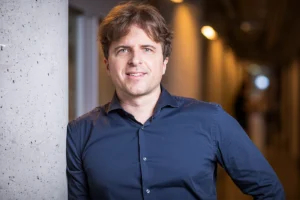
"It’s the precision that led us to develop our theoretical model. We found that the atomic clock’s motion becomes ‘entangled’ with its internal energy. The signature of this entanglement is that the clock itself loses some of its quantum properties, which can be detected using modern techniques," explained Associate Professor Joshua Foo of Kyushu University’s Institute for Advanced Studies, one of the paper’s lead authors.
Crucially, the team did not stop at theoretical identification. They devised a novel control technique designed to manipulate the motion of the trapped ions within the atomic clock setup. According to the study’s data, this innovative control mechanism boosts the experimental sensitivity to the targeted quantum-time effect by an astounding 100 to 1,000 times. This massive leap in precision brings an effect previously relegated to the realm of pure science fiction well within the technological grasp of existing advanced atomic physics laboratories.
From Theory to Experiment: The Chronology of an Investigation
The journey toward this discovery represents years of incremental progress in quantum information science and precision measurement. Over the past decade, laboratories around the world have steadily improved the control of trapped ions and neutral atoms, transforming atomic clocks from passive timekeepers into active quantum simulators.
The collaborative effort began taking definitive shape as theoretical physicists increasingly recognized that atomic clocks were approaching a sensitivity threshold where foundational physics could be tested. The multi-institutional team combined expertise in quantum optics, gravitational physics, and atomic instrumentation to model how a trapped ion clock would behave if subjected to superposed trajectories in a gravitational field.
By formulating rigorous mathematical descriptions of the entanglement between internal clock ticks and external spatial motion, the researchers isolated the exact conditions under which the superposition of times would manifest as detectable decoherence. The culmination of these theoretical models resulted in the paper accepted and published by Physical Review Letters.
Official Responses and Expert Analysis
The physics community has received the publication with considerable enthusiasm, viewing it as a pragmatic roadmap to solving long-standing theoretical dilemmas. While many proposals for testing quantum gravity require particle accelerators the size of galaxies—such as the hypothetical Planck scale where quantum fluctuations of spacetime become dominant—this new approach utilizes table-top or laboratory-scale atomic physics apparatuses already operational in institutions like NIST and international academic labs.
Independent physicists have noted that the methodology avoids the insurmountable energy requirements typically associated with probing quantum gravity. By leveraging the extreme precision of quantum control, researchers can effectively substitute high-energy particle collisions with high-precision temporal measurements.
Despite the optimism, the research team remains grounded regarding the immediate hurdles. Moving from a sophisticated mathematical model to a physical laboratory demonstration involves navigating significant technical barriers. Real-world laboratory environments are plagued by noise, electromagnetic fluctuations, thermal disturbances, and environmental decoherence—all of which can disrupt fragile quantum states before measurements can be recorded.
"Naturally, bringing our theoretical model to reality is the big next step, and developing a detailed experiment that accounts for real-world unpredictability will give us further insight into our model," Associate Professor Foo remarked regarding the path forward. "We are also interested in exploring whether atomic clocks could eventually be used to probe the quantum realm of gravity, the other fundamental question in physics."
Broader Implications for Fundamental Physics
The implications of successfully executing this experiment extend far beyond the refinement of timekeeping technology. For nearly a century, theoretical physics has been paralyzed by an internal contradiction. The two foundational pillars of modern science—general relativity, which explains the smooth, deterministic physics of the very large, and quantum mechanics, which explains the probabilistic, discrete physics of the very small—are fundamentally incompatible. When physicists attempt to apply the mathematics of quantum mechanics to Einstein’s smooth spacetime, the equations break down, yielding nonsensical infinities.
A unified theory of "quantum gravity" remains the holy grail of modern physics, required to explain phenomena such as the singularity at the center of black holes or the earliest moments of the Big Bang. By demonstrating that time itself can exist in a quantum superposition, researchers could gain empirical footholds into how spacetime behaves at the intersection of gravity and quantum mechanics.
Furthermore, aside from theoretical breakthroughs, perfecting this level of quantum control will inevitably yield practical benefits. Enhanced atomic clocks with increased resilience to environmental noise will improve global navigation systems, telecommunications synchronization, and high-frequency financial trading networks. More importantly, they could serve as ultra-sensitive sensors capable of detecting dark matter candidates or mapping subterranean geological structures with unprecedented fidelity by measuring localized variations in Earth’s gravitational field.
As international laboratories begin the arduous task of translating the Kyushu-led theoretical framework into empirical hardware, the scientific community watches closely. The quest to understand time has driven human curiosity for millennia; now, by peering into the overlapping ticks of a quantum atomic clock, humanity may finally learn what time truly is when stripped of its classical illusions.
Related posts: