The Rise of Japanese Kei Trucks in the United States Presents Both Opportunity and Regulatory Complexity

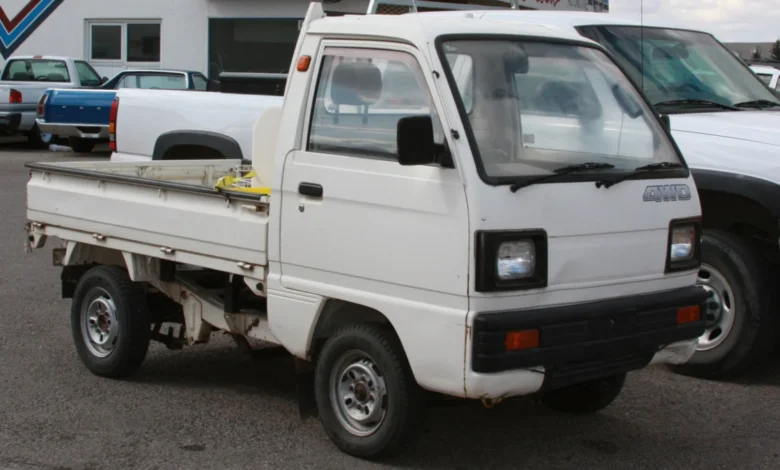
The American automotive landscape is currently witnessing an unconventional shift in the import market, characterized by a surge in demand for Japanese kei trucks. These micro-utility vehicles, originally engineered to satisfy Japan’s unique size and displacement regulations, have transcended their role as utilitarian farm equipment to become a mainstream automotive curiosity. In 2023 alone, approximately 7,500 of these diminutive trucks were imported into the United States, signaling a growing consumer appetite for affordable, mechanically straightforward, and highly maneuverable transport solutions. However, beneath the appeal of their modest price tags and iconic aesthetic lies a labyrinthine framework of federal statutes and state-level regulatory hurdles that potential buyers must navigate with caution.
The Origins and Mechanics of the Kei Class
The term "kei" is derived from the Japanese word "keijidōsha," meaning "light automobile." These vehicles were born out of post-World War II economic necessity, designed to provide affordable motorized transport while occupying a minimal footprint. By government mandate, kei trucks are strictly limited in dimension—currently capped at 11.2 feet in length and 4.9 feet in width—and engine displacement, which is restricted to 660cc.
This rigid design philosophy resulted in a vehicle that is remarkably efficient and durable. Because these engines were built to withstand constant stop-and-go cycles in dense urban environments, they are renowned for their longevity. Brands such as the Honda Acty, Suzuki Carry, Daihatsu Hijet, Subaru Sambar, and Mitsubishi Minicab have become the gold standard for enthusiasts. Their mid-engine or rear-engine configurations, often paired with optional four-wheel drive, provide surprising off-road capability for vehicles that weigh roughly 1,500 to 1,800 pounds.
A Chronology of the Import Boom
The popularity of kei trucks in the U.S. is fundamentally tied to the "25-year rule." Under federal law, vehicles that are at least 25 years old from the date of manufacture are exempt from the Federal Motor Vehicle Safety Standards (FMVSS) and Environmental Protection Agency (EPA) emissions standards required for newer imports.
The trend gained significant momentum in the early 2020s. As the COVID-19 pandemic disrupted global supply chains and drove up the prices of domestic used trucks, American consumers began looking for alternatives. Between 2020 and 2023, social media platforms and niche enthusiast forums highlighted the utility of these trucks for small-scale farming, landscaping, and urban delivery. This organic growth transformed the kei truck from a localized hobbyist pursuit into a legitimate import category, with specialized importers now maintaining consistent inventory for buyers across the country.
Economic and Practical Considerations
The primary driver for the kei truck phenomenon is the entry price. Prospective owners can acquire a well-maintained, vintage kei truck for between $4,500 and $10,000. When compared to the rising costs of modern full-size pickups—which frequently exceed $50,000—the economic proposition is stark.
However, the "sticker price" is a misleading metric for total cost of ownership. The process of importing a vehicle from Japan involves significant overhead:
- Logistics: Ocean freight and inland transport can add between $2,000 and $4,000 to the total cost.
- Compliance: While the 25-year rule exempts these vehicles from federal standards, it does not mandate state compliance.
- Maintenance: The lack of a centralized domestic parts supply chain means that owners must rely on specialty parts importers or fabricate their own components. While the mechanical systems are simple, the scarcity of specific parts can lead to long periods of vehicle downtime.
The Regulatory Patchwork: A State-by-State Conflict
The most significant challenge for prospective owners is not the purchase itself, but the act of legalizing the vehicle for public road use. Because these trucks were never intended for the U.S. market, they lack modern safety features such as crumple zones, airbags, and anti-lock braking systems. This has triggered a defensive reaction from state departments of motor vehicles (DMVs).
California, which maintains the most stringent emissions and safety standards in the country, has effectively barred most kei trucks from being registered for road use. The state’s Air Resources Board (CARB) and the Department of Motor Vehicles often view these imports as non-compliant with current air quality standards, regardless of their age.
Other states have implemented more targeted restrictions. Wyoming and Arkansas, for example, have enacted legislation prohibiting the use of kei trucks on interstate highways, citing safety concerns regarding the vehicles’ ability to maintain highway speeds and survive collisions with heavier, modern vehicles. Conversely, some states have moved to ban them from public roads entirely, arguing that their small size makes them invisible to other drivers. This creates a volatile environment for owners, who may find their vehicle legally registered one year, only to face legislative changes that invalidate their plates the next.
Official Responses and Safety Concerns
The American Association of Motor Vehicle Administrators (AAMVA) has previously expressed concern regarding the integration of off-road-capable, non-compliant vehicles into the general traffic stream. These concerns center on the "compatibility" issue: in the event of an accident between a 1,500-pound kei truck and a 6,000-pound modern SUV, the physical disparity is extreme.
Law enforcement agencies in various jurisdictions have noted that while these trucks are excellent for farm or industrial use on private property, their performance characteristics—such as low top speeds and poor highway stability—pose a risk when intermingled with high-speed, heavy-duty traffic. Prospective buyers are encouraged to consult their local DMV or a legal professional specializing in import law before committing to a purchase to ensure that their specific state allows for road-legal registration.
The Broader Market Impact
The rise of the kei truck also serves as a commentary on the current state of the domestic automotive market. The demand for these small vehicles suggests a growing dissatisfaction with the "truck bloat" that has characterized the American market for the last two decades. As domestic pickups have grown larger, more complex, and more expensive, the simple, honest utility of the kei truck has become a sought-after alternative.
Market analysts suggest that the interest in kei trucks has not gone unnoticed by domestic manufacturers. The emergence of compact, unibody pickups like the Ford Maverick and the Hyundai Santa Cruz represents an attempt to bridge the gap between the traditional, oversized American truck and the need for a practical, light-duty vehicle. While these domestic models offer modern safety features and warranty support, they lack the specific, ultra-compact form factor that makes the kei truck uniquely suited for specific niche tasks.
Conclusion and Recommendations for Buyers
For the enthusiast or the small-scale operator, a kei truck can be a highly rewarding investment. Their mechanical simplicity makes them excellent platforms for learning automotive repair, and their utility in specific, low-speed environments is unmatched. However, the purchase requires a high degree of due diligence.
Before pursuing an import, potential buyers should:
- Verify State Laws: Confirm whether the specific state allows road registration for "mini-trucks" or imported vehicles over 25 years old.
- Account for Hidden Costs: Factor in the full price of logistics, customs brokerage fees, and the cost of potential mechanical refurbishment.
- Assess Usage: Determine whether the vehicle will remain on private land or if it is intended for road use. If road use is the goal, the buyer must be prepared for potential registration hurdles and insurance complications.
- Evaluate Alternatives: If the objective is simply a functional, light-duty truck for daily driving, consider whether a modern domestic small pickup might offer a more reliable and legally straightforward solution.
The kei truck phenomenon is a fascinating intersection of global trade, automotive history, and local policy. As these vehicles continue to arrive in American ports, the debate over their role on U.S. roads is likely to continue, forcing a conversation about what we truly value in a vehicle: the raw, analog experience of a bygone era, or the safety and compliance of the modern age.