Honda and GAC Extend Strategic Partnership to 2038 Amidst Sharp Sales Decline and Broader Japanese Automotive Realignment in China

The landscape of the Chinese automotive market, once a goldmine for foreign legacy manufacturers, is undergoing a seismic shift that has forced a significant recalibration of long-standing alliances. In a move that signals both a commitment to a difficult market and a desperate need for structural evolution, Honda Motor Company has officially extended its joint venture with the state-owned Guangzhou Automobile Group (GAC) through 2038. This extension ensures the continuation of their 50-50 ownership structure well beyond the original 30-year agreement’s scheduled expiry in 2028. However, this diplomatic show of unity arrives against a backdrop of severe financial strain, operational retreats, and a sales performance that has left industry analysts questioning the long-term viability of Japanese brands in the world’s largest car market.
The renewal was far from a foregone conclusion. According to internal data and market reports, GAC-Honda’s deliveries for the first half of 2026 plummeted by a staggering 55.8% year-on-year, totaling just 68,318 vehicles. This collapse in volume has triggered a period of intense soul-searching for the Tokyo-based automaker, which is simultaneously grappling with a nearly US$16 billion write-off related to its global electric vehicle (EV) pivot and the collapse of high-profile domestic merger talks.
A Crisis of Volume: The Numbers Behind the Collapse
The severity of the downturn for GAC-Honda cannot be overstated. In June 2026, the joint venture recorded sales of only 14,099 units, representing a 53% decline compared to the same month in the previous year. Even more alarming was the production data: manufacturing output fell by more than 83%, with only 5,201 units rolling off assembly lines during the month.
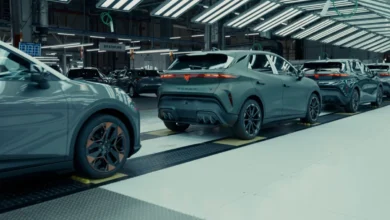
This drastic reduction in output led to the unavoidable decision in April 2026 to suspend operations at the Huangpu plant. The facility, which boasts an annual capacity of 240,000 units, had been a cornerstone of Honda’s internal combustion engine (ICE) production in China. The suspension of such a massive asset highlights the speed at which traditional gasoline-powered vehicles are losing ground to domestic New Energy Vehicle (NEV) champions like BYD and emerging tech-centric players like Xiaomi and Aion.
Industry analysts had speculated for months that the renewal talks were at an impasse. Rumors circulated that GAC Group, buoyed by the success of its independent brands, was seeking a greater share of control or more favorable terms, given that Honda’s traditional model lineup was failing to resonate with a younger, tech-focused Chinese demographic. The decision to maintain the 50-50 split suggests a compromise where Honda brings its global manufacturing standards and brand legacy to the table, while GAC provides the localized supply chain and regulatory navigation necessary to survive the current market volatility.
Chronology of a Changing Alliance
To understand the weight of the 2038 extension, one must look at the historical trajectory of GAC-Honda, which has mirrored the rise and current stagnation of foreign OEMs in China:
- 1998: GAC-Honda is founded as Honda’s first manufacturing venture in China, setting the stage for decades of dominance in the mid-size sedan and SUV segments.
- 2020: The joint venture absorbs Honda’s dedicated China export arm, beginning its transformation from a domestic-only supplier to a regional export hub.
- 2023: GAC-Honda begins "reverse exporting" the Odyssey minivan from its Zengcheng plant to Japan, marking a historic shift in global automotive logistics.
- 2024-2025: Japanese market share in China continues its downward trajectory, falling from 24% in 2020 to roughly 13%.
- February 2025: Merger talks between Honda and Nissan collapse after Nissan’s board rejects a minority stake, forcing Honda to navigate the China crisis without a domestic partner of equal scale.
- April 2026: Operations at the Huangpu ICE plant are suspended due to a lack of demand.
- July 2026: Honda and GAC announce the 10-year extension of their partnership to 2038.
The Pivot to New Energy Vehicles: 2027 and Beyond
In their joint announcement regarding the renewal, both companies emphasized a "leverage of respective technological and resource advantages." This is corporate shorthand for a radical shift in product strategy. For years, Honda—along with its Japanese peers—has been criticized for its lethargic transition to fully electric vehicles. The company’s primary focus on its e:HEV hybrid system, while efficient, has not captured the imagination of a Chinese market that is heavily incentivized toward battery electric vehicles (BEVs).
To rectify this, the joint venture has announced an aggressive roadmap for 2027. This includes the launch of three new electrified models, most notably a next-generation Accord designed specifically with the Chinese NEV market in mind. These models will likely utilize GAC’s localized expertise in battery integration and intelligent cockpit software, areas where Japanese firms have historically lagged behind Chinese domestic brands.
The stakes are high. Since its inception in 1998, GAC-Honda has sold over 11 million vehicles. However, maintaining that legacy requires more than just updated versions of old favorites. The venture must now compete with GAC’s own independent success; GAC Group has expanded its Trumpchi, Aion, and Hyptec brands into Europe and Southeast Asia, often with technology that rivals or exceeds what is currently found in the GAC-Honda lineup.
The Export Strategy: A New Role for Chinese Factories
One of the most significant developments in the GAC-Honda relationship is the evolution of the venture into an export powerhouse. While the domestic Chinese market has become hyper-competitive, the cost-efficiencies of manufacturing in China remain unparalleled.
GAC-Honda has already become a vital supplier for Honda’s operations in Europe, Canada, and Latin America. The "reverse export" of the Odyssey minivan to Japan was a watershed moment. Historically, Japan has been a closed market, preferring domestic production for its home buyers. The fact that Japanese consumers are now driving China-built Hondas is a testament to the quality parity reached by Chinese plants and the sheer economic necessity of utilizing China’s more mature and affordable battery supply chain.
This strategy is not unique to Honda. The entire Japanese automotive cohort is adopting a "China-for-Global" manufacturing philosophy:
- Nissan: Currently shipping N7 electric sedans to Southeast Asia and Frontier Pro plug-in hybrids to Mexico via its venture with Dongfeng.
- Mazda: Exporting the China-built 6e and CX-6e to right-hand-drive markets like Australia.
- Subaru: Evaluating the reverse-import of US-made vehicles into Japan to balance global trade pressures.
The logic is inescapable: building EVs in China is significantly more viable than building them in Japan, where energy costs are higher and the supply chain for minerals and battery components is less integrated.
Financial Headwinds and the US$16 Billion Write-Off
The renewal of the GAC partnership comes at a time when Honda’s global balance sheet is under immense pressure. The company is currently navigating a massive US$16 billion write-off stemming from its retreat from several ambitious EV projects. This includes the cancellation of the "0 Series" and the dissolution of the Afeela joint venture with Sony, which was once touted as the future of software-defined mobility.
Of that US$16 billion, industry sources suggest up to US$10 billion may be owed to Tier-1 and Tier-2 suppliers. these companies had invested heavily in EV-specific tooling and dedicated production lines based on Honda’s previous volume projections. To mitigate these losses, Honda’s North American operations are pivoting back toward hybrid production, specifically focusing on the Civic Hybrid, as a bridge while the company rethinks its long-term BEV strategy.
Analysis of Implications: A Fight for Survival
The extension of the GAC-Honda JV to 2038 is a defensive maneuver designed to buy time. By locking in the partnership, Honda ensures it retains a manufacturing footprint in the world’s most important automotive laboratory. If Honda were to exit China or allow the JV to expire, it would lose access to the rapid innovations in battery tech and autonomous driving currently being pioneered in the Guangdong province.
However, the road ahead is fraught with difficulty. The rise of "nationalistic consumption" in China, combined with the superior software integration of domestic brands, means that the "Honda" badge no longer carries the premium it did a decade ago. To survive until 2038, GAC-Honda must move beyond being a manufacturer of Japanese designs and become a truly localized entity that can out-innovate the very partners (like GAC’s Aion) it shares a boardroom with.
Furthermore, the geopolitical landscape adds another layer of complexity. As Japanese firms look to import US-made or China-made cars back to Japan, they are navigating a minefield of potential tariffs and trade protectionism. The decision to lean into Chinese production for global exports may provide a short-term cost advantage, but it leaves the company vulnerable to shifting international trade policies.
In conclusion, while the 2038 extension provides a semblance of stability, the underlying reality for GAC-Honda is one of managed decline and urgent transformation. The next three years, leading up to the 2027 product launches, will determine whether this 30-year-old partnership can successfully reinvent itself for the electric age or if it will remain a cautionary tale of a legacy giant struggling to keep pace with a changing world.
Related posts: