The Generational Shift: Why the Electric Motorcycle Revolution Will Be Defined by New Riders Rather Than Converted Traditionalists

The global transition toward electric mobility has long followed a straightforward playbook established by the automotive industry: engineer a battery-powered vehicle that matches or exceeds the performance of its internal combustion engine counterpart, price it competitively, and wait for traditional consumers to make the switch. For years, legacy motorcycle manufacturers and emerging startups alike applied this exact logic to two-wheeled transport. They assumed that convincing lifelong enthusiasts of gasoline engines to abandon the roar, vibration, and mechanical complexity of traditional motorcycles was the primary gateway to mass adoption.
However, market data, consumer behavior studies, and the shifting demographics of urban and recreational transport suggest that this conventional wisdom has fundamentally misdiagnosed the trajectory of the industry. The future of electric motorcycles will not be built on the conversion of seasoned combustion-engine riders. Instead, it will be driven entirely by a rising generation of consumers who have no prior attachment to gasoline, having spent their formative years navigating cities and trails on electric bicycles, scooters, and high-performance e-motos.
The Fundamental Divergence Between Cars and Motorcycles
To understand why the electric vehicle playbook fails when applied directly to motorcycles, industry analysts point to the vastly different psychological roles that cars and motorcycles play in Western markets, particularly in the United States and Europe.
For the vast majority of consumers, an automobile is primarily a utilitarian asset—a tool for reliable, comfortable, and efficient transportation from point A to point B. While a subset of the driving public retains a deep emotional attachment to internal combustion engines, practical considerations such as fuel economy, maintenance costs, and daily convenience routinely override sentimental preferences.
Motorcycles occupy an almost entirely inverted psychological space. In markets like North America, where motorcycling is rarely a matter of basic commuting necessity, vehicles are purchased predominantly for recreation, lifestyle, and passion. For traditional riders, the mechanical character of a gasoline engine—the rhythmic exhaust note, the tactile feedback of engine vibrations, and the physical engagement of operating a manual clutch and gearshift—is not a design flaw to be engineered away. It is the defining feature of the experience.
Consequently, presenting a traditional motorcyclist with an electric model that offers superior acceleration, lower maintenance expenditures, and cheaper operating costs often yields indifference or resistance. The hesitation is not rooted in a rational critique of electric vehicle performance, but in an emotional divergence regarding what a motorcycle represents. Recognizing this reality has forced a strategic pivot among legacy manufacturers who spent the past decade attempting to court traditional buyers with high-priced electric flagships.
A Decade of Trial, Error, and Market Realities
The limitations of the conversion strategy became evident following the commercial rollout of early high-end electric motorcycles. Over a decade ago, Harley-Davidson became a pioneer among legacy manufacturers by committing engineering resources to battery-powered propulsion. When the Harley-Davidson LiveWire debuted in 2018, it earned critical acclaim from automotive and motorcycle journalists for its engineering refinement, build quality, and explosive acceleration.

Despite the positive reception, commercial uptake was severely constrained. Priced near $30,000, the motorcycle faced immense pricing pressure, but more importantly, it struggled to attract traditional Harley-Davidson loyalists who viewed the absence of a V-twin engine and exhaust note as a dealbreaker. The machine failed to satisfy the visceral expectations of the legacy demographic.
Recognizing that the traditional market required a different approach, Harley-Davidson subsequently spun off its electric division into the standalone brand LiveWire. The company has since adapted its product portfolio, shifting focus toward more accessible mid-tier offerings such as the S4 Honcho line. This strategic realignment underscored a broader industry lesson: attempting to force traditional combustion enthusiasts into electric saddles is an uphill battle characterized by slow adoption curves and high marketing costs.
The Rise of the Native Electric Generation
While legacy manufacturers spent years attempting to convert seasoned riders, a quiet demographic revolution was taking place on sidewalks, college campuses, and suburban streets. Millions of young consumers have grown up entirely immersed in light electric vehicles. For children and adolescents coming of age over the past decade, electric mobility is not a novel, experimental alternative to traditional transport; it is the baseline standard.
These younger demographics have spent their formative years utilizing electric bicycles, stand-up scooters, and increasingly sophisticated, high-torque electric off-road motos. They are inherently familiar with the instantaneous throttle response, silent operation, and minimal maintenance profile of lithium-ion propulsion systems. To this cohort, operating a mechanical clutch and managing an internal combustion engine can appear archaic and unnecessarily complex.

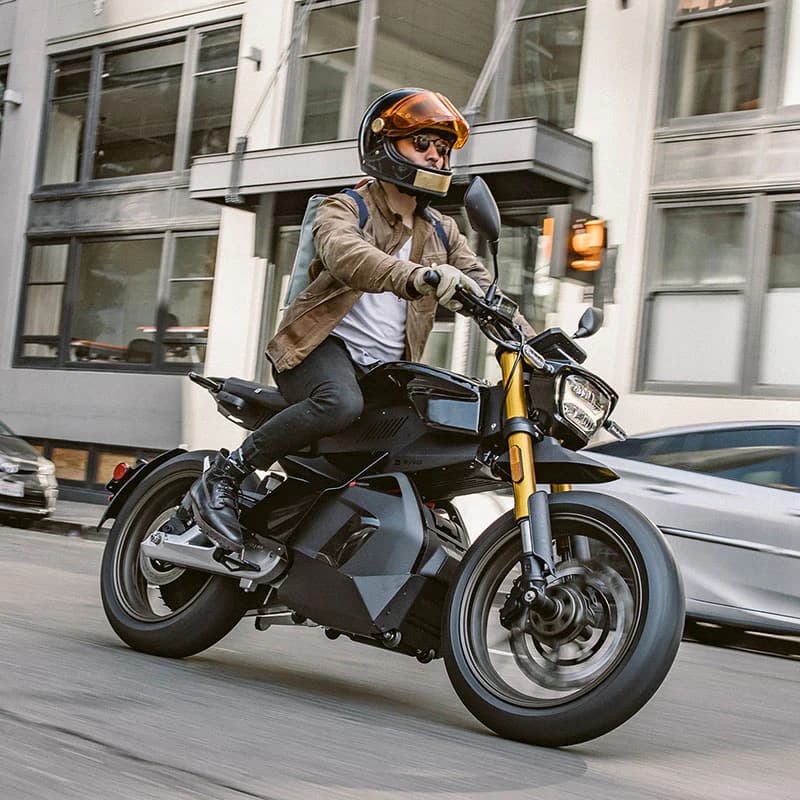
As these individuals transition into young adulthood, their transportation needs naturally evolve. A sixteen-year-old riding a restricted electric bicycle or an off-road e-moto eventually matures into a twenty-something commuter requiring street-legal speeds of 70 to 80 miles per hour to navigate urban freeways and arterial roadways.
For this new generation of buyers, graduating to a full-sized electric motorcycle is the most logical and frictionless progression. Their decision to purchase an electric motorcycle is not driven by environmental activism, political ideology, or a meticulous spreadsheet-based comparison of operating costs. It is simply the natural next step in a continuum of vehicle familiarity. While a small percentage of these younger consumers may eventually explore traditional combustion motorcycles, the vast majority will have no historical or emotional anchor keeping them tethered to fossil fuels.
Technological Horizons and the Evolution of Infrastructure
Parallel to this demographic shift, ongoing advancements in battery chemistry and powertrain engineering are systematically eliminating the historical performance gaps that once disadvantaged electric motorcycles.
For years, the primary impediment to widespread electric motorcycle adoption was range anxiety and lengthy replenishment times. Traditional combustion motorcycles could be refueled in minutes and travel hundreds of miles before requiring another stop. Early electric models often struggled with limited highway range and cumbersome charging cycles.

However, the landscape of energy storage is rapidly transforming. Ongoing research and commercial development in lithium-metal batteries and solid-state battery technology promise to deliver dramatic improvements in energy density. Industry analysts project that within the decade, next-generation battery cells will match the effective range and rapid-energy replenishment times of gasoline-powered equivalents while maintaining a lower center of gravity and significantly reduced mechanical complexity.
Companies specializing in urban and commuter electric motorcycles, such as Ryvid with its Anthem platform, have already begun introducing modular battery systems and lightweight chassis designs that bridge the gap between heavy e-motos and traditional street bikes. As these technologies mature, the debate over performance parity will become obsolete. Electric motorcycles will simply outperform combustion equivalents across every measurable metric—torque delivery, maintenance intervals, running costs, and convenience.
Broader Economic and Market Implications
The long-term economic implications of this generational transition point toward a slow, structural contraction of the traditional combustion motorcycle market rather than a sudden, volatile collapse.
Current enthusiasts of internal combustion engines will continue to purchase, restore, and ride gasoline motorcycles for the foreseeable future. However, as this demographic ages out of active riding over the coming decades, market demand will not be replenished by a fresh wave of young combustion enthusiasts. Instead, the market will bifurcate: a dwindling, niche collector market for vintage and specialized internal combustion motorcycles will persist, while the mainstream commercial market for new riders will be overwhelmingly electric.
This transition mirrors historical industrial shifts where new technologies did not necessarily conquer entrenched incumbents through direct competition on identical terms, but rather superseded them by capturing the emerging demographic base. Just as digital photography gradually marginalized film, and smartphones replaced traditional landlines not by converting every legacy user overnight, but by capturing the next generation of consumers, electric motorcycles are positioned to dominate the future of two-wheeled transport.
Ultimately, the electrification of motorcycling will not be remembered as a hostile takeover of traditional motorcycle culture. Rather, it will be recognized as a quiet generational pivot. Gasoline motorcycles will not vanish because electric models successfully beat them at their own game on the showroom floor; they will fade because the upcoming generation of riders will be operating in an entirely different technological paradigm—leaving internal combustion to recede into history not with a dramatic bang, but with a quiet and inevitable transition.