The Andreessen Horowitz Academy and the Disruption of the Traditional Undergraduate Model

For the modern elite student, the traditional value proposition of a four-year university degree is facing its most significant existential crisis in a century. With tuition costs at top-tier private institutions ballooning toward half a million dollars for a four-year stint, coupled with the rapid integration of artificial intelligence into the workforce—which threatens to erode the entry-level roles that once justified such massive educational investments—the incentive structure for high-achievers is shifting. In the epicenter of global innovation, Silicon Valley, the trend of bypassing formal collegiate pathways has moved from the fringes of the tech community into the boardroom of venture capital. On Tuesday, Andreessen Horowitz (a16z) signaled this paradigm shift by announcing the launch of the Andreessen Horowitz Academy, a for-profit, unaccredited educational venture designed to replace the traditional degree with a high-intensity, industry-integrated curriculum.
The Genesis of the Academy
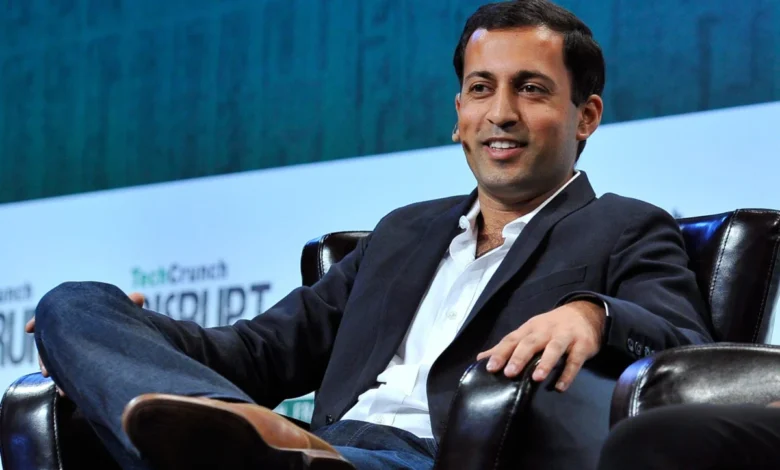
The initiative is led by Gagan Biyani, a co-founder of the $3.2 billion ed-tech unicorn Udemy. As the chief architect of this new institution, Biyani views the $2 trillion higher education sector as ripe for a total structural overhaul. The Academy, which operates as a distinct legal entity separate from the venture capital firm, has secured $42 million in initial funding from a16z and a consortium of individual investors.
The inaugural program, scheduled to launch in September 2027, will host an initial cohort of 50 students. In a move designed to attract top-tier talent, the program is tuition-free for its founding class. Furthermore, each student will be granted $50,000 in compute credits to facilitate high-level technical experimentation and a $5,000 travel budget. However, the program does not offer federal student aid, holds no accreditation, and provides no formal degree or guaranteed employment.
A Three-Phase Educational Architecture
The Academy’s operational model is structured to mirror the rapid development cycles of the tech industry rather than the sedentary pace of academia. The one-year pilot is divided into three distinct phases:
- The San Francisco Core (September–April): Students will reside in San Francisco, engaging in a rigorous, project-focused curriculum. The coursework, which ranges from "The Craft of Selling" and "AI Inference Engineering" to historical analyses like "Origins and Innovations in Digital Computing 1940–2025," is intended to provide foundational knowledge alongside practical application.
- Global Immersion (May): A dedicated month of international travel designed to expose students to global markets and technological landscapes.
- The Industry Co-op (June–August): A three-month internship phase. The Academy has secured commitments from 10 founding partners—including industry titans such as OpenAI, Nvidia, Meta, Google, Anthropic, Anduril, Coinbase, Palantir, Replit, and Stripe.
While the program highlights these high-profile partnerships, Biyani clarifies that the commitment from these firms varies. Some partners provide infrastructure support, such as hardware or compute credits, while others act as hiring conduits. Crucially, the Academy does not guarantee job placement, though it has enlisted an additional 50 hiring partners, including companies like Databricks and Boom Supersonic, that have agreed to prioritize interviews for Academy students.
Challenging the “Pre-Idea” Founder
Biyani emphasizes that the Academy is not an explicit rejection of higher education as a concept, but rather a rejection of the current status quo that forces 18-year-olds into rigid, non-specialized tracks. The target demographic is what Biyani terms "pre-idea founders"—young, high-potential individuals who have demonstrated technical or entrepreneurial aptitude but lack a long-term roadmap.
Admissions to the Academy will not rely on traditional standardized testing metrics alone, though transcripts remain a requirement. Instead, the school favors "proof of work." The pilot class profiles include teenagers who have already built functional AI-driven products, such as an AI book indexer generating six-figure annual recurring revenue (ARR) and a viral AI dating application.
The Academy’s pedagogical strategy relies on a tiered system of engagement:
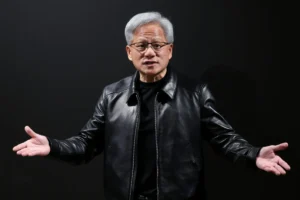
- The Visionaries: Industry leaders like Sam Altman, Jensen Huang, Satya Nadella, Mira Murati, Fei-Fei Li, and Travis Kalanick are slated to participate as guest speakers for fireside chats.
- The Faculty: Industry practitioners, such as Instacart co-founder Max Mullen and former Windows president Steven Sinofsky, have committed to teaching multi-session courses.
- The Mentors: A rotating roster of industry veterans will hold regular office hours to provide guidance on the students’ self-directed projects.
Economic and Regulatory Hurdles
The long-term viability of the Academy rests on its transition from a boutique program to a scalable institution. The organization plans to seek regulatory approval for a two-year program starting in 2028. Should they succeed, the intent is to shift to a revenue-generating model, with annual tuition projected to fall between $60,000 and $90,000.
This pivot raises significant questions regarding the economics of the "alternative college" model. Economists and industry experts have noted that while the program may succeed as an elite, high-touch bootcamp for 50 students, the transition to a large-scale institution is fraught with historical failures.
Bryan Caplan, an economist at George Mason University and a vocal critic of the signaling value of traditional degrees, suggests that the Academy functions primarily as a "prestige filter." "Something that can work for 50 handpicked people isn’t going to work even for the top 5,000," Caplan remarked. He argues that the Academy’s success hinges entirely on its exclusivity. If it becomes too large, it loses the "weirdness" factor that currently allows these students to stand out to employers.
Furthermore, Ryan Craig of Achieve Partners, an expert in apprenticeship models, points to the "free money" problem. Because traditional universities have access to federal student aid, they can offer tuition at a price point that is heavily subsidized by the taxpayer. Without access to Title IV federal funds, private institutions struggle to compete on price, leading to a "death spiral" for many alternative education startups. Craig suggests that for the Academy to truly disrupt the market, it would need to evolve into a "work college" where partner companies subsidize tuition by paying students market-rate salaries for their co-op work—a high bar for entry-level talent to clear.
The Broader Implications for Higher Education
The rise of the Andreessen Horowitz Academy reflects a broader shift in the tech sector toward "skills-first" hiring. Companies are increasingly finding that the four-year degree is a poor proxy for the specific, rapidly evolving skills required to develop generative AI or complex software architectures.
The implications for the broader economy are twofold. First, it places additional pressure on elite universities to justify their high costs through demonstrable ROI. If a one-year, $90,000 program can produce engineers capable of shipping production-ready code for a company like OpenAI, the value proposition of a general education degree, which may take four years and cost $300,000, becomes increasingly difficult to defend.
Second, the Academy represents the "corporatization of the syllabus." By aligning curriculum directly with the needs of the 10 founding partners, the Academy is effectively creating a bespoke talent pipeline. This model benefits the tech firms, which receive a steady stream of pre-vetted, highly trained, and culturally aligned workers, but it potentially limits the intellectual breadth of the students, who are being trained specifically for the needs of the Silicon Valley ecosystem.
As the program approaches its 2027 launch, the industry will be watching closely to see if the "proof of work" model can survive the transition from an experimental pilot to a sustainable, large-scale educational institution. For now, the Academy stands as a significant, albeit risky, test of whether the future of elite education will be found in the lecture halls of the Ivy League or the offices of venture capital firms. Whether this experiment serves as a blueprint for the next century of learning or becomes a cautionary tale remains to be seen.