Rivian CEO RJ Scaringe Confirms Upcoming R3 Crossover Will Be Priced Materially Lower Than R2 With R4 Set to Push Costs Down Further


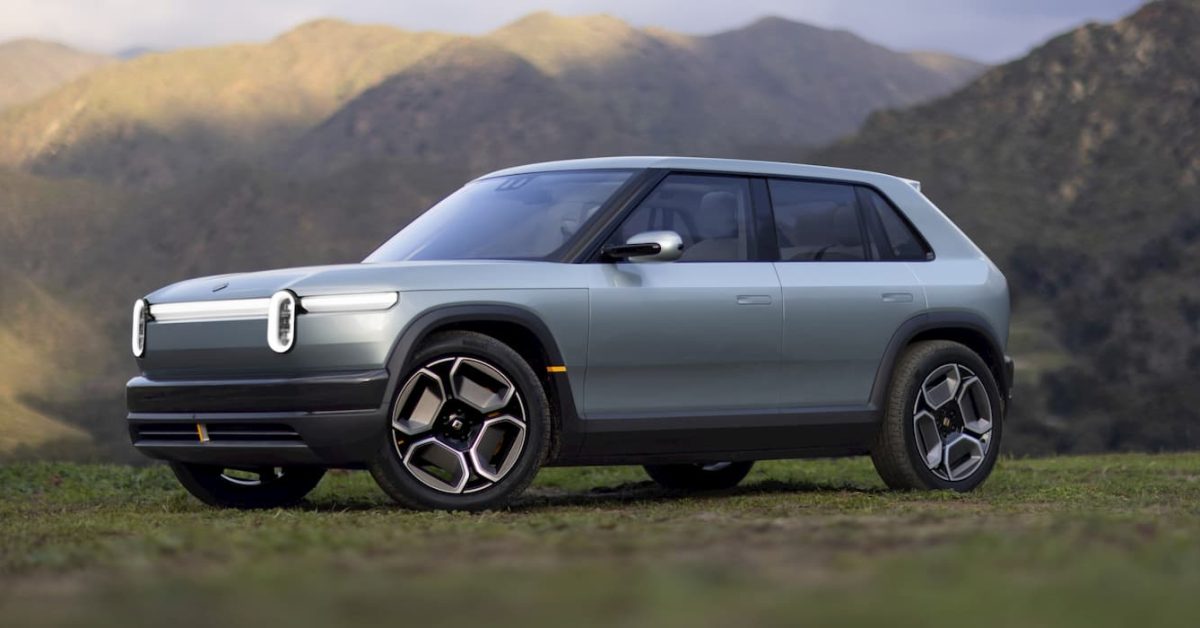
Electric vehicle manufacturer Rivian Automotive is charting a clear trajectory toward the mainstream automotive market, with company leadership confirming that upcoming models will progressively lower the barrier to entry for consumers. In a recent interview with major media outlets, Chief Executive Officer RJ Scaringe outlined the company’s long-term product roadmap, revealing that the anticipated R3 crossover will debut at a price point significantly below that of the R2 SUV, while a subsequent R4 model will introduce even more accessible pricing tiers.
This strategy underscores Rivian’s adherence to a classic automotive scaling playbook: establishing brand prestige and manufacturing capabilities with premium flagship vehicles before moving sequentially downmarket to capture larger consumer volume. As the automotive industry navigates fluctuating demand, supply chain maturation, and intensifying global competition, Rivian’s ability to execute this strategy will be critical in determining its long-term viability as a mainstream American electric vehicle manufacturer.
The Product Roadmap: From Flagship Origins to Mass-Market Scale
Rivian’s journey to lower price points has been deliberate, shaped heavily by the economic realities of launching an automotive startup. When the company first entered the market, it did so with high-end luxury vehicles: the R1T pickup truck and the R1S SUV. Operating as an unproven entity without established supply chain leverage, Rivian faced steep component costs, initially budgeting for substantial supplier price premiums.
However, as production volumes have grown and the brand has proven its market demand, supplier dynamics have shifted. Major tier-one automotive suppliers, once hesitant to commit resources to an unproven startup, now actively court Rivian, laying the groundwork for more cost-effective manufacturing at scale.
Building upon the foundation of the R1 platform, Rivian introduced the R2 platform as its gateway to higher-volume production. The R2 SUV was designed to capture a much broader segment of the market than its six-figure predecessors. Yet, the pricing structure of the R2 rollout is tiered across multiple variants and release dates, introducing complexities for consumers trying to gauge affordability.
While the R2 has frequently been publicized with a starting base price of approximately $45,000, acquiring that specific base configuration requires patience. Rivian’s phased launch schedule for the R2 began with the premium Performance launch edition priced at $57,990. Subsequent trims follow incrementally: the Premium variant at $53,990, the Standard Long Range at $48,490, and finally, the base Standard Rear-Wheel-Drive model at $45,000.
Against this backdrop, Scaringe’s assertion that the upcoming R3 crossover will be "materially lower" than the R2 requires contextualization. Previous statements from Rivian executives have pointed to the mid-to-high $30,000 range for the R3, effectively bridging the gap between niche luxury EVs and true mass-market adoption. Following the R3, the proposed R4 model is intended to push pricing thresholds down even further, though that vehicle remains in the conceptual and strategic planning phases without a finalized engineering team or launch date.

Chronology of Production and Manufacturing Milestones
Rivian’s aggressive expansion hinges heavily on manufacturing efficiency and capacity. The realization of the R3 and subsequent affordable models is tied directly to the development of the company’s multi-phase production facilities.
The timeline of Rivian’s vehicle rollouts and infrastructure developments highlights the methodical progression of the brand:
- Initial Flagship Phase: Rivian launched the R1T and R1S, establishing brand recognition in the luxury EV segment and absorbing early-stage supplier cost premiums.
- March: Rivian officially unveiled the comprehensive R2 lineup, detailing trim levels, specifications, and a staggered pricing structure starting from $45,000.
- June: Official customer deliveries of the R2 commenced, providing an immediate operational boost and prompting management to upwardly revise annual delivery guidance.
- September: Rivian officially broke ground on its state-of-the-art manufacturing facility in Georgia, designated as the primary production hub for both the R2 and the upcoming R3 crossover.
- Late 2026 to Late 2027: The staggered rollout of remaining R2 variants takes place, moving from the Premium and Standard Long Range editions down to the entry-level Rear-Wheel-Drive model.
- 2028 (Scheduled): Commercial production of the R3 is slated to begin at the Georgia manufacturing facility, which has been engineered for a projected annual capacity of up to 400,000 units across two distinct operational phases.
- Post-R3 Horizon: The R4 and R5 sibling vehicles are slated for development on a newly engineered platform, though formal engineering teams and timelines have yet to be deployed.
Financial Performance and Operational Scaling
While product announcements capture consumer interest, Rivian’s financial balance sheet remains a focal point for investors and industry analysts. The commercial introduction of the R2 has successfully stimulated demand, enabling the company to increase its delivery guidance for the fiscal year to between 65,000 and 70,000 vehicles—a notable increase compared to the roughly 42,000 units delivered in the previous year.
Despite these volume increases and revenue growth, Rivian continues to operate at a net financial loss as it scales operations, builds new manufacturing infrastructure, and refines its supply chain. Current corporate financial projections anticipate an adjusted EBITDA loss ranging between $1.8 billion and $2 billion for the fiscal year.

This capital-intensive phase is characteristic of automotive manufacturing startups transitioning from low-volume luxury production to high-volume mass production. Absorbing significant upfront capital expenditures for factory construction—such as the massive Georgia plant expansion—creates short-term financial headwinds designed to yield long-term operational economies of scale.
Market Implications and Competitive Landscape
Rivian’s strategic trajectory closely mirrors the market penetration playbook pioneered by Tesla, which transitioned successfully from the high-priced Roadster and Model S lines to the higher-volume Model 3 and Model Y vehicles. Industry analysts view this top-down approach as a necessary industry standard for electric vehicle startups, given the prohibitive initial costs of research, development, and retooling.
The reception of the R2 by early automotive reviewers and consumers suggests that Rivian is effectively positioning itself to capture market share from established mid-size electric crossovers, such as the Tesla Model Y. By offering distinct rugged styling, adventure-oriented features, and a broadening range of price points, Rivian is carving out a definitive niche in the North American electric vehicle landscape.
As the company progresses toward the 2028 launch of the R3 at its Georgia facility, the broader automotive market will be watching closely to see whether Rivian can successfully achieve profitability while simultaneously reducing vehicle price points. If executed according to plan, the introduction of sub-$40,000 electric vehicles bearing the Rivian badge could fundamentally alter consumer adoption rates and solidify the company’s standing as a permanent fixture in the global automotive industry.