Nvidia CEO Jensen Huang Challenges AI Doomsday Narratives as Industry Tensions Reach Boiling Point

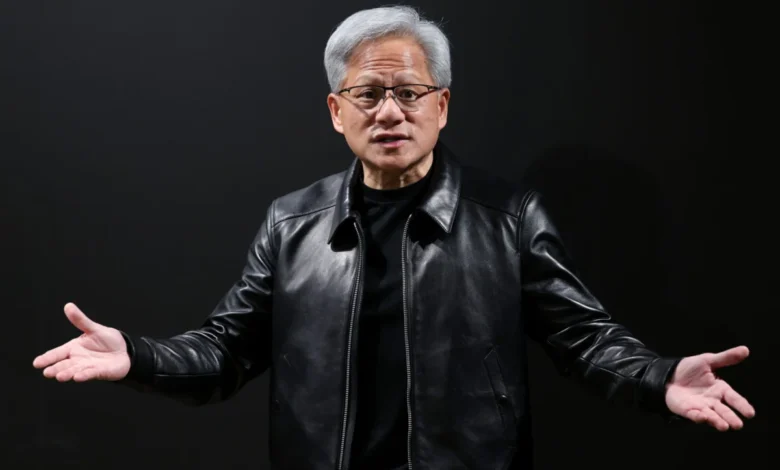
In a high-stakes clash of philosophies within the artificial intelligence sector, Nvidia CEO Jensen Huang has publicly repudiated the pervasive "AI doomerism" that has dominated recent discourse among Silicon Valley’s elite. During a recent interview on CBS Sunday, Huang explicitly rejected the catastrophic forecasts regarding the trajectory of artificial intelligence by 2030, labeling the apocalyptic warnings propagated by some industry peers as "irresponsible" and detached from scientific reality. As the leader of the world’s most valuable company and the architect of the hardware foundation upon which the current AI revolution is built, Huang’s dismissal marks a significant pivot point in the global debate over the future of machine intelligence.
The Anatomy of the Conflict: Engineering vs. Existentialism
The tension centers on a fundamental disagreement regarding the nature of AI risk. On one side, leaders like Anthropic CEO Dario Amodei and OpenAI CEO Sam Altman have frequently voiced concerns about the rapid, unchecked development of frontier models. These figures often call for a measured, cautious approach, suggesting that society needs time to adapt to emerging capabilities and that industry players should prioritize safety over speed.
Huang, however, argues that these public warnings are not merely misguided but potentially motivated by ulterior agendas. He posits that the alarmist rhetoric serves as a strategic maneuver to circumvent existing regulatory frameworks rather than a sincere effort to ensure public safety. According to Huang, the focus should remain on rigorous engineering and the application of established legal statutes to govern AI, rather than stoking public fear through speculative scenarios of societal collapse. "There is a 0% chance that 2030 is going to be the end of the world," Huang asserted, emphasizing that while safety is a legitimate concern, it is an engineering challenge that requires technical solutions rather than hyperbolic alarmism.
A Shifting Political Landscape
The debate has moved beyond the boardrooms of technology firms and into the halls of government. The recent administrative shift has seen a notable rejection of restrictive AI regulation. President Donald Trump has recently signaled a preference for utilizing existing criminal and civil laws to manage AI-related risks, rather than crafting sweeping new legislation that might hinder American technological dominance.
The administration’s recent proposal to form an "AI Force," conceptually modeled after the U.S. Space Force, underscores the geopolitical urgency of the moment. By appointing an "AI czar," the government aims to centralize its strategy, prioritizing national competitiveness—particularly against global rivals like China—over the "slow-down" tactics advocated by some industry leaders. Trump’s stance, characterized by his declaration that "whoever wins AI, wins," highlights the prioritization of rapid development, a sentiment that aligns closely with Huang’s call to "go as fast as we can, but not faster than we should."
Chronology of the AI Safety Debate
The current friction is the result of a multi-year escalation in rhetoric and development:
- 2023: Early concerns regarding large language models (LLMs) begin to gain mainstream traction as public access to generative AI expands.
- Early 2026: Leading figures, including Dario Amodei, begin calling for formal, industry-wide safety pauses and the implementation of independent oversight boards.
- Mid-2026: Public letters signed by over 1,300 employees from top AI companies circulate, demanding that developers prioritize risk mitigation over feature expansion.
- September 2026: Jacob Coxon, a prominent researcher, resigns from Anthropic, citing "gambling with our lives" as the reason for his departure, fueling a massive viral discourse on social media.
- Late September 2026: The Trump administration officially pivots against restrictive AI regulation, favoring a nationalistic, competition-focused approach.
- Current: Jensen Huang makes his definitive statement on CBS, formally separating the hardware industry’s vision of progress from the software sector’s narrative of existential doom.
Data-Driven Reality: The Infrastructure Engine
Nvidia’s position in this debate is unique because the company functions as the central nervous system of the AI economy. With market valuations frequently hitting record highs, Nvidia’s H100 and subsequent GPU architectures are the essential components for training the models that the "doomers" fear.
Market analysis shows that capital expenditure in AI data centers has grown by nearly 40% year-over-year. While some skeptics argue that this growth is driven by "artificial demand," the reality on the ground is a massive deployment of infrastructure that is already being integrated into healthcare, logistics, and scientific research. Huang argues that because this infrastructure is already being deployed, the "doomsday" predictions are not just wrong—they are obstructive to the massive gains in human productivity that these systems are currently facilitating.
Analyzing the "Ulterior Motives" Claim
When Huang suggests that industry leaders calling for a slowdown may have "ulterior motives," he is echoing a sentiment shared by several policy analysts. Some critics argue that large, established AI companies may favor regulation because it creates a "moat" around their business. By advocating for strict safety standards and government oversight, incumbents can make the barrier to entry for smaller, leaner competitors prohibitively expensive.
If regulation were to mandate that only companies with massive resources and existing safety infrastructure could legally train frontier models, it would essentially cement the current market leaders’ position, regardless of their actual technological advantage. Huang’s warning to "read between the lines" suggests that these leaders are not truly seeking more laws, but are instead looking to be relieved of the responsibilities that come with existing laws, perhaps by shifting the burden of liability onto government bodies.
Implications for Future Policy
The divergence between the "slow-down" cohort and the "accelerationist" cohort—led in spirit by Nvidia’s leadership—poses a complex challenge for policymakers. If the government adopts a policy of unchecked acceleration, it may risk unforeseen externalities, such as the weaponization of AI or deep-seated socio-economic disruption. Conversely, if the government bows to the pressure of the "doomsday" narrative and enacts restrictive, slow-moving regulations, it risks losing the global race for technological supremacy.
The formation of the "AI Force" suggests a middle path: a focus on national security and standard-setting that is managed by the state rather than dictated by the private companies themselves. By taking control of the narrative, the government may be attempting to move the debate away from the existential philosophical questions raised by AI executives and toward concrete, mission-oriented goals.
Conclusion: The Road Ahead
The clash between Jensen Huang and the proponents of AI safety represents more than just a difference of opinion; it is a fundamental struggle over the governance of the 21st century’s most potent technology. While the industry leaders in the "safety" camp continue to emphasize the dangers of "self-improving superintelligence," the hardware providers are pushing for a future defined by infrastructure expansion and practical application.
As the government prepares to appoint an AI czar and define the mandate of its new AI Force, the industry will be forced to reconcile these two realities. For now, the message from the world’s most valuable chipmaker is clear: the path to the future is built on engineering, not fear, and the perceived "existential risk" of AI is a distraction from the tangible potential that lies ahead. Whether this confidence in engineering will be sufficient to mitigate the risks remains to be seen, but the debate has definitively moved from the realm of academic theory into the core of national policy and economic strategy.
Related posts: