SpaceX Is So Confident In Its New Starship Rocket That It Is No Longer Taking Reservations For The Dependable Falcon 9

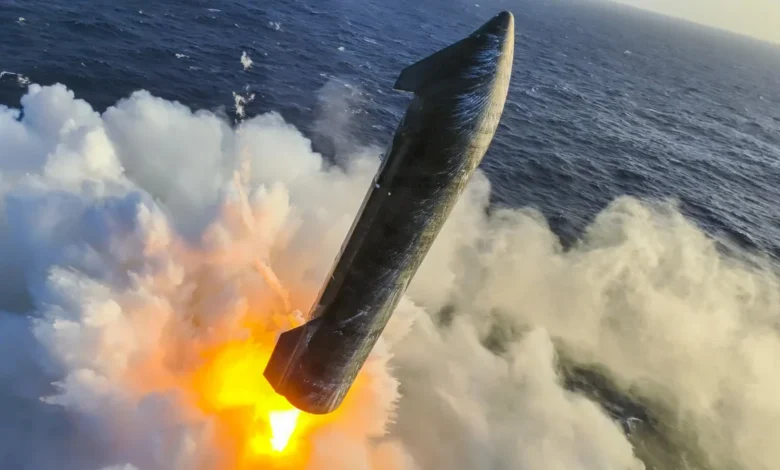
The orbital launch industry is bracing for a seismic shift as SpaceX, the dominant force in global space transportation, has reportedly ceased accepting new launch reservations for its Falcon 9 vehicle for missions beyond 2028. This strategic move signals a definitive pivot in the company’s roadmap, betting the entirety of its future on the successful maturation of the Starship—a colossal, fully reusable heavy-lift launch system currently in its testing phase. For the global satellite industry, the aerospace supply chain, and government partners like NASA, the retirement of the Falcon 9 represents the end of an era and the beginning of a high-stakes transition period.
The Falcon 9 has been nothing short of a revolution in aerospace engineering. By 2025, the vehicle performed 165 successful orbital launches, accounting for nearly 50 percent of all global launch activity. Its ability to reuse booster stages has not only lowered the cost of access to space but has catalyzed an entire commercial ecosystem, ranging from small-satellite startups to international telecommunications giants. With a near-perfect track record and a high cadence of operations, the Falcon 9 became the industry standard. However, Elon Musk’s long-term vision has always prioritized the Starship, which is designed to scale capacity to a level previously thought impossible, potentially enabling several daily launches.
A Timeline of Transition
The decision to wind down the Falcon 9 is not a sudden development, but rather the culmination of a decade-long development cycle for SpaceX. The company’s trajectory can be mapped through several key milestones that explain the current urgency:
- 2010–2015: Initial testing and validation of the Falcon 9. The successful recovery of the first stage in 2015 fundamentally changed the economics of space flight.
- 2016–2020: Rapid scaling of operations. The Falcon 9 became the primary workhorse for NASA’s Commercial Crew Program and the deployment of the Starlink satellite constellation.
- 2021–2024: Intensive development of the Super Heavy booster and the Starship upper stage. Despite multiple test flight anomalies, the hardware has demonstrated increasing reliability and technical sophistication.
- 2025: The "peak Falcon" year, where the rocket handled half of humanity’s orbital payload.
- 2028: The projected sunset date for new Falcon 9 bookings. This aligns with the critical deadline for NASA’s Artemis lunar landing missions.
The 2028 threshold is widely viewed as a "make-or-break" target. Because SpaceX is under contract to provide the Human Landing System (HLS) for the Artemis III and IV missions, the company must ensure Starship is fully operational, human-rated, and capable of complex on-orbit refueling by that time. By refusing new bookings for the Falcon 9 beyond that year, SpaceX is essentially forcing its own hand, ensuring that engineering talent and manufacturing capacity are diverted exclusively toward the Starship project.
The Artemis Factor and Lunar Ambitions
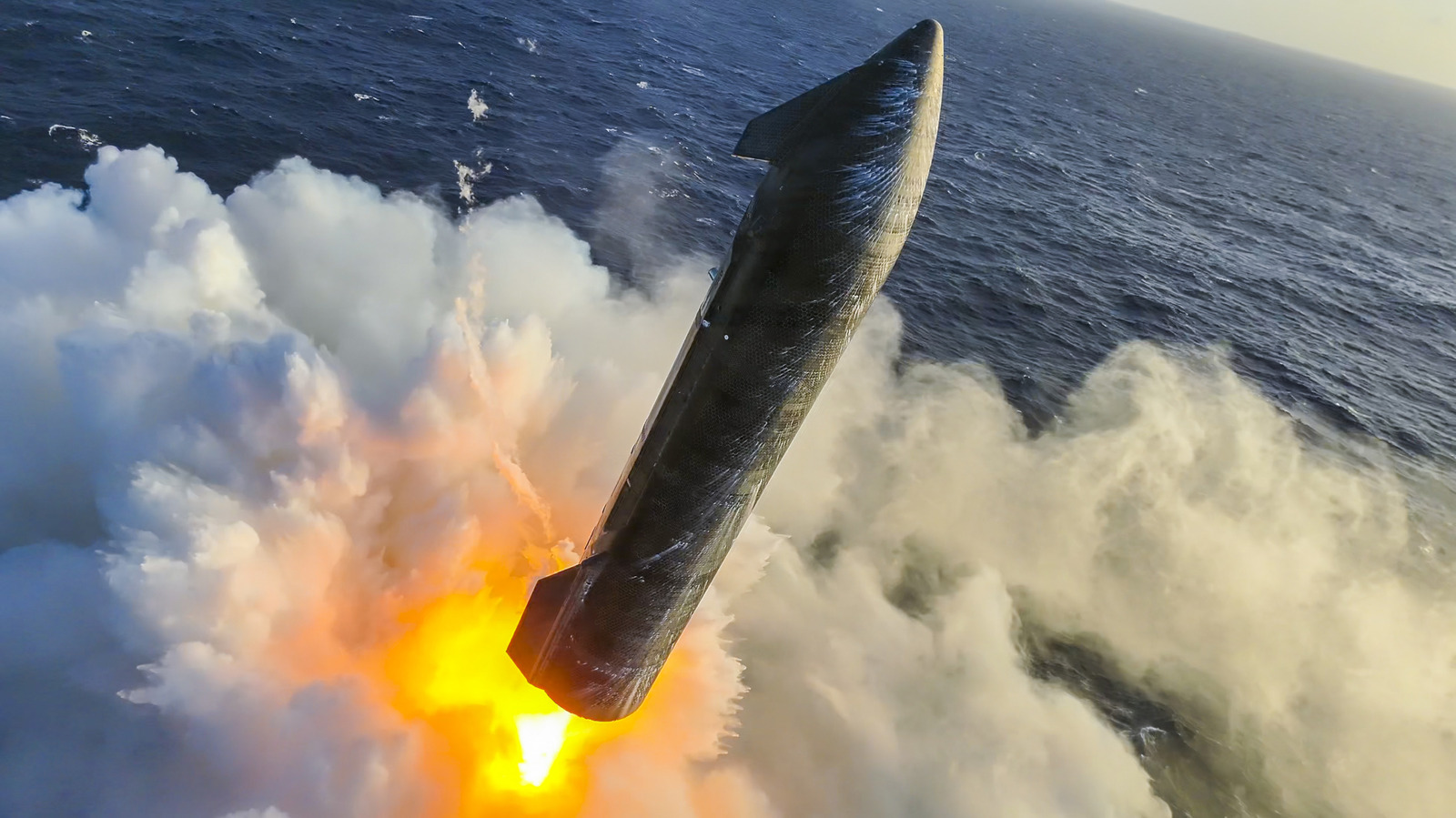
The reliance on Starship is not merely a corporate decision but a geopolitical one. The Artemis program, led by NASA, envisions a return to the Moon, with SpaceX providing the lander that will ferry astronauts from lunar orbit to the surface. The architecture of this mission is incredibly complex: it requires a Starship to launch from Earth, reach orbit, and then be refueled by a series of tanker Starships—as many as 15 separate launches—before it can proceed to the Moon.
NASA’s uncertainty regarding this timeline has been palpable. The agency has kept the door open to other contractors, notably Blue Origin, to provide backup and alternative lunar lander capabilities. This hedging strategy highlights a growing anxiety within the halls of government: if Starship is not ready by 2028, the entire U.S. lunar roadmap faces a multi-year delay. Consequently, the cessation of Falcon 9 bookings may be a signal to stakeholders that SpaceX is confident in its ability to meet the 2028 deadline, effectively closing the door on the "old" way of doing business.
The "Space Crunch" and Market Implications
The retirement of the Falcon 9 leaves a vacuum that the industry is currently scrambling to understand. Satellite operators, particularly those relying on rideshare missions—where multiple payloads are packed into a single rocket—have benefited from the low costs provided by Falcon 9. If that capacity disappears before Starship is fully operational and capable of cost-effective, high-cadence service, the global "space crunch" could intensify.
There are currently insufficient spaceports and launch vehicles to meet the projected demand for the remainder of the decade. While companies like Rocket Lab and various European launch providers are expanding their capabilities, none currently possess the payload capacity or the flight frequency of the Falcon 9. If SpaceX stops flying the Falcon 9 while Starship is still in its infancy, the industry could face a significant bottleneck, potentially forcing companies to wait years for a launch window.
ISS Logistics and the Post-2028 Gap
Beyond commercial satellites, the International Space Station (ISS) represents a critical dependency. The ISS is slated for continued operation through 2032, and currently, the Falcon 9 and the Crew Dragon capsule serve as the primary lifeline for both cargo and crew. If SpaceX retires the Falcon 9 prematurely, it creates a four-year logistical gap that would need to be filled.
While Boeing’s Starliner program was intended to provide redundancy, it has been plagued by technical setbacks, leading NASA to classify recent issues as a "maximum mishap." If both the Falcon 9 and the Starliner face challenges, the U.S. might be forced to rely on international partners or older, less efficient systems to maintain a presence on the ISS. The potential for a void in American orbital capability is driving intense scrutiny from lawmakers, who are monitoring the transition to ensure national security and scientific research are not compromised.
Engineering Realities: The Hurdle of Reliability
The transition from a proven workhorse to an experimental heavy-lift vehicle is fraught with risk. The Starship is significantly larger, more powerful, and more complex than its predecessor. Achieving the "several launches per day" cadence that Musk envisions requires not just a working rocket, but an entire ground-support infrastructure that does not currently exist at the necessary scale.
Industry analysts note that even if the rocket performs perfectly during upcoming test flights, the transition to full operational status—including the rigorous safety protocols required for human flight—takes time. The first orbital flight attempt for the latest Starship iteration, scheduled for late 2025, will be a bellwether for the rest of the industry. If the flight proves successful, it will validate the timeline. If it encounters further delays, the decision to stop taking Falcon 9 reservations will appear increasingly risky.
Analysis: A Gamble on Innovation
SpaceX’s strategy is a bold application of "creative destruction." By intentionally creating a resource scarcity for its older, reliable product, the company is betting that the necessity of the Starship will drive the innovation required to make it successful. This is a classic "burning the ships" approach—by eliminating the safety net of the Falcon 9, the company ensures that its best minds are focused entirely on the future.
However, the implications for the broader aerospace industry are profound. The current reliance on a single provider for such a large percentage of global launches creates a single point of failure. If the Starship encounters a long-term grounding or a series of failures, the lack of a Falcon 9 backup would reverberate through the global economy, affecting everything from telecommunications and national security to scientific research.
As we approach 2028, the eyes of the global space community will be fixed on the Starbase facility in Texas. The success of the Starship will likely define the next half-century of human activity in space. Conversely, any stumble in the transition will be a stark reminder that the history of space exploration is written in the tension between visionary ambition and the harsh, unforgiving realities of physics and engineering. For now, the market must wait, plan, and prepare for a future where the sky is no longer the limit—provided the rockets are there to reach it.
Related posts: