The Ultimate Guide to Men’s Moisturizers: Expert-Tested Picks for Every Skin Type and Budget

As dermatological science continues to evolve, the consensus surrounding male skincare has shifted from a superficial luxury to an essential component of personal health. Moisturizer remains the undisputed cornerstone of any effective daily regimen. Beyond merely softening the epidermis, dermatological assessments confirm that quality hydrating formulations actively support the skin barrier and significantly mitigate transepidermal water loss. This physiological process is critical for maintaining cellular hydration and ensuring optimal skin functionality across diverse environmental conditions.
According to Dr. Nicole Ruth, a board-certified dermatologist practicing at Weiser Skin in New York City, modern hydrating formulations do far more than supply surface-level moisture. Depending on the precise chemical architecture of the product, top-tier moisturizers actively replenish essential skin lipids, restore internal moisture reservoirs, and mitigate inflammation. However, industry experts caution that skincare is rarely universal. Formulations tailored for oily or acne-prone skin profiles will routinely fail to satisfy the deep cellular requirements of chronically dry or compromised complexions. Furthermore, seasonal shifts demand strategic adjustments, requiring consumers to alternate between lightweight, non-comedogenic daytime gels, protective formulas integrated with sun protection factor (SPF), and heavy, occlusive overnight repair creams.
To navigate the saturated personal care market ahead of the 2026 grooming season, extensive product testing has evaluated dozens of contenders across varying price points, climates, and skin classifications. The findings emphasize that high cost does not inherently guarantee superior performance; rather, ingredient transparency, textural elegance, and user consistency dictate long-term skin health.
Main Findings and Top-Rated Moisturizers
Following rigorous evaluations by grooming editors and dermatological panels, seven standout formulations have been identified as category leaders, addressing specific dermatological demands without unnecessary financial inflation.
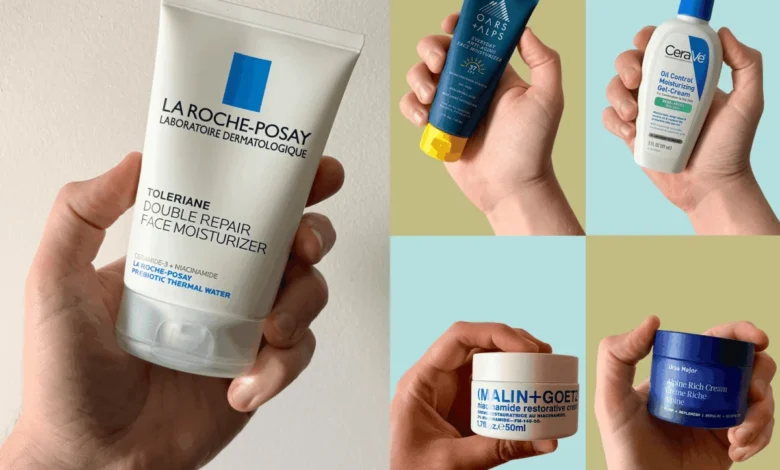
For general use, the undisputed frontrunner is the La Roche-Posay Toleriane Double Repair Face Moisturizer. Celebrated universally by skincare enthusiasts and clinical professionals alike, this fragrance-free lotion bridges the gap between clinical efficacy and everyday accessibility. The formula features a balanced fusion of ceramides, niacinamide, and glycerin to hydrate and repair the compromised skin barrier, alongside prebiotic thermal water to calm inflammation. Its lightweight, lotion-cream hybrid texture absorbs rapidly, making it an adaptable daily driver for normal, dry, and sensitive skin types through changing seasonal climates.
For consumers battling excess sebum and shine, the CeraVe Oil Control Moisturizing Gel Cream offers an effective, mattifying solution. Utilizing silica to absorb surface oils alongside hyaluronic acid, niacinamide, and a foundational trio of ceramides, this gel-cream provides targeted hydration without exacerbating greasiness. While initial application immediately following a shave may provoke minor stinging in reactive skin, its long-term sebum-regulating properties excel in warm or humid environments.
When confronting severe dryness, particularly during harsh winter months, the Ursa Major Alpine Rich Cream delivers intensive nourishment. Eschewing purely superficial botanical trends, the brand pairs targeted plant extracts with proven clinical hydrators like squalane, glycerin, and ceramides. The whipped texture melts effortlessly into the epidermis, establishing a protective, occlusive matrix that locks in moisture overnight.
For anti-aging concerns, the Malin+Goetz Niacinamide Restorative Cream represents a gold standard in preventive maintenance. Containing a robust 2% concentration of niacinamide, this mid-weight, fragrance-free cream targets fine lines, loss of firmness, and uneven skin tone. Clinical observations confirm visible improvements in skin plumpness and elasticity around expression lines after several weeks of consistent application.
Budget-conscious consumers find exceptional value in the Vanicream Daily Facial Moisturizer. Stripped of unnecessary marketing frills and added fragrances, this unassuming tube delivers vital humectants and five essential ceramides at a fraction of the cost of luxury alternatives. Though it requires a slightly extended absorption period compared to premium counterparts, its gentleness makes it an ideal staple for reactive or budget-minded individuals.
For nocturnal recovery, the Kiehl’s Midnight Recovery Omega-Rich Botanical Night Cream utilizes a whipped, marshmallow-like consistency rich in botanical oils and fatty acids. Designed to work in tandem with the body’s natural circadian repair cycle, it visibly plumps fatigued skin and mitigates under-eye shadows by morning.
Finally, daily sun protection is seamlessly addressed by the Oars+Alps Everyday Face Moisturizer SPF 37. Exceeding the dermatological baseline recommendation of SPF 30, this formulation integrates broad-spectrum UV protection with hyaluronic acid and Alpine Caribou Moss, avoiding the heavy, chalky residue typical of traditional sunscreens.
Chronology and Industry Evolution
The men’s grooming sector has experienced a profound paradigm shift over the past decade. Historically relegated to basic bar soap and alcohol-heavy aftershaves—practices that systematically degraded the skin barrier—male consumers now have unprecedented access to advanced dermatological science.
In the early 2010s, brands primarily marketed products along rigid gender lines, relying heavily on aggressive synthetic fragrances and menthol additives. By the mid-2010s, the rise of direct-to-consumer digital brands democratized skincare education, encouraging men to look past packaging and examine active ingredient lists. Regulatory bodies and professional dermatological associations subsequently pushed for greater transparency, paving the way for fragrance-free, clinically validated formulations to dominate market share.
By 2026, the convergence of medical dermatology and daily grooming has normalized multi-step routines. The introduction of microemulsions, exosome technology, and plant-derived lipid complexes indicates that the market is no longer treating male skincare as an afterthought, but as a specialized category requiring sophisticated chemical engineering.
Supporting Data and Dermatological Insights
Clinical data underscores the necessity of targeted ingredient selection. According to Dr. Kunal Malik of Spring Street Dermatology in New York City, tailoring a skincare regimen requires an accurate assessment of natural sebum production and environmental exposure.
Skin Type Classification and Recommended Formulations:
- Oily Skin: Requires lightweight, oil-free, water-based, and non-comedogenic formulations. Ingredients like silica and niacinamide help regulate sebum without clogging pores. Heavy occlusives should be avoided.
- Dry Skin: Benefits from humectants (hyaluronic acid, glycerin), emollients (squalane, shea butter), and barrier-repairing ceramides packaged in rich, emollient-heavy creams.
- Sensitive Skin: Demands minimal ingredient lists that exclude synthetic fragrances and drying alcohols. Calming agents like colloidal oatmeal and lipid-replenishing ceramides are vital.
- Acne-Prone Skin: Requires non-comedogenic balance. While moisturizers maintain barrier health, dedicated acne fighters such as salicylic acid or benzoyl peroxide can be integrated elsewhere in the regimen.
- Combination Skin: Needs balanced formulations that provide lightweight hydration to the T-zone while supporting drier perimeter areas.
- Normal Skin: Can utilize flexible, lightweight hydrators focused on maintaining baseline moisture equilibrium.
- Aging Skin: Demands peptides, niacinamide, and retinoids to restore firmness, coupled with daily broad-spectrum SPF 30 or higher.
Official Responses and Expert Consensus
The medical community maintains a unified stance regarding product selection and gender-neutral marketing. Dr. Nicole Ruth explicitly notes that male skin—while often structurally thicker and more prone to sebum production due to higher androgen levels—does not require formulations engineered exclusively for men.
"Men do not need a moisturizer labeled ‘for men,’" Dr. Ruth emphasizes. "Individual concerns matter much more than gender-based marketing. The best moisturizer is ultimately the one a patient will actually use consistently."
Regarding sun protection, dermatologists stress that ultraviolet radiation poses a continuous threat regardless of seasonal temperature drops. While a broad-spectrum SPF 30 moisturizer is sufficient for standard daily commutes, prolonged outdoor exposure necessitates dedicated, water-resistant sunscreens reapplied every two hours.
Broader Impact and Market Implications
The expansion of the men’s skincare market reflects broader cultural shifts regarding self-care, wellness, and personal presentation. As corporate environments and social norms continue to destigmatize male grooming, brands are forced to elevate their manufacturing standards. The widespread adoption of clinical-grade ingredients in accessible drugstore products has narrowed the performance gap between luxury and mass-market tiers.
Ultimately, the proliferation of specialized moisturizers signals a permanent departure from obsolete grooming habits. By prioritizing barrier health, preventative anti-aging, and clinically proven hydration over aggressive marketing tropes, modern consumers are equipped to maintain optimal dermatological health throughout their lives.