The U.S. Naval Blockade on Iran Is Severely Constricting the Economy as Land-Based Alternatives Fail to Compensate for Lost Maritime Trade

The ongoing military confrontation between the United States and Iran has reached a critical juncture, defined primarily by a rigorous U.S. naval blockade that has effectively paralyzed Iran’s maritime commerce. With more than 80% of Iran’s pre-war trade tonnage traditionally transiting through southern ports, the closure of these maritime gateways has triggered a profound economic contraction. As the U.S. Central Command (CENTCOM) maintains its ironclad grip on the Persian Gulf, Tehran’s attempts to pivot toward overland trade routes are proving to be a logistical and financial failure, threatening to push the nation’s economy toward a total systemic collapse.
Chronology of the Maritime Siege
The roots of the current crisis trace back to the onset of the conflict, which saw an immediate spike in regional tensions and direct threats to the Strait of Hormuz, a critical global energy chokepoint. Following initial skirmishes involving drone and missile attacks on commercial vessels, the United States mobilized a multinational task force to secure the passage.
By late spring, the U.S. had established a permanent naval presence, redirecting or intercepting commercial vessels suspected of facilitating Iranian state commerce. According to recent data provided by CENTCOM, the blockade has achieved a near-total cessation of Iranian oil exports. In contrast, the U.S. military has facilitated the secure passage of over 1 billion barrels of oil from other Gulf producers over the last two months, successfully insulating the global energy market from the volatility of the conflict. Adm. Brad Cooper, the chief of CENTCOM, noted on Saturday that the primary shipping lanes in the Strait of Hormuz are now clear of mines and functioning at their highest volume in six months, leaving Iran effectively isolated from its primary source of revenue.
The Failure of the Overland Pivot
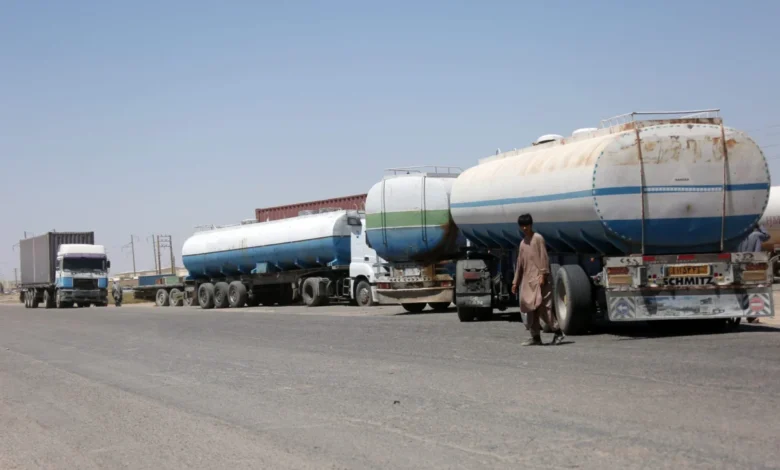
Facing a complete shutdown of its southern ports, the Iranian government has aggressively attempted to divert trade through its land borders with Turkey, Pakistan, Afghanistan, Iraq, and Turkmenistan. While this strategy has led to a statistical uptick in bilateral trade—notably a 19% increase in trade with Turkey reaching $3.2 billion in the first half of the year—the volume remains a fraction of what is required to sustain the Iranian economy.
The infrastructure of these border crossings, designed for regional commerce rather than international transit, has been overwhelmed by the sudden influx of heavy logistics. Bureaucratic bottlenecks, combined with a lack of adequate warehousing and archaic customs protocols, have created catastrophic gridlock. At the Iranian-Turkish border, reports indicate that over 3,700 trucks were recently stranded, with wait times for cargo clearance often exceeding three weeks.
The impact of these delays on the domestic economy is severe. Perishable goods, including essential foodstuffs, frequently spoil before reaching their destination. For industrial inputs, the delays have created a cascading failure in the supply chain. A Turkish driver interviewed by the Financial Times described a 24-day wait for his return trip, while similar reports from the Afghan border suggest that transit times have become so unpredictable that many logistics firms have ceased operations in the region entirely.
Economic Implications and Rising Inflation
The economic fallout of the blockade is best illustrated by the disparity in transportation costs. Majidreza Hariri, head of the Iran-China Joint Chamber of Commerce, recently highlighted that the cost of transporting a container via sea is approximately $3,000. Under the current blockade, the cost to move that same container via land routes has ballooned to $12,000.
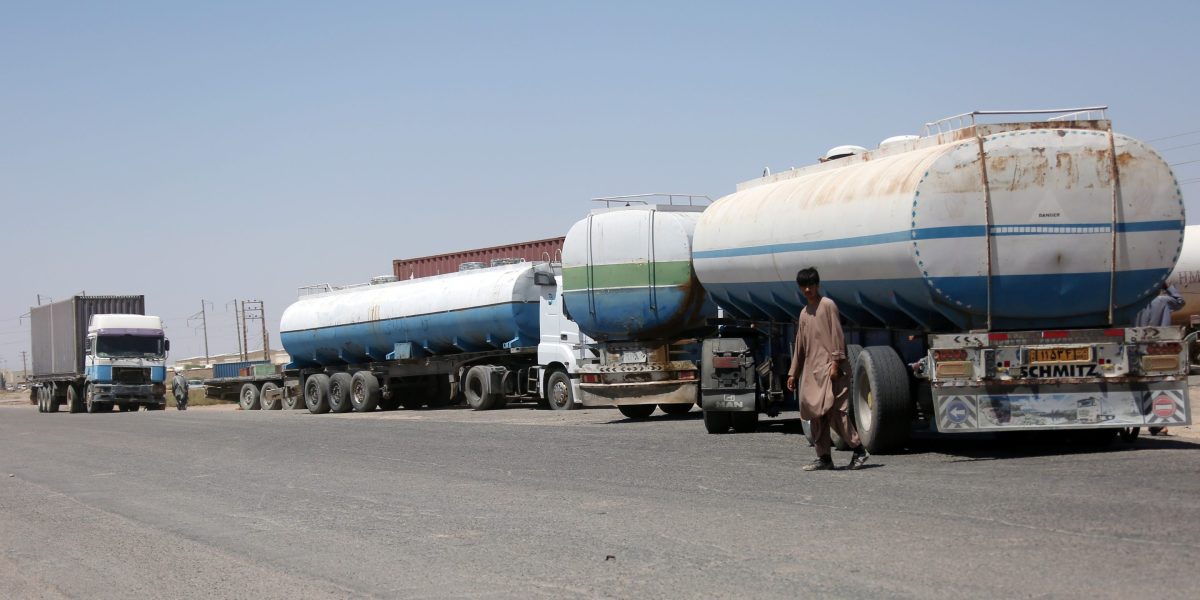
Given that Iran’s southern ports previously handled roughly 2 million containers annually, the transition to land-based logistics represents an estimated $18 billion annual increase in transportation expenses. This cost is inevitably passed on to the consumer in a market already struggling with 90% inflation. The scarcity of imported fuel—a consequence of Iran’s limited domestic refining capacity—has forced the government to implement harsh price hikes and strict demand-curbing measures, further eroding the standard of living for the average Iranian citizen.
Recent data from Iranian customs confirms the gravity of the situation: in the five months ending August 22, non-oil exports declined by 28% to $15 billion, while imports plummeted by 26% to $17 billion. Analysts suggest that these figures represent a best-case scenario for survival, but as Hariri noted, the economy is currently on a trajectory to "grind to a halt" if the maritime blockade persists.
Political Pressure and Strategic Stalemate
The economic distress has not gone unnoticed by the highest levels of the Iranian leadership. Supreme Leader Ayatollah Mojtaba Khamenei has reportedly expressed significant concern regarding the erosion of social cohesion and the viability of the state under such sustained economic pressure. However, the regime’s response has remained characteristically defiant, emphasizing internal security over economic liberalization.
From the perspective of the Trump administration, the blockade serves as the primary mechanism for economic warfare intended to force a political resolution to the conflict. The strategy relies on the assumption that the cumulative weight of inflation, supply shortages, and industrial paralysis will eventually compel Tehran to negotiate or collapse.
Conversely, regional observers and geopolitical analysts remain cautious about the timeline of this strategy. They note that the Iranian regime has historically demonstrated a high threshold for public suffering and a capacity for long-term endurance that often exceeds the patience of democratic nations, which are sensitive to the global energy price fluctuations caused by the very conflicts they seek to manage.
The Future of the Southern Corridors
There is a growing acknowledgment within the Iranian Chamber of Commerce that the current strategy of relying on land borders is unsustainable. Industry leaders have begun to lobby for the restoration of maritime trade through the Gulf, arguing that there is no viable alternative to the scale and efficiency of sea-based logistics. "Under these circumstances, there is little alternative but to find a way to restore and maintain the southern trade corridors," one member told the Financial Times.
However, the path to reopening these corridors remains closed. The U.S. military’s "ironclad" blockade is not merely a tactical maneuver; it is a strategic assertion of control over regional maritime stability. As long as the current conflict persists, the Strait of Hormuz will remain a contested space, with the U.S. maintaining a firm posture to ensure the continued flow of oil from other regional actors while keeping the Iranian economy in a state of controlled strangulation.
Ultimately, the blockade serves as a potent reminder of the vulnerability of modern, globalized economies to the disruption of key transit chokepoints. For Iran, the next few months will likely define the long-term feasibility of its current geopolitical stance. As the government struggles to maintain basic supplies and mitigate the effects of hyperinflation, the internal pressure from the business sector and the public will continue to mount. Whether this pressure results in a shift in state policy or a further consolidation of domestic control remains the central question of the ongoing regional crisis. The combination of stalled land transit, the inability to export oil, and the refusal of the international community to bypass the naval blockade leaves Iran with few options, forcing it to confront the reality that its economic survival is inextricably tied to the very sea lanes it once sought to disrupt.
Related posts: