Wednesday morning sports headlines focus on major contract renewals and structural shifts across elite European football


The landscape of professional football is currently defined by long-term planning and strategic consolidation, as evidenced by a wave of contract extensions and administrative appointments reported across Wednesday’s newspapers. From the Emirates Stadium to the corridors of Anfield and beyond, clubs are positioning themselves for the next decade of competition, while individual leagues and international governing bodies face their own unique set of logistical and commercial pressures.
Arsenal Secures Core Pillars for the Future
The most significant news emerging from North London concerns the long-term stability of Arsenal’s sporting project. Reports indicate that Declan Rice, the cornerstone of Mikel Arteta’s midfield, is nearing an agreement to commit his future to the club until at least the summer of 2031. Since his high-profile arrival, Rice has evolved into a foundational piece of the squad, providing both defensive steel and tactical versatility. Securing the England international on such an extensive deal signals the board’s intent to maintain the current trajectory of the club.
Complementing this, manager Mikel Arteta has reportedly agreed to a contract extension that includes a significant salary increase. This move is a direct acknowledgment of his role in transforming Arsenal from a top-four contender into a consistent challenger for the Premier League title. The extension potentially aligns with a long-term vision that could see the Spaniard surpass a decade in the dugout, a rare feat in the modern Premier League era. For the Arsenal hierarchy, this dual commitment—securing both the manager and his primary on-field lieutenant—is intended to provide a period of sustained continuity that the club has arguably lacked since the departure of Arsène Wenger.
Liverpool and the Sporting Director Succession
On Merseyside, Liverpool is taking proactive steps to stabilize its leadership structure. Julian Ward, who previously held the role of sporting director, is reportedly set to return to the position. This appointment comes as the club navigates a transitional phase following the departure of Richard Hughes. The decision to bring back a familiar face suggests that Liverpool’s ownership, Fenway Sports Group, is prioritizing continuity and established institutional knowledge as they plan for the post-Klopp era. Ward’s return is expected to streamline recruitment and scouting processes, ensuring that the club remains competitive in an increasingly complex transfer market.
Youth Recruitment and Global Scouting Networks
While established clubs focus on senior management, the race for elite talent remains as competitive as ever. Chelsea, maintaining its aggressive policy of scouting young prospects, has identified 15-year-old Gambian midfielder Adama Jeng as a primary target. Jeng, currently developing at Samger FC, represents the global reach of modern scouting departments, which are increasingly looking beyond traditional European hubs to identify high-potential talent earlier in their development cycle.
In a similar vein, Manchester United is recalibrating its academy strategy, scouring the continent for replacements for burgeoning talents like JJ Gabriel. The club has reportedly identified 16-year-old Lens talent Mezian Mesloub as a viable prospect. These moves reflect the broader trend of Premier League clubs investing heavily in the "pre-professional" age group, aiming to secure high-ceiling players before they hit the open market and command exorbitant transfer fees.
Economic Realities and Sponsorship Volatility
Financial stability remains a critical concern for clubs operating under stringent Profit and Sustainability Rules (PSR). Tottenham Hotspur’s recent announcement regarding their commercial partnerships highlights the fragility of revenue streams. The club has lost a sponsor after Sidiz triggered an early termination clause, ending their association at the end of October. This development, occurring during a challenging start to the domestic season, underscores the pressure on clubs to maximize commercial output even when on-field performances fluctuate.
Furthermore, Nottingham Forest is reportedly bracing for significant interest in Morgan Gibbs-White. The midfielder’s valuation has risen considerably, with Bayern Munich noted as one of the interested parties. For clubs outside the traditional "Big Six," the ability to retain key players while managing the allure of interest from European giants is a constant strategic challenge. The potential departure of such a pivotal figure would not only force a tactical rethink but would also test the club’s ability to reinvest wisely under the watchful eye of league regulators.
International Stability: The Scaloni Era
On the international stage, Argentina is moving to secure the future of its most successful manager in recent history. Lionel Scaloni, who led the Albiceleste to glory, has been offered a long-term contract extension. This move is designed to provide stability through the next World Cup cycle. Given the volatile nature of international management, where turnover is high and results are scrutinized on a global stage, Argentina’s commitment to Scaloni is a testament to the tactical cohesion he has instilled in a squad featuring generational talent.
Rugby Union: Financial Incentives and Retention
Outside of football, the professional rugby landscape is seeing significant investment in player retention. Henry Pollock has signed a new contract with the Northampton Saints worth approximately £450,000 per annum, keeping him at the club until 2029. This agreement is strategically important for both the club and the England national team. By securing a player of Pollock’s caliber, Northampton ensures their competitiveness in the Premiership, while the Rugby Football Union (RFU) benefits from having a key international asset remaining within the domestic league, thereby maintaining his availability for selection beyond the next World Cup.
Formula 1: The Dilemma of the Calendar
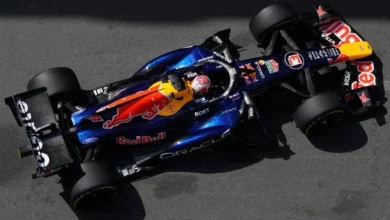
The Formula 1 season’s conclusion is currently mired in logistical and ethical uncertainty. Organizers are facing a difficult dilemma regarding the upcoming races in Qatar and Abu Dhabi. The ongoing conflict in the Gulf region has created a precarious environment for international sporting events, yet the financial implications of cancellation are profound.
Formula 1’s commercial model relies heavily on race-hosting fees and broadcasting rights, both of which are tied to the completion of the full race calendar. Canceling these events would result in significant revenue losses, not only for the sport’s rights holders but also for the teams, who operate on a cost-cap model that relies on consistent revenue distribution. The situation is being monitored closely, with stakeholders weighing the safety and ethical concerns against the rigid requirements of the global sporting calendar.
Broader Implications and Strategic Analysis
The common thread running through these developments is the premium placed on long-term stability. Whether it is Arsenal securing their manager for the next decade, or Argentina extending their World Cup-winning coach, organizations are moving away from the "quick fix" culture that has historically plagued high-level sports.
In the Premier League, the enforcement of PSR and financial sustainability regulations has necessitated a more disciplined approach to recruitment and wage bills. Clubs can no longer simply outspend their way to success; they must build systems that foster player development and tactical consistency. This is why the focus on youth scouting—such as Chelsea’s interest in Adama Jeng—and the retention of existing stars like Declan Rice are becoming the hallmarks of a well-run footballing institution.
The economic pressure on clubs is further exacerbated by the volatile nature of commercial partnerships. Tottenham’s experience with their sponsor demonstrates that even the most prestigious clubs are susceptible to external economic pressures. As a result, the "commercial department" of a football club has become as vital as the scouting department.
Finally, the intersection of global politics and professional sport, as seen in the Formula 1 dilemma, serves as a reminder that the world of elite competition does not exist in a vacuum. As sporting bodies continue to expand into new territories, the logistical risks and ethical responsibilities associated with these venues will continue to grow. For the stakeholders involved, the challenge will be to balance the pursuit of commercial growth with the maintenance of a stable, safe, and sustainable environment for athletes and fans alike.
As the season progresses, these developments will likely set the tone for the January transfer window and the strategic planning of clubs for the 2025/26 campaign. The ability to navigate these challenges—both on and off the pitch—will distinguish the clubs that continue to compete at the summit of the game from those that struggle to maintain their footing in an increasingly demanding industry.