Geely to Unveil Revolutionary 2.2MW Ultra-Fast EV Charging System and Battery Technology Capable of Four-Minute Refueling

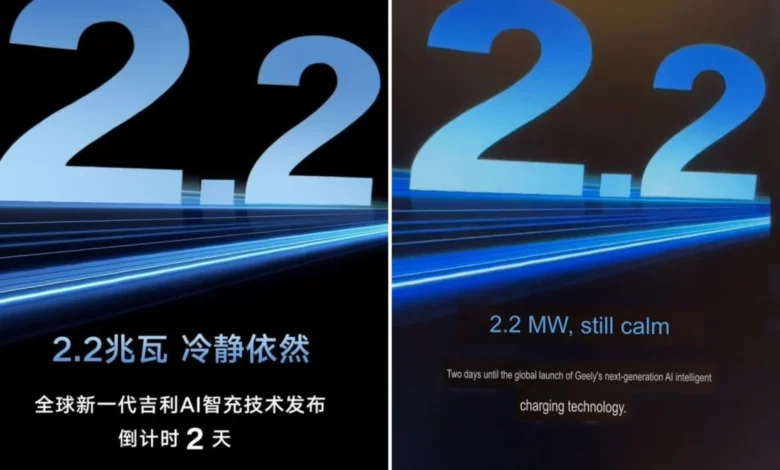
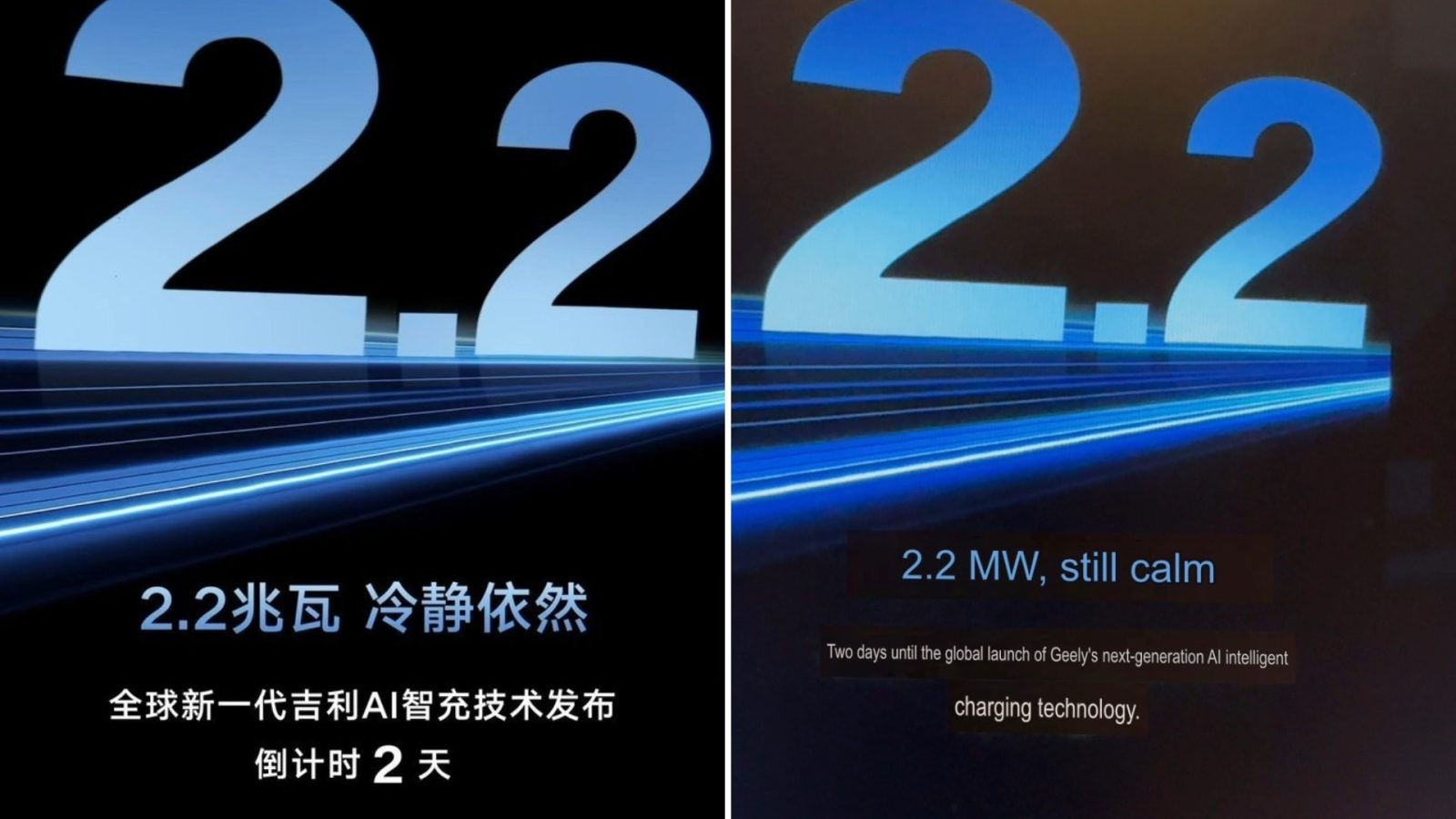
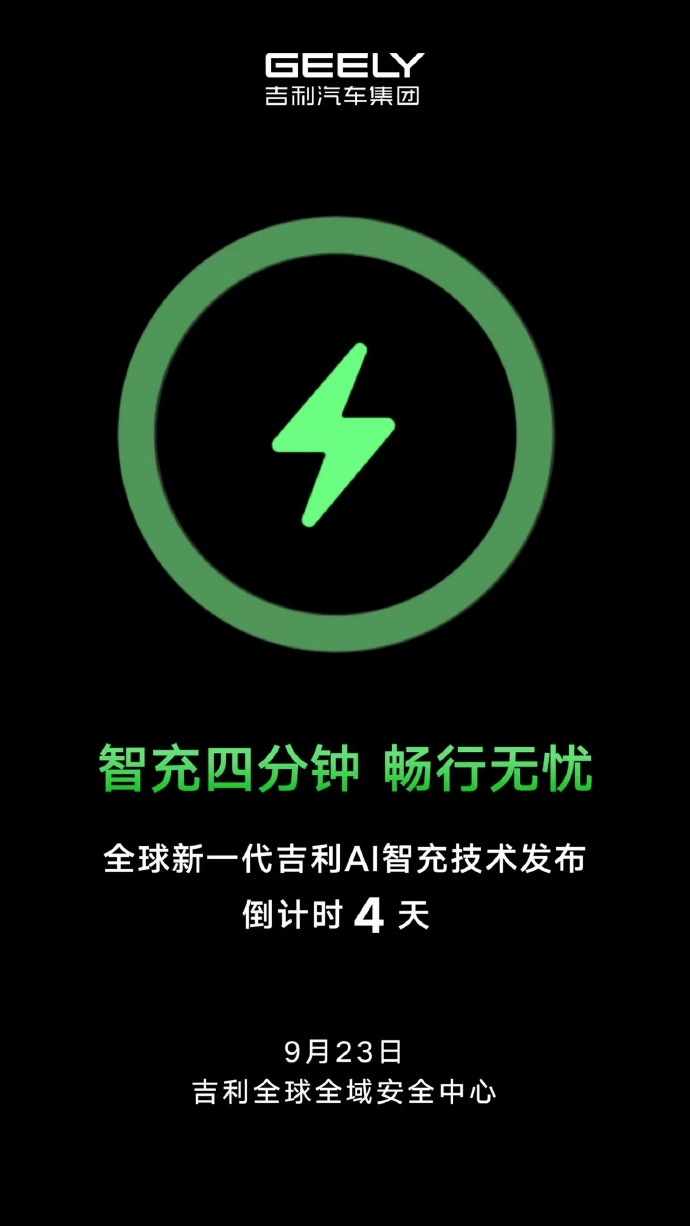
The global electric vehicle landscape is once again shifting at a breakneck pace, driven primarily by relentless engineering competition within the Chinese automotive market. Chinese automotive giant Geely has officially announced plans to reveal its next-generation artificial intelligence-powered smart charging technology and high-performance EV battery system. Scheduled for an official global debut on Wednesday, September 23, at the Geely Global All-Domain Safety Center in Ningbo, China, the upcoming technology promises to redefine consumer expectations by facilitating a remarkable four-minute charging capability.
This technological leap represents a significant escalation in what has effectively become an arms race for EV charging superiority in China. Geely’s impending system boasts a staggering 2.2 megawatts (MW) of power output. To contextualize this milestone, Geely’s new infrastructure delivers roughly 50 percent more power than its primary domestic rival BYD’s recently introduced 1.5MW "Flash Charging 2.0" system. As charging speeds continue to accelerate exponentially, the automotive industry in China is moving past conventional metrics, increasingly measuring EV replenishment times in seconds rather than minutes.
The Accelerating Timeline of Ultra-Fast Charging
The trajectory of electric vehicle charging infrastructure has evolved dramatically over the past several years, transforming what was once a lengthy logistical hurdle into an experience that closely mirrors refueling a traditional internal combustion engine vehicle. While Western markets continue to grapple with the rollout of 150kW to 350kW direct current fast chargers, Chinese automakers have aggressively pursued ultra-high-voltage architectures.
Earlier developments laid the groundwork for this current paradigm shift. For instance, BYD’s Blade 2.0 battery architecture introduced charging intervals benchmarked at approximately five minutes. Geely quickly countered with its proprietary Golden Brick battery architecture, which trimmed times down to roughly four minutes and twenty-two seconds under optimal conditions. Now, the unveiling of a 2.2MW system signifies a structural jump in power delivery, pushing the boundaries of thermal management, grid capability, and battery chemistry endurance.
While promotional teaser campaigns from Geely—highlighted by social media statements promising "Charge in Four Minutes, Drive with Peace of Mind"—remain deliberately tight-lipped on granular technical specifications, industry analysts anticipate that the full reveal will clarify the operational parameters of these ultra-fast intervals. Typically, EV charging speeds are measured within specific state-of-charge parameters, usually from 10 percent to 80 percent, to account for the inherent tapering of electrical current as a lithium-ion cell approaches full capacity.
Integration of Artificial Intelligence and Battery Longevity
One of the most intriguing elements of Geely’s forthcoming announcement is the integration of advanced artificial intelligence within the charging ecosystem. While the term "AI" is frequently utilized across modern technology marketing, Geely’s implementation appears directly tied to sophisticated thermal management algorithms and dynamic current regulation.
In ultra-fast charging environments, the primary engineering obstacle is mitigating extreme heat generation, which accelerates cell degradation and poses severe safety risks. By employing AI-driven smart charging protocols, Geely’s system is expected to continuously monitor individual cell temperatures, internal resistance, and voltage fluctuations in real time. This intelligent oversight aims to protect the battery architecture, ensuring that rapid replenishment does not compromise the lifespan of the vehicle.
Industry reports and preliminary briefings suggest that Geely’s next-generation batteries are engineered to withstand up to 3,500 charge and discharge cycles while maintaining minimal capacity degradation. Achieving high cycle life alongside ultra-fast charging speeds addresses one of the most persistent consumer anxieties regarding battery longevity in high-performance electric vehicles.

Comparative Analysis: Global Charging Benchmarks
The sheer magnitude of Geely’s 2.2MW charging system becomes starkly apparent when compared to existing global infrastructure. At 2.2 megawatts, Geely’s consumer-focused technology operates at a scale that vastly surpasses standard passenger car chargers deployed across North America and Europe.
For perspective, standard public direct current fast chargers in the United States typically operate between 150kW and 350kW, making Geely’s upcoming system roughly six times faster than typical American infrastructure. Furthermore, Geely’s passenger vehicle charger even exceeds the power output of Tesla’s dedicated Megacharger network. Tesla’s inaugural 1.2MW Megacharger installation—deployed in Ontario, California—was specifically designed to support heavy-duty commercial applications like the Tesla Semi, which utilizes significantly larger battery packs than standard consumer sedans or utility vehicles. The ability to channel similar, and even higher, power levels into standard consumer passenger cars underscores the vast technological divergence currently dividing the Chinese EV market from its Western counterparts.
Strategic Implications for the Global Automotive Market
The debut of Geely’s 2.2MW charging system at the company’s state-of-the-art testing facility in Ningbo carries profound implications for the global automotive industry. As Chinese automakers successfully resolve the twin challenges of range anxiety and charging duration, the pressure on legacy international manufacturers intensifies.

The commercialization of four-minute charging effectively neutralizes one of the primary consumer arguments traditionally leveled in favor of gasoline-powered vehicles: the convenience of rapid refueling. When an electric vehicle can recover hundreds of kilometers of driving range in the time it takes a driver to walk into a station and purchase a beverage, the fundamental utility gap between electric and internal combustion vehicles narrows to near zero.
However, widespread deployment of 2.2MW infrastructure will not be without systemic hurdles. Electrical grid stability, local transformer capacity, and the massive capital expenditure required to upgrade utility networks to support multi-megawatt hubs present formidable challenges. Even within China, where government backing and centralized grid planning have facilitated rapid deployment of high-power charging corridors, scaling multi-megawatt stations will require sophisticated energy storage buffers to prevent destabilizing local power grids during peak usage.
As Geely prepares to lift the veil on its complete technical suite during Wednesday’s presentation, industry stakeholders worldwide will be watching closely. The event is expected to provide definitive data on the hardware specifications of the 2.2MW chargers, the precise chemical composition of the supporting batteries, and the projected timeline for commercial rollout across Geely’s diverse brand portfolio, which includes Lynk & Co, Zeekr, and Volvo. Ultimately, Geely’s latest technological stride reinforces the reality that the benchmark for electric vehicle mobility is no longer merely keeping pace with traditional automotive standards, but actively rewriting them at an unprecedented velocity.