Waymo Targets 2027 for Japan’s First Commercial Robotaxi Launch in Tokyo with Local Partners

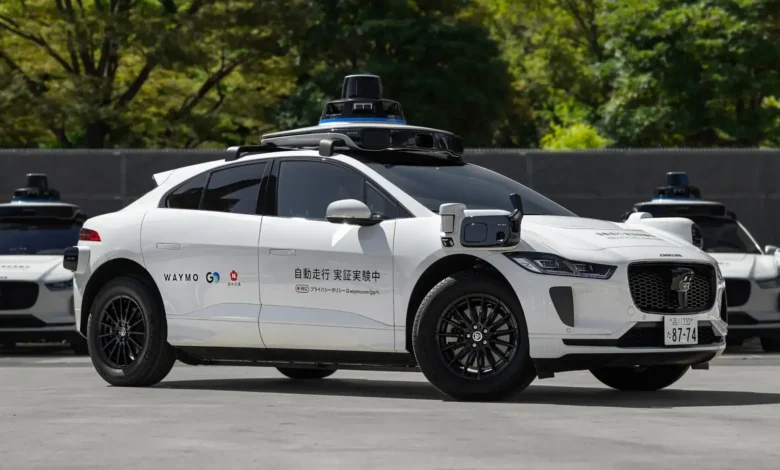
Autonomous driving pioneer Waymo, in a strategic alliance with prominent Japanese taxi application Go and established local transport operator Nihon Kotsu, has formally announced plans to introduce Japan’s first commercial driverless taxi service. Slated for a 2027 rollout in Tokyo, the ambitious venture will initially deploy a dedicated fleet of approximately 100 Jaguar I-Pace electric vehicles. This upcoming deployment marks Waymo’s maiden commercial foray into the Asian market, representing a significant milestone in the company’s global expansion strategy.
While the partnership and vehicle fleet have been firmly established, the precise launch date remains contingent upon securing comprehensive regulatory approvals from both national and municipal authorities in Japan. Despite active testing phases underway in major international urban centers such as Tokyo, London, and Munich, Waymo has yet to transport a single paying passenger globally outside of the United States. The Tokyo initiative therefore stands as a critical proving ground for the commercial viability of Western autonomous technology within one of the world’s most densely populated and intricately regulated urban environments.
Regulatory Compliance and Operational Division of Responsibilities
Navigating Japan’s stringent transport laws requires a meticulously structured operational framework. Under current legislation, only a licensed taxi operator is legally permitted to transport fee-paying passengers. To comply with these statutory requirements, the division of labor among the three corporate partners has been precisely defined.
Waymo assumes responsibility for supplying the core autonomous driving system, the vehicle hardware, the proprietary operating platform, and the advanced fleet management software. Meanwhile, Nihon Kotsu manages physical depot operations and assumes full legal liability for any potential accidents occurring during driverless operations. The third partner, Go, oversees the digital dispatch application and manages coordination with the broader traditional taxi industry to ensure seamless integration.
Uniquely, rides will be bookable through both the Go and Waymo mobile applications. This marks the first time Waymo has committed to distributing its autonomous services through a partner’s native application rather than exclusively relying on its own proprietary software outside the United States. Historically, Waymo leveraged a partnership with Uber for deployment in select American cities, though that collaboration has been systematically phased out in favor of a direct, go-it-alone operational approach domestically. The decision to integrate with Go in Japan highlights an adaptive strategy tailored to the specific commercial landscape of the region.
Chronology of Testing and Development in Tokyo
Waymo’s journey toward a Japanese commercial launch is the result of years of careful groundwork and progressive testing phases. The company initially established a physical presence in Tokyo in December 2024, a milestone it characterized as its first international road trip. Throughout 2025, Waymo vehicles engaged in extensive manual mapping across seven central wards of the metropolis, with human drivers from Nihon Kotsu behind the wheel to record foundational spatial data.
Following this mapping phase, the operation progressed to supervised autonomous testing, which has continued over the past year. Waymo reports that these supervised trials have rigorously tested the autonomous driving software across complex scenarios, including notoriously narrow neighborhood roads, bustling commercial districts, and dense pedestrian crowds. Although Waymo has not publicly disclosed the exact date supervised autonomous driving commenced on Tokyo’s streets, the continuous progression underscores the rigorous safety validation required before moving toward uncrewed operations.
Evolving Timelines and Regulatory Expectations
The targeted 2027 rollout window reflects a notable recalibration of tone and expectations regarding speed to market. Earlier in the year, Waymo’s internal product leadership expressed an accelerated outlook. At a corporate briefing held in Tokyo last March, Chief Product Officer Saswat Panigrahi reportedly informed attendees that a fully driverless service was "not years away" and was progressing "on a scale of months," according to local Japanese trade coverage. Furthermore, a corporate funding filing published by Waymo in February outlined preliminary groundwork aimed at international expansion, explicitly targeting Tokyo and London within the 2026 calendar year.
Because no hard commercial date had been officially announced prior to this September disclosure, the 2027 target does not technically constitute a delay. However, Waymo’s current public communications emphasize that the timeline remains strictly dependent on regulatory approval and ongoing collaborative efforts with Japanese government ministries to secure necessary permits and licenses. Industry analysts note that this measured administrative language is characteristic of operations seeking pioneer status, as regulators navigate uncharted legal territory for Japan’s inaugural commercial robotaxi service.
Competitive Landscape in the Japanese Autonomous Sector
Waymo is far from alone in pursuing the lucrative Japanese autonomous vehicle market. The broader domestic ecosystem has seen significant activity from both legacy automotive giants and nimble technology startups. Earlier in January, Nissan executed its own autonomous pilot in Yokohama, utilizing a small fleet of five Serena minivans equipped with safety operators, with an eye toward a commercial launch also targeted for 2027. Additionally, Nissan has outlined plans to conduct autonomous taxi trials in collaboration with British autonomous driving startup Wayve as early as late 2026.
Other international and domestic players are similarly carving out territory. Nuro initiated autonomous testing in Tokyo earlier in 2026, marking its first operational market outside the United States with backing from prominent backers including Nvidia and Toyota. Concurrently, Honda has actively explored its own proprietary robotaxi concepts. This robust competitive environment suggests that Japan is rapidly evolving into a premier global hub for autonomous mobility validation and commercialization.
Strategic Divergence: Tokyo Versus European Markets
A fascinating aspect of Waymo’s international strategy is the stark contrast between its approach in Asia and its concurrent deployments in Europe. In the United Kingdom, Waymo announced plans for a London-based launch in October 2025. In Germany, Munich has been targeted as the company’s first mainland European market, with a projected rollout slated for late 2027.
Unlike the collaborative joint-venture model adopted in Tokyo, Waymo is pursuing a more direct, vertically integrated operational control model in Europe through its own local subsidiaries, rather than embedding itself within established legacy taxi networks. However, these European ventures face their own hurdles. In Munich, Waymo held no local driving permits at the time of its announcement, trailing established competitors such as Mobileye, Volkswagen, and Wayve, which already hold Level 3 autonomous permits in Germany. In London, the company has yet to secure regulatory authorization for fully driverless operation, meaning initial deployments will feature safety drivers behind the wheel.
Implications of the Local Partnership Model
Waymo’s decision to abandon its preferred go-it-alone playbook in favor of a partnership with Nihon Kotsu and Go provides profound insight into the company’s corporate strategy. By integrating its autonomous technology directly into a century-old traditional taxi operation and a dominant digital dispatch platform, Waymo acknowledges that regulatory navigation and cultural trust represent the most formidable barriers to entry in Japan.
Establishing trust among local consumers, municipal authorities, and traditional transport unions is widely considered a more delicate challenge than solving technical engineering hurdles alone. By leveraging the deep-rooted industry expertise and brand equity of Nihon Kotsu, Waymo mitigates the friction typically associated with foreign technology companies entering highly regulated legacy markets. As the industry looks toward the 2027 target, the success of the Tokyo venture will likely serve as a foundational blueprint for how advanced autonomous driving systems scale globally into complex urban societies.
Related posts: