Toyota Navigates Existential Crisis as Chinese Competition Challenges the Multi-Pathway Strategy and the Future of the Corolla

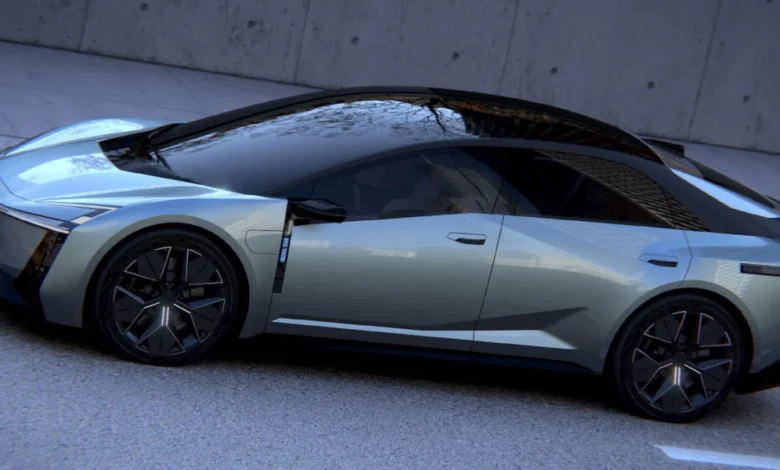
Toyota Chairman Akio Toyoda has issued a stark warning regarding the automaker’s future, signaling a profound "sense of crisis" within the world’s largest car manufacturer as it grapples with the rapid transition to electric vehicles (EVs) and aggressive competition from Chinese manufacturers. Speaking during a rare, behind-the-scenes special broadcast with the Japanese national broadcaster NHK, Toyoda framed the current era not merely as a period of technological transition, but as a fight for the company’s very relevance. The Chairman’s comments, delivered at a secret development site for the next-generation Corolla, underscore a growing internal realization that the traditional methods that secured Toyota’s global dominance for decades may no longer be sufficient in a landscape increasingly defined by software-integrated battery electric vehicles (BEVs).
At the heart of this internal turmoil is the next-generation Corolla, a vehicle that serves as more than just a high-volume product; it is the barometer for Toyota’s survival. Since its introduction 60 years ago, the Corolla nameplate has moved more than 57 million units across 12 generations, making it the best-selling vehicle in history. For Toyota, the Corolla is the embodiment of its "mass-market" philosophy—reliable, affordable, and ubiquitous. However, the development of the next iteration, which must include a competitive battery-electric variant, is being treated as a litmus test. The pressure is palpable among the rank and file; one Toyota engineer admitted to NHK with striking bluntness that the company feels it is currently "losing to China" in the race to define the next generation of automotive mobility.
The Multi-Pathway Strategy Under Scrutiny
Toyota’s official response to the global push for electrification has been the "multi-pathway approach." This strategy, championed by Akio Toyoda and continued under CEO Koji Sato, posits that the path to carbon neutrality should not be limited to a single technology. Instead, Toyota is investing simultaneously in conventional hybrids (HEVs), plug-in hybrids (PHEVs), battery-electric vehicles (BEVs), and hydrogen fuel cell vehicles (FCEVs), as well as hydrogen combustion engines. The next-generation Corolla is the physical manifestation of this philosophy. The platform currently under development is designed to be powertrain-agnostic, capable of supporting traditional gasoline engines, hybrids, and full-electric configurations across various body styles, including sedans, hatchbacks, crossovers, and high-performance GR models.
The logic behind this approach is rooted in global infrastructure realities. Toyota leadership has long argued that a BEV-only mandate ignores the energy mix of many regions, particularly in developing nations where electricity is still largely generated from coal and natural gas. In such markets, Toyota contends that a high-efficiency hybrid can offer a greater net reduction in carbon emissions than a BEV charged on a "dirty" grid. Furthermore, the company cites the scarcity of battery materials as a reason to spread lithium supplies across millions of hybrids rather than a smaller number of BEVs.
However, critics and industry analysts warn that this "jack of all trades" strategy may carry a significant long-term cost. By designing a single platform to accommodate the bulky mechanical components of an internal combustion engine alongside the large battery packs of an EV, Toyota may be forced into compromises in packaging, weight, and aerodynamic efficiency. This stands in sharp contrast to "born-electric" rivals like Tesla and China’s BYD, which utilize dedicated BEV architectures that maximize interior space and optimize battery placement.
The Chinese Challenge and the Speed of Innovation
The primary source of Toyota’s "sense of crisis" is the meteoric rise of the Chinese automotive industry. Chinese OEMs have fundamentally rewritten the rules of vehicle development. While Toyota traditionally operates on a four-to-five-year development cycle for a new model—prioritizing rigorous testing, long-term reliability, and supply chain stability—Chinese competitors like BYD, Xiaomi, and Geely have compressed that cycle to 18 to 24 months.
This speed allows Chinese manufacturers to be far more reactive to consumer trends, particularly in the realm of software-defined vehicles (SDVs). In the modern Chinese market, the "car" is increasingly viewed as a smartphone on wheels, with advanced infotainment, autonomous driving features, and over-the-air (OTA) updates being the primary selling points. Toyota, which has built its reputation on mechanical perfection, is now finding itself playing catch-up in the digital space.
The scale of the threat was highlighted by BYD Chief Executive Wang Chuanfu, who recently stated his company’s intention to become the world’s largest automaker by volume within five years. This is no idle boast; BYD has already overtaken Ford in global sales volume as of 2025 and is aggressively expanding into Europe, Southeast Asia, and Latin America. Perhaps more concerning for Toyota is BYD’s ability to price plug-in hybrids and BEVs at levels that undercut Toyota’s traditional hybrids, threatening the profit margins that fund Toyota’s research and development.
Data Analysis: Success Today, Uncertainty Tomorrow
On paper, Toyota’s current financial and sales performance remains robust, which makes the Chairman’s "crisis" language seem counterintuitive to some. In 2025, Toyota and Lexus reported total global sales of 11.3 million vehicles. Of that total, hybrids accounted for approximately 42%, while pure battery-electric models represented a mere 1.9%. In the United States, a critical market for the company, electrified vehicles—the vast majority of which were hybrids—accounted for 47% of total sales.
These figures suggest that Toyota’s multi-pathway strategy is currently aligned with consumer demand. Hybrids are a highly profitable bridge for consumers who are wary of the range limitations or the high costs of BEVs. However, Akio Toyoda’s concern is that these numbers are a "lagging indicator." They represent where the market is today, not where it will be in 2030 or 2035.
The internal anxiety was further fueled by the recent cancellation of the Lexus LF-ZC project in June. Originally intended to be a flagship BEV that would showcase Toyota’s next-generation solid-state battery technology and advanced "gigacasting" manufacturing techniques, the project’s setback suggests that the transition to high-performance, cost-competitive EVs is proving more difficult than the company’s leadership initially anticipated. If Toyota cannot master these new manufacturing and battery technologies, it risks losing its historic leadership in both technology and affordability.
National Implications and the Future of Japan
For Akio Toyoda, the stakes of this transition extend beyond the balance sheet of a single corporation. Toyota is the cornerstone of the Japanese economy, supporting a massive network of suppliers and millions of jobs. "Unless Japan is a country chosen by every other country, it cannot survive," Toyoda told NHK, framing the company’s success as a matter of national security and economic sovereignty.
The fear is that if the global automotive industry moves irrevocably toward BEVs and software-centric models, and if Japan fails to lead in those sectors, the country could face an industrial decline similar to that experienced by the consumer electronics industry in the 1990s and 2000s. In that era, Japanese giants like Sony and Panasonic were overtaken by more agile competitors from South Korea and eventually China.
Strategic Implications and Broader Impact
The next three years will be the most critical in Toyota’s 87-year history. The company is currently making massive investments in battery production, including a $13.9 billion investment in its North Carolina battery plant, and is racing to bring solid-state batteries to market by 2027 or 2028. These batteries promise shorter charging times and significantly longer ranges, which Toyota hopes will be the "silver bullet" that allows it to leapfrog current BEV leaders.
However, the "multi-pathway" bet remains a gamble. If the global market shifts toward BEVs faster than expected—driven by government mandates or rapid declines in battery costs—Toyota’s insistence on maintaining internal combustion engine production lines could leave it with stranded assets and uncompetitive products. Conversely, if BEV adoption slows due to infrastructure bottlenecks or resource shortages, Toyota’s diversified portfolio will make it the most resilient player in the industry.
The "sense of crisis" articulated by Akio Toyoda is intended to shatter any remaining complacency within the organization. By framing the next Corolla as a "fight for survival," the leadership is signaling that the era of incremental improvement is over. To compete with the speed and cost structures of the Chinese automotive surge, Toyota must find a way to marry its legendary quality and reliability with a new culture of digital agility and rapid innovation. The world’s best-selling car has survived 60 years of change, but its transition to the electric age will determine whether Toyota remains the global standard or becomes a relic of a bygone industrial era.
Related posts: